

DNP Fine Chemicals' resin synthesis technology: Designing performance from the molecular level.
Resin Synthesis Technology
At DNP Fine Chemicals, we design and synthesize a wide variety of resins to enhance the performance of our products, such as color resists and inkjet inks. By meticulously optimizing the molecular structure and function according to the application, we can ensure that the necessary performance is manifested at the required time, leading to improved product value and increased competitiveness.
As a core technology supporting high-performance materials, we are expanding the possibilities of resin synthesis even further.
What is resin synthesis?
Resin synthesis technology is the technique of creating polymer materials with desired properties by combining monomers and functional raw materials. By precisely designing the molecular structure, functional groups, molecular weight, and crosslinking density, a wide range of properties such as strength, flexibility, heat resistance, adhesion, and solubility can be freely controlled.
Because it allows for the synthesis of optimal resins tailored to specific applications, it is a fundamental technology essential for improving the performance of high-performance materials such as resists, inks, and adhesives.
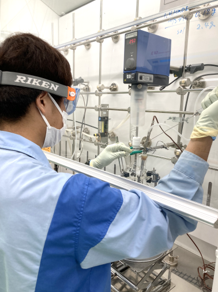
DNP Fine Chemicals' resin synthesis technology
DNP Fine Chemicals utilizes multiple synthesis technologies, including radical polymerization, urethane reactions, and emulsion polymerization, to create polymer materials with diverse functions, enabling the synthesis of resins optimized for various applications.
radical polymerization
Radical polymerization is a representative polymerization technique that uses radicals, which are active species with unpaired electrons, as initiators to chain together monomers with double bonds. It is relatively easy to set the conditions and is used in the synthesis of a wide range of resins, including polyethylene and polystyrene.
At DNP Fine Chemicals, we optimize molecular weight, functional groups, and structural properties by highly controlling this reaction, creating high-performance resins tailored to various applications such as resists and inks.
Urethane formation reaction
The urethane reaction is a fundamental process in which isocyanate groups (–NCO) and hydroxyl groups (–OH) react to form urethane bonds, creating polyurethane resins that possess both flexibility and durability.
This reaction has a wide range of applications, including adhesives, paints, and functional film materials. DNP Fine Chemicals can precisely impart the required properties, such as adhesion, heat resistance, and mechanical properties, by optimizing reaction control and raw material selection.
Emulsion polymerization
Emulsion polymerization is a technique that stabilizes monomers dispersed in water with a surfactant and polymerizes them in an emulsion state, resulting in high-molecular-weight latex with small particle sizes and uniformity. It is used in many fields, including paints, adhesives, and rubber latex.
At DNP Fine Chemicals, we design functional latexes tailored to specific applications by finely adjusting particle size distribution, viscosity, and stability, contributing to improved product performance such as applicability and durability.
Products applying resin synthesis technology
Color Resist
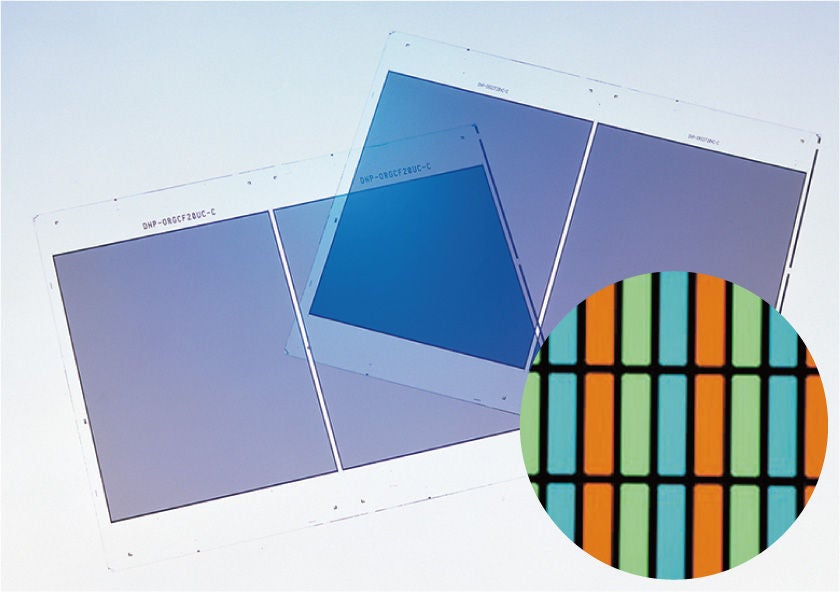
Color resists are materials used to form display pixels and require both high color saturation and fine patterning capability.
Through ink formulation technology, pigment dispersion, resin solubility, and photoreactivity are optimized to achieve properties suited for exposure and development processes. This enables uniform film formation and high color purity, contributing to high-definition display performance.
Inkjet Inks
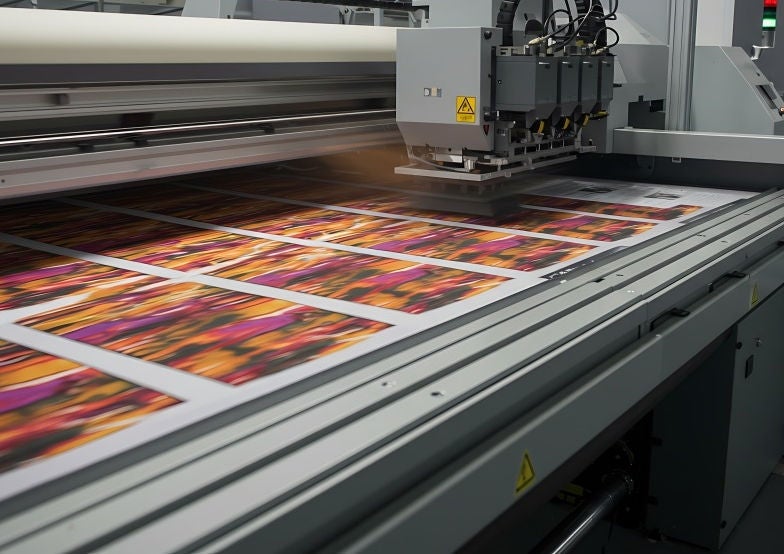
Inkjet inks are materials in which color performance and jetting stability are critically important.
DNP Fine Chemicals optimizes formulations according to application requirements and precisely controls wettability, drying behavior, and adhesion.
Please note that inquiries from individual customers cannot be accepted. Thank you for your understanding.