
High-Performance UV Ink with Low Odor, Easy Handling, and Compatibility with Specialty Materials
UV Ink
UV ink cures instantly upon exposure to ultraviolet light and exhibits excellent adhesion to a wide variety of substrates. It is attracting attention as a next-generation ink that combines reduced environmental impact with high-quality expressive performance.
Leveraging proprietary technologies, DNP Fine Chemicals has achieved both low odor and high stretchability, delivering new value that resolves conventional challenges.
What is UV Ink?
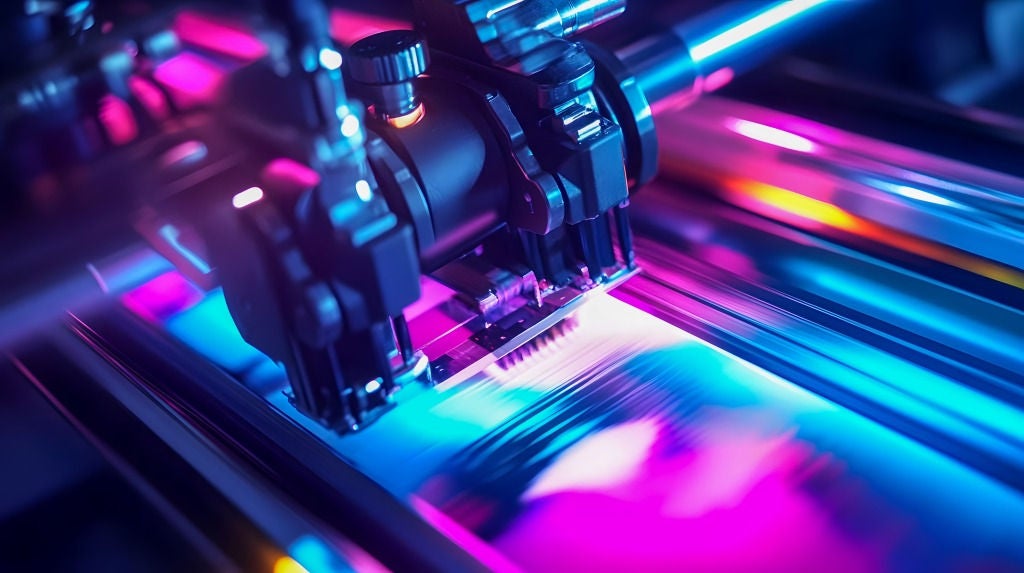
UV ink is an ink that cures and fixes instantly when exposed to ultraviolet (UV) light.
One of its key advantages is high production efficiency, as no drying process is required. In addition to paper, UV ink can be printed directly onto non-porous materials such as plastics, glass, metal, and wood, making it suitable for a wide range of applications. Because it does not use solvents, VOC emissions are low, and it is attracting attention as an environmentally friendly printing method.
UV ink also enables high color density and embossed effects through thick film formation and offers excellent abrasion resistance and weather resistance.
Main Applications of UV Ink
UV ink offers high durability with excellent resistance to abrasion, water, and chemicals, allowing it to maintain quality over long periods even in harsh environments. In addition, because solvents do not evaporate, volatile organic compounds (VOC) emissions are low, helping to reduce environmental impact. Furthermore, since the ink fixes on the surface of paper or substrates without penetrating them, it enables high-quality expressions that take advantage of raised textures and gloss effects.
For these reasons, UV ink is ideally suited for packaging and decorative printing applications where high added value is required.
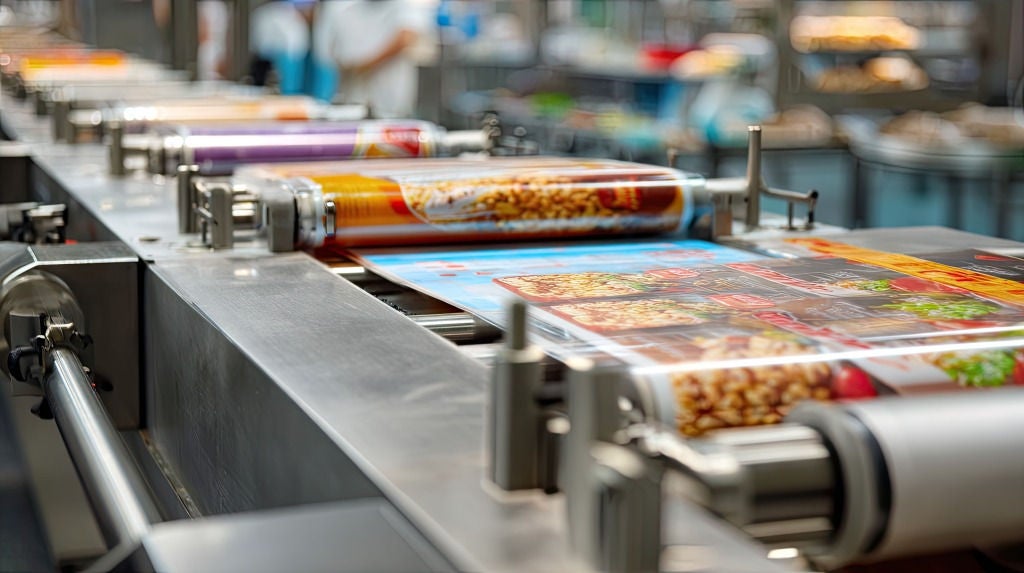
■Main Applications of UV Ink
Labels, three-dimensional molded products, packaging, traffic signs, POP displays, and more.
DNP Fine Chemicals’ UV Ink
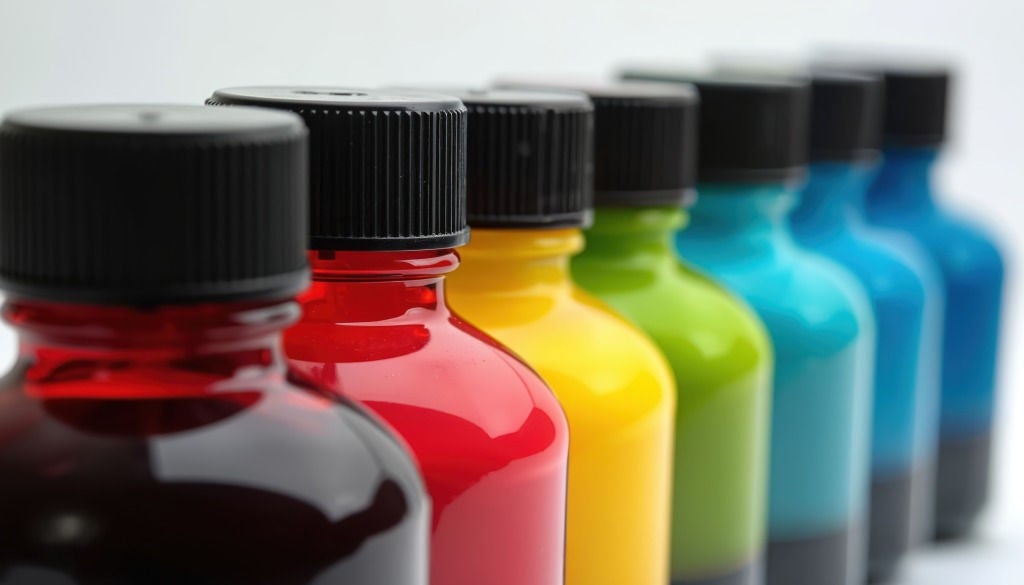
DNP Fine Chemicals’ UV ink is designed to achieve both a comfortable working environment and high practical performance. To address the strong odor that has traditionally been an issue with UV inks, low-odor monomers and photoinitiators are used, creating a more user-friendly printing environment.
In addition, we have developed UV ink with high stretchability that prevents film cracking even on three-dimensional molded products and curved substrates. Combining flexibility and strong adhesion, it supports a wide range of specialized applications such as vacuum forming and three-dimensional decoration.
Through these advancements, we are opening up new possibilities for UV ink and responding to diverse market needs.
Features of DNP Fine Chemicals’ UV Ink
■Low odor
Monomers and photoinitiators used in UV ink can sometimes emit irritating odors. By carefully selecting low-odor materials, we enhance workplace comfort and enable a low-odor ink design suitable for indoor use and applications used in close proximity to people.
■Stretchability
In applications involving three-dimensional molding or curved substrates, ink films are prone to cracking. Our UV ink features a stretchable design with enhanced flexibility and followability, allowing it to withstand stretching and bending while preventing cracking and peeling. This makes it well-suited for vacuum forming and decorative panels.
Core Technologies for UV Ink Development and Manufacturing
Precision Dispersion Technology
By uniformly dispersing pigments at the nanometer level, color performance, transparency, and printing stability are enhanced. Aggregation and sedimentation are suppressed, allowing quality to be maintained even during long-term storage, while reducing nozzle clogging and color unevenness. This ensures high-definition image quality even after UV curing.
Resist and Ink Formulation Technology
By optimally formulating monomers, oligomers, resins, pigments, and additives, we achieve a well-balanced combination of properties such as low odor, high image quality, and flexibility. Formulations are tailored according to substrate types and applications, enabling product designs that meet a wide range of market needs.
Evaluation and Analysis Technology
Through accelerated weathering tests and spectroscopic evaluation, curing speed, adhesion, and abrasion resistance are quantitatively verified. In addition, odor measurements and stretchability tests are conducted to analyze performance under conditions close to actual use, leading to the development of highly reliable products.
Frequently Asked Questions About UV Ink Development and Manufacturing
Q. What Is the Difference Between UV Ink, Water-Based Ink and Solvent Ink?
A. UV ink is an ink that cures instantly when exposed to ultraviolet light. A major advantage is its high productivity, as no drying process is required. In addition to paper, it can be printed directly onto a wide range of non-porous materials such as plastics, metals, and glass, and it offers excellent abrasion resistance and water resistance.
水性インクや溶剤インクについては、それぞれの紹介ページをご覧ください。
Q. What Types of Materials Can Be Printed On?
A. In addition to paper, it is compatible with a wide variety of materials, including acrylic, PVC, polycarbonate, metals, wood, and glass.
A key feature is its excellent adhesion even to non-porous substrates that were difficult to print on with conventional inks.
Q. Are Environmental and Safety Considerations Adequately Addressed?
A. Because UV ink does not require solvent evaporation, it emits low levels of VOCs, helping to reduce environmental impact.
In addition, adopting LED-UV systems enables energy-saving, low-heat printing environments.
As uncured ink may cause skin irritation, proper handling and safety management are required during operation.
Q. Is Custom Ink Development Available?
A. Yes. For orders meeting a minimum production volume per lot, we can also develop custom-designed UV ink with tailored adhesion, flexibility, gloss control, and other properties according to the substrate and application. Please feel free to contact us for further consultation.
Q. Are Prototypes or Small-Lot Testing Available?
A. We can provide sample inks for testing purposes at the prototyping stage or in small lots. This allows evaluation under actual substrates and printing conditions.
Q.Can You Also Conduct Ink Performance Testing and Weather Resistance Evaluation?
A. Using our evaluation and analysis technologies, we can conduct a wide range of tests,
including weather resistance, adhesion, abrasion resistance, and gloss retention.
Leave UV Ink Development and Manufacturing to DNP Fine Chemicals
DNP Fine Chemicals’ UV ink supports a wide range of applications, including packaging and labels as well as car wrapping and three-dimensional decorative printing. If you are looking for a high-quality and environmentally friendly printing solution, please feel free to contact us.
Please note that inquiries from individual customers cannot be accepted. Thank you for your understanding.