
From Photos to Posters — High-Quality Water-Based Ink You Can Use with Confidence
Water-Based Ink
Water-based ink enables vivid expression while being environmentally friendly. Designed for safety with reduced volatile organic compounds (VOC) emissions, it can be used with confidence for applications ranging from interior decoration to package printing.
Leveraging proprietary technologies, DNP Fine Chemicals delivers next-generation water-based ink that combines beauty, safety, and environmental consideration.
What is Water-Based Ink?
Water-based ink is a general term for inks that use water as the main component, produced by dispersing or dissolving pigments or dyes in water. It is an environmentally friendly type of ink.
Because it emits low levels of VOCs and offers high safety, water-based ink is widely used in various fields such as home and office printers and package printing. It enables vivid color reproduction and high-quality printing and is particularly suitable for absorbent substrates such as paper.

Main Applications of Water-Based Ink
Water-based ink is an environmentally friendly ink that enables high-quality printing on absorbent substrates. With low VOC emissions and excellent safety, it can be used with confidence even for indoor applications.
Its vivid color reproduction with minimal bleeding makes it ideal for high-definition expressions such as photographs and posters. In addition, its widespread adoption offers cost advantages, making it an efficient and accessible printing solution.
Because of these characteristics, water-based ink is an optimal choice for applications such as indoor signage and commercial printing, where both environmental consideration and high quality are required.
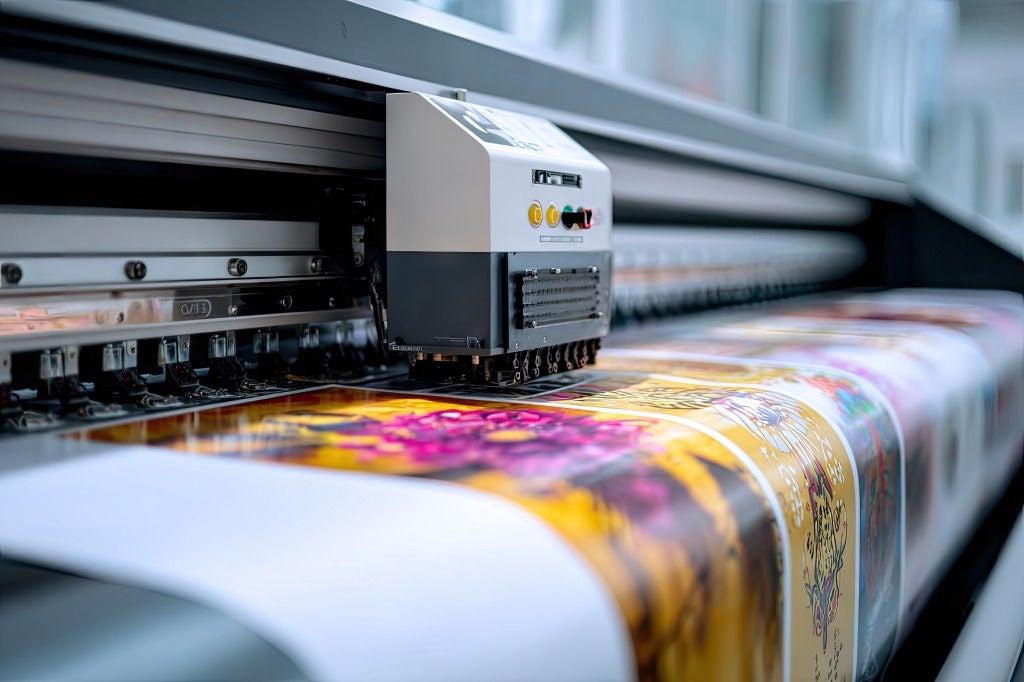
■Main Applications of Water-Based Ink
Sign Displays, building materials (wallpaper and flooring), labels, packaging, and more.
DNP Fine Chemicals’ Water-Based Ink
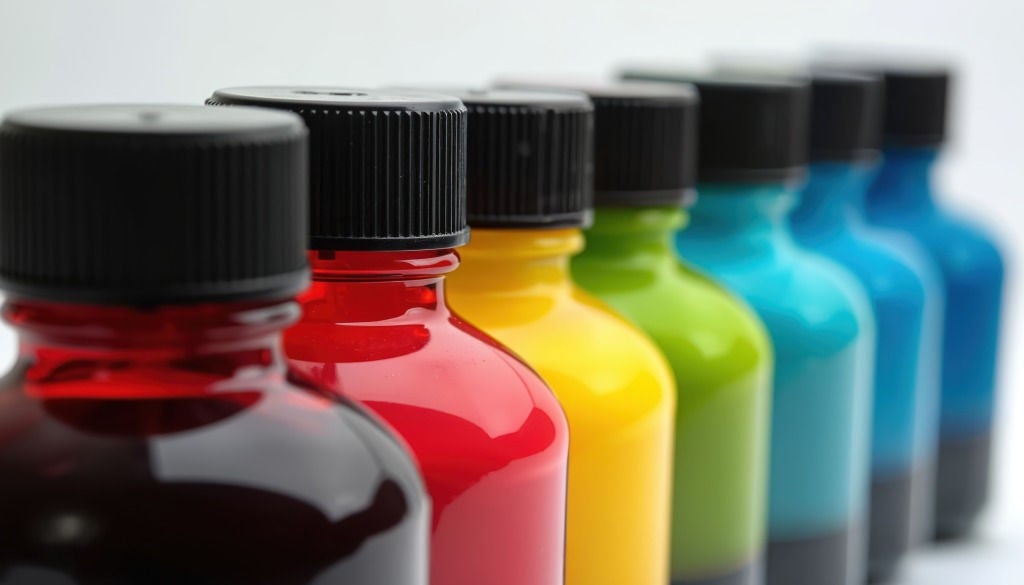
DNP Fine Chemicals’ water-based ink combines high image quality, practicality, and safety. Through the reaction between a pretreatment liquid and the color ink, clear dots with suppressed bleeding are formed, enabling high-definition expression.
While supporting low-temperature drying, the ink exhibits high film durability and maintains long-term quality across a wide range of substrates. In addition, the use of dedicated pretreatment liquids allows compatibility with various media, and material designs compliant with food sanitation regulations can also be provided depending on the application.
By balancing environmental consideration with high quality, our water-based ink meets diverse needs across the printing industry.
Features of DNP Fine Chemicals' water-based inks
■Substrate Compatibility
By using dedicated pretreatment liquids, stable printing is possible on a wide variety of media, such as paper, fabrics, and films. In some cases, printing can be performed without pretreatment. Color performance and adhesion are optimized according to substrate characteristics, enabling compatibility with a broad range of applications.
■High Image Quality
By utilizing the chemical reaction between dedicated pretreatment liquids and color inks, clear dots with suppressed bleeding are formed. This achieves beautiful and sharp print quality even in applications that require high-definition expression, such as photographs, posters, and packaging.
■Low-Temperature Drying and High Film Durability
The low-temperature drying design allows printing on substrates with low heat resistance. In addition, the high-strength ink film provides excellent resistance to friction and bending, ensuring durability suitable for long-term use.
■Compliance with the Food Sanitation Act
Compliant with food sanitation regulations, the ink is suitable for food packaging and related materials, providing a reliable solution in terms of hygiene and safety.
Core Technologies for Water-Based Ink Development and Manufacturing
Precision Dispersion Technology
This technology uniformly disperses pigments in water at the nanometer level to enhance color performance and stability. It prevents aggregation and sedimentation, maintaining quality even during long-term storage. In addition, by suppressing nozzle clogging and enabling stable ink ejection, it supports high-definition and vivid printing expression.
Resin Synthesis Technology
Through molecular design, binder resins that retain pigments and dyes and firmly fix them to paper and films are optimized. By imparting water resistance, abrasion resistance, and flexibility, we compensate for durability weaknesses inherent to water-based ink and enhance adaptability to a wide range of applications.
Evaluation and Analysis Technology
This technology quantitatively measures ink properties such as color performance, weather resistance, and drying characteristics to identify areas for improvement. By reproducing actual usage conditions through spectroscopic evaluation and accelerated testing, it enables highly reliable product design. Safety testing is also conducted to ensure compliance with regulatory and hygiene requirements.
In addition, ink ejection performance can be evaluated for inkjet heads from various manufacturers, enabling ink designs with excellent ejection stability.
Resist and Ink Formulation Technology
This technology designs the optimal balance of water, pigments, resins, and additives to meet diverse requirements such as environmental performance, high image quality, and cost efficiency. By tailoring formulations according to substrates and applications, it enables the development of water-based inks suitable for a wide range of fields—from paper to food packaging materials.
Frequently Asked Questions About Water-Based Ink Development and Manufacturing
Q. What Is the Difference Between Water-Based Ink, Solvent Ink and UV Ink?
A. Water-based ink is a low-environmental-impact ink that uses water as its main component. It offers excellent color performance, low odor, and high safety. However, it has challenges such as limited
Our inks are designed to address these challenges.
溶剤インクやUVインクについては、それぞれの紹介ページをご覧ください。
Q. What Types of Materials Can Be Printed On?
A. It is mainly suitable for absorbent substrates such as paper, cardboard, fine paper, and coated paper.
It is widely used for applications that require high image quality, including photographs, posters, and booklets.
Q. Are Environmental and Safety Considerations Adequately Addressed?
A. Water-based ink contains little to no organic solvents and emits extremely low levels of VOCs (volatile organic compounds), making it an environmentally friendly printing method.
In addition, its low odor and high safety make it suitable for indoor applications and use in office environments.
Q. Is Custom Ink Development Available?
A. Yes. If a minimum production volume per lot is met, we can develop custom water-based ink tailored to your printer type, paper quality, and color performance requirements. Please feel free to contact us for further consultation.
Q. Are Prototypes or Small-Lot Testing Available?
A. We can provide sample inks for testing purposes at the prototyping stage or in small lots. This allows evaluation under actual substrates and printing conditions.
Q. Can You Also Conduct Ink Performance Testing and Weather Resistance Evaluation?
A. We are able to conduct performance evaluations required for water-based ink, including weather resistance, abrasion resistance, and color performance.
We also provide improvement proposals tailored to specific applications and operating environments.
Leave Water-Based Ink Development and Manufacturing to DNP Fine Chemicals
DNP Fine Chemicals’ water-based ink achieves both environmental compatibility and high image quality, supporting a wide range of applications from commercial printing to food packaging. We provide optimal solutions tailored to customer needs. If you are seeking high-quality and sustainable printing, please feel free to contact us.
Please note that inquiries from individual customers cannot be accepted. Thank you for your understanding.