
CSIP Sterilization System | Sterile-Filter Equipped CIP/SIP Technology
DNP’s aseptic filling system achieves industry-leading productivity by integrating two proprietary sterilization technologies—F₀ Solution and CSIP—into a proven high-speed line design. These innovations enable faster sterilization cycles and reduced energy consumption, helping manufacturers meet growing demand without compromising product safety.
Table of contents
Video: F₀solution (2:36)
Video: CSIP process (2:42)
Key features
- High speed aseptic filling system: Up to 72,000 BPH (Bottle Per Hour)
- High efficiency: Over 98%
- Fastest changeovers: 1.0hr (Carbonated Soft Drink: CSD), 1.5hr (High acid), 2.0hr (Low acid)
- Extended production runs: Over 150 hours for low-acid beverages
What is the CIP and SIP process?
CIP (Cleaning-in-Place)
CIP is an automated cleaning method that circulates detergents and rinse water through pipes, tanks, and filling valves—without the need for disassembly. Alkaline and/or acidic solutions flow at controlled temperatures and rates to dissolve product residues and biofilms. These are then rinsed away, effectively removing both organic and inorganic substances from internal surfaces and preparing the system for sterilization.
SIP (Sterilization-in-Place)
SIP (Sterilization-in-Place) follows CIP and uses high-temperature steam or hot water to eliminate any remaining microorganisms. The system heats to a defined sterilization threshold—typically above 121°C—maintains that temperature for a validated duration, and then cools under positive pressure to prevent recontamination. This process ensures the production line is thoroughly sterilized before the next run.
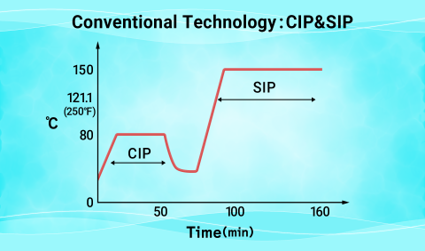 Sequential sanitation in conventional lines—CIP runs first, then a separate SIP cycle follows
Problems with conventional CIP and SIP processes
In a traditional aseptic filling line, every product change triggers a two-step sanitation cycle—CIP (Cleaning-in-Place) followed by SIP (Sterilization-in-Place). While essential for food safety, this sequence has become the single largest drag on productivity:
Extended downtime:
Each product change requires a full CIP (60–90 min) and SIP (~60 min), halting production and increasing downtime.
Steam-intensive process:
Time-and-temperature–based SIP relies on continuous live steam, driving up energy costs and CO₂ emissions.
Lengthy changeovers:
Sequential CIP and SIP cycles for every recipe swap turn even minor product changes into full sanitation procedures—slowing small-batch and just-in-time production.
What Is F₀ solution and how it reduces SIP time by approximately 50%
F₀ Solution is an innovative approach that significantly shortens SIP process time compared to conventional methods, while maintaining full aseptic performance. It is compatible with a wide range of aseptic processing and filling equipment, including UHT sterilizers, aseptic tanks, filling machines, and sterile air filters.
In addition to boosting productivity, F₀ Solution helps reduce environmental impact by lowering steam consumption and cutting CO₂ emissions.
How F₀ solution works
- Initiate SIP
Steam or hot water is circulated through the piping to begin the sterilization cycle. - Start F₀ accumulation
The temperature in the aseptic zone rises, and F₀ accumulation begins once it reaches the threshold (e.g., 121.1°C). - Accumulate until target reached
F₀ is accumulated every second until it reaches the predetermined value for the current product (e.g., 233), at which point the system shifts to cooling. - Complete SIP
After the cooling process, the aseptic zone is maintained at positive pressure to complete the SIP process.
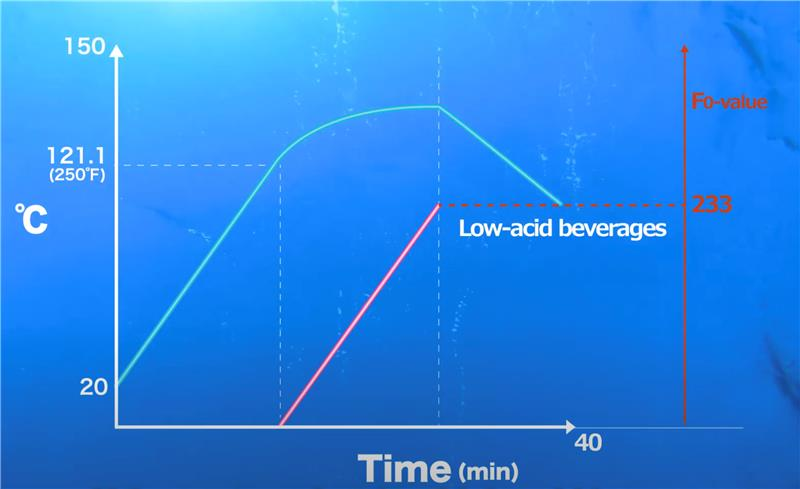
Low-acid beverages
F₀ accumulation start temperature: 121.1°C
F₀ target value: 233
SIP time: approx. 40 min
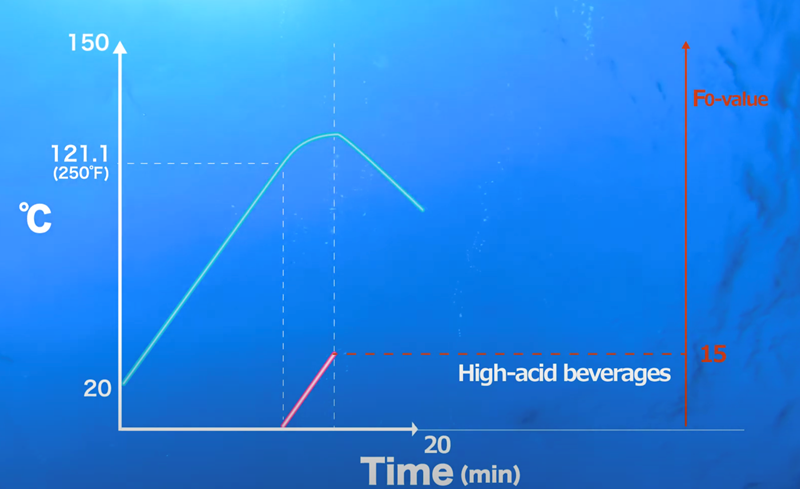
High-acid beverages
F₀ accumulation start temperature: 121.1°C
F₀ target value: 15
SIP time: approx. 20 min
Advantages of F₀ solution
- SIP cycle time: Reduces sterilization from ~60 minutes to ~30 minutes (≈ 50% faster)
- Aseptic integrity: Maintains sterilization performance with real-time F₀ control
- Software-based upgrade: Enables F₀ monitoring on existing lines—no new vessels required
- Broad applicability: Compatible with UHT sterilizers, aseptic tanks, filling machines, and sterile-air filters
- Steam & CO₂ usage: Cuts steam demand in half, lowering energy costs and emissions
What is “CSIP”? - integrated high-temperature CIP/SIP process
CSIP enables simultaneous execution of CIP and SIP, eliminating the need for traditional SIP cycles. This allows for a high-temperature, short-duration CIP between production runs. With continuous monitoring, aseptic integrity is maintained, enabling rapid product changeovers and minimizing downtime.
How CSIP works
- Rinse & heat-up
After the previous production run, the system rinses the pipes. An alkaline or acidic detergent is introduced, and the temperature begins to rise. - CIP timer initiation
Once the detergent reaches the CIP temperature, the circulation timer starts. Heating continues toward the SIP threshold. - F₀ monitoring begins
At 121.1°C, the F₀ software activates. CIP and SIP proceed simultaneously while lethality is continuously accumulated. - Sterilization completion
When the accumulated F₀ value reaches the product-specific target, SIP concludes. After the CIP timer ends, the system transitions to a sterile-water rinse. - Rinse, cool & verify
UHT-sterilized water flushes out the detergent as the system cools. Temperature and flow are continuously monitored to ensure aseptic integrity.
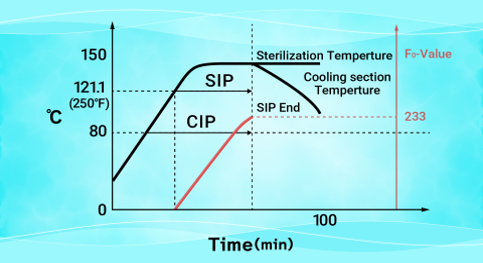
Advantages of CSIP
- Simultaneous CIP + SIP: A single high-temperature cycle cleans and sterilizes—eliminating the need for a separate SIP step
- Fastest changeovers: Rapid product switching without standalone SIP boosts productivity and flexibility
- Lower steam & CO₂ emissions: Eliminating the SIP hold reduces energy consumption and carbon footprint
*Reduction amounts may vary depending on system specifications - Utility savings: High-temperature CIP shortens cleaning time and reduces detergent and water usage
- Continuous sterility monitoring: Real-time control of temperature, flow, and F₀ ensures aseptic integrity during changeovers
- Easy retrofit: Easily deployable on existing aseptic filling lines for PET bottles, cartons, cups, BIB, and more—with minimal equipment modifications
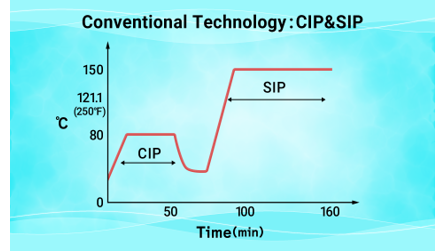 Conventional aseptic sanitation: Separate CIP & SIP
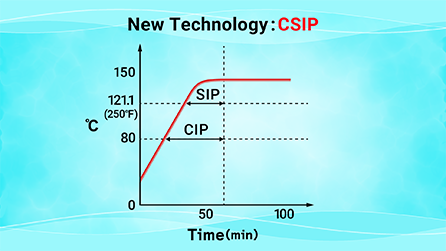 CSIP process: Combined CIP & SIP
Case Study of F₀ Solution & CSIP
Juice filling machine case study — 54,000 bph PET bottle line at Asahi Nagoya (Japan)
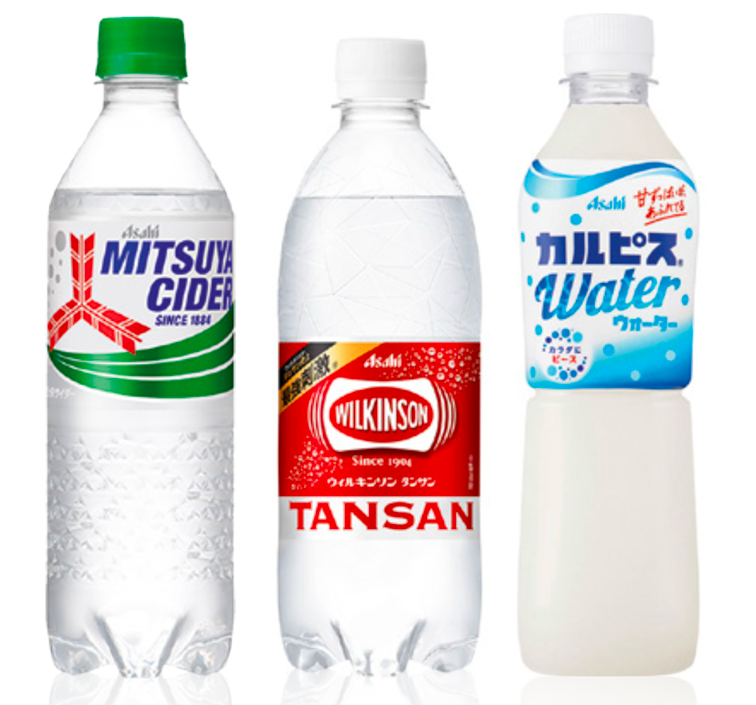
Asahi Breweries’ Nagoya factory commissioned DNP’s aseptic PET bottle filling system in April 2021 to produce carbonated and non-carbonated beverages for its Mitsuya Cider, Wilkinson, and Calpis brands. An energy-saving blow molder and aseptic carbonation filler sterilize bottles with H₂O₂ gas at around 50°C, while a 30 m³/h UHT sterilizer feeds product for filling 500ml at 54,000 bph (20,000bph for 1.5L); media-fill tests of over 30,000 bottles confirmed sterility with no spoilage. DNP’s patented CSIP technology runs CIP and SIP simultaneously in less than two hours per changeover, and by eliminating the pasteurizer and using normal-pressure PET bottles, the system reduces H₂O₂ usage by approximately 40%, reduces the total cost of ownership, and cuts CO₂ emissions.