
New Environmentally Advanced Aseptic Filling System: Green Aseptic™
With the global demand for soft drinks continuing to grow, the use of PET bottles is expected to increase accordingly. In response to this expanding market, beverage manufacturers are intensifying their efforts to adopt environmentally conscious practices, particularly by tackling the challenge of decarbonizing both the PET bottle production and the soft drink filling processes.
To address these challenges, we have developed a proprietary non-thermal sterilization system that takes into account the water content ratio in soft drinks.
Table of contents
Video:Green Aseptic technology (2:38)
Problems with traditional aseptic filling processes
Liquid processing can generate 45% of total CO₂ emissions
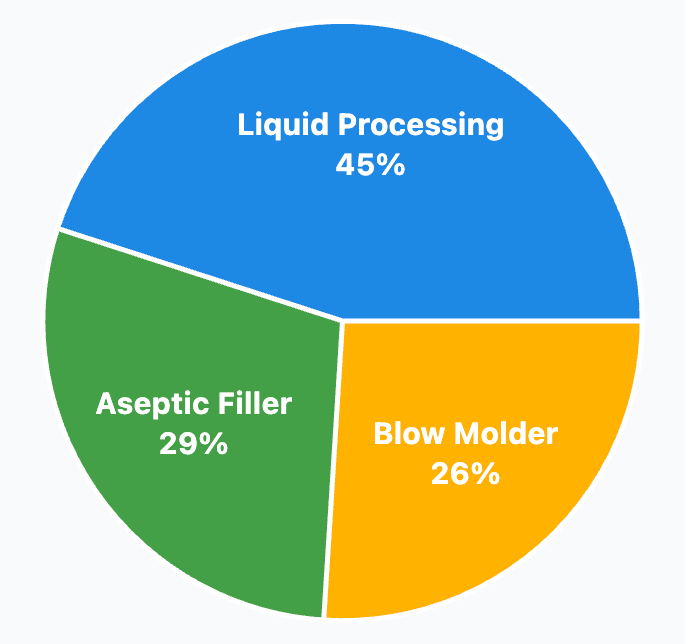
- Assumptions: 900 bpm PET bottle aseptic line, 5,400 h per year, 300 changeovers; Scope limited to liquid processing only. Emission factors: Japanese LCI (IDEA v2) and CFP DB (v1.01 / v1.03).
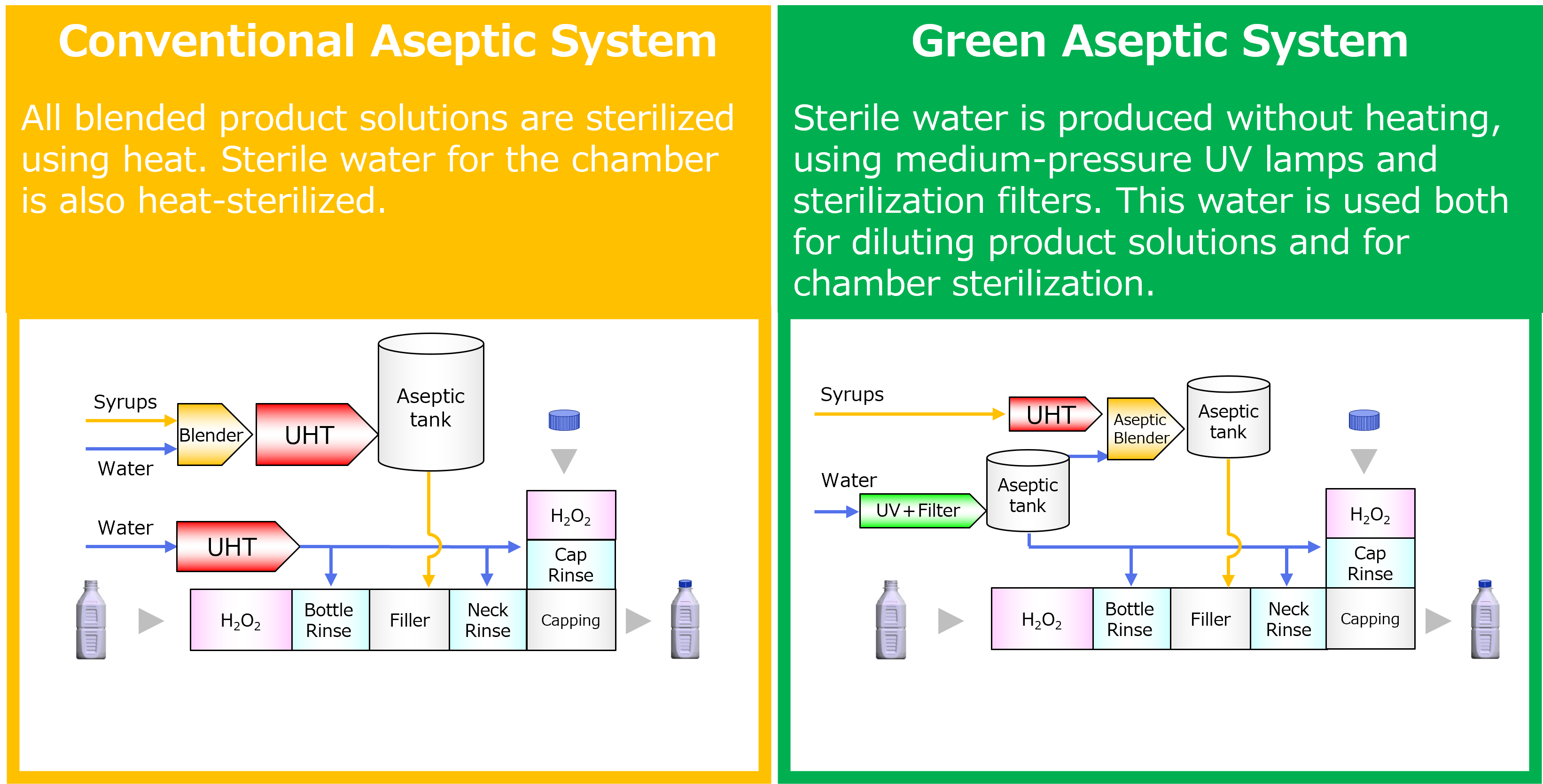
In conventional aseptic filling processes for PET bottles, large volumes of beverages are produced by diluting syrup with water sterilized using ultra high temperature (UHT). This UHT-treated water is also used to rinse the containers.
These heat-based steps release a disproportionate share of greenhouse gas emissions. As the pie chart on the left illustrates, liquid-processing alone accounts for the largest share of total CO₂ emissions in a typical aseptic line. Decarbonising this water-sterilization loop has therefore become an urgent priority for beverage producers worldwide.
What is the new eco-friendly aseptic filling process Green Aseptic?
Green Aseptic is an Innovative non-thermal sterilization technology that combines medium-pressure UV lamps with sterilization filters. This patented technology has significantly advanced decarbonization and energy efficiency in liquid processing systems for both low- and high-acid beverages.
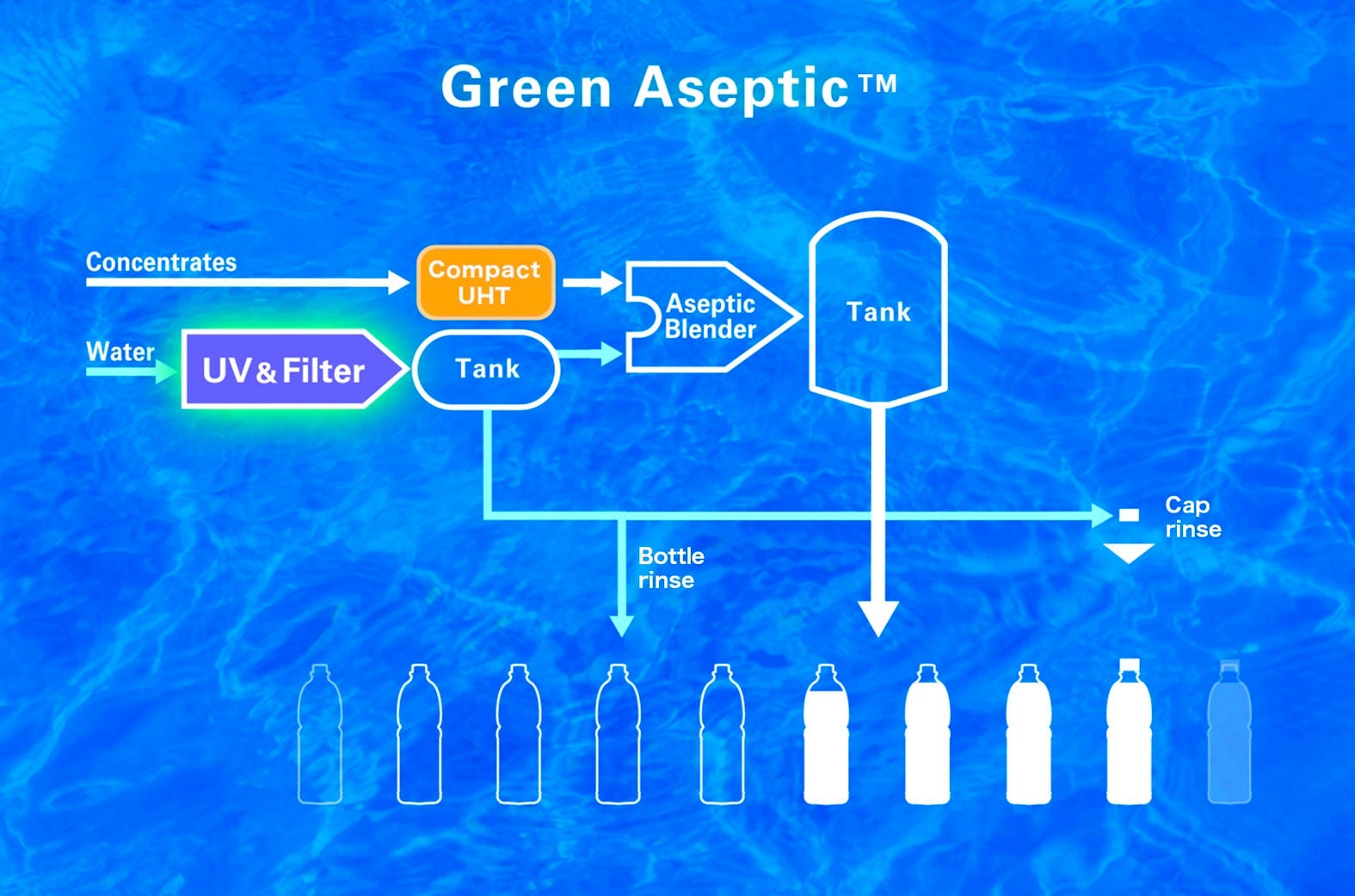
Key features
- Scalable production of ultra-low carbon water
- Cutting-edge sterilization technology reduces CO₂ emissions and energy use
- Ambient distribution: No need for refrigerated transport
- Longer shelf life, less food waste
Core elements - UV lamps and filters
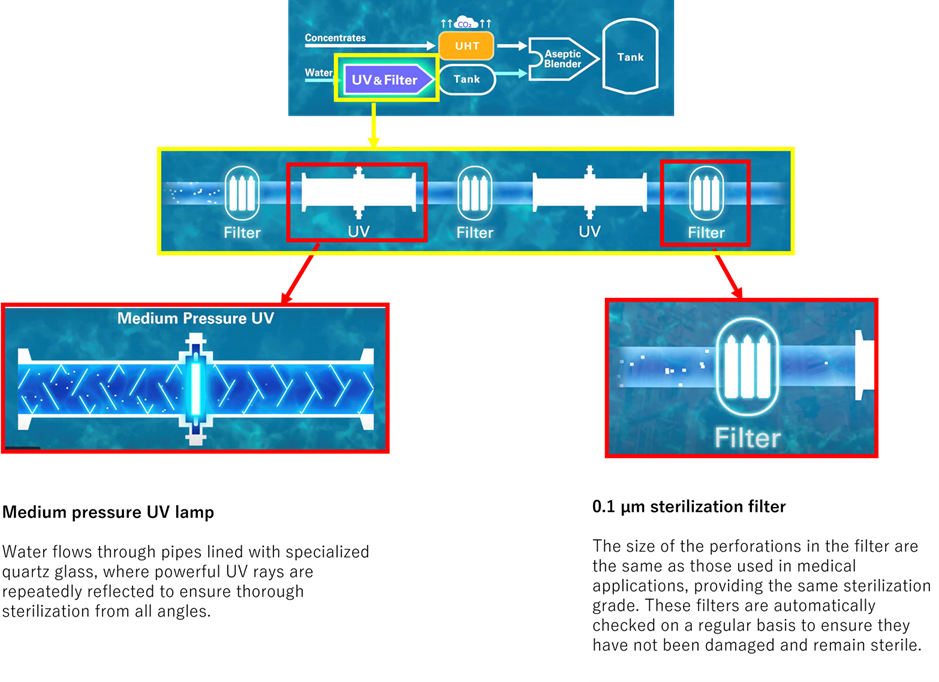
System configuration comparison with conventional UHT-based aseptic filling
Operational benefits
- Lower operating costs for steam, cooling water, and electricity
- Reduced use of steam, water, detergent, and wastewater in UHT CIP
- Less blending required thanks to concentrate sterilization
- Compact UHT module reduces both initial and maintenance costs
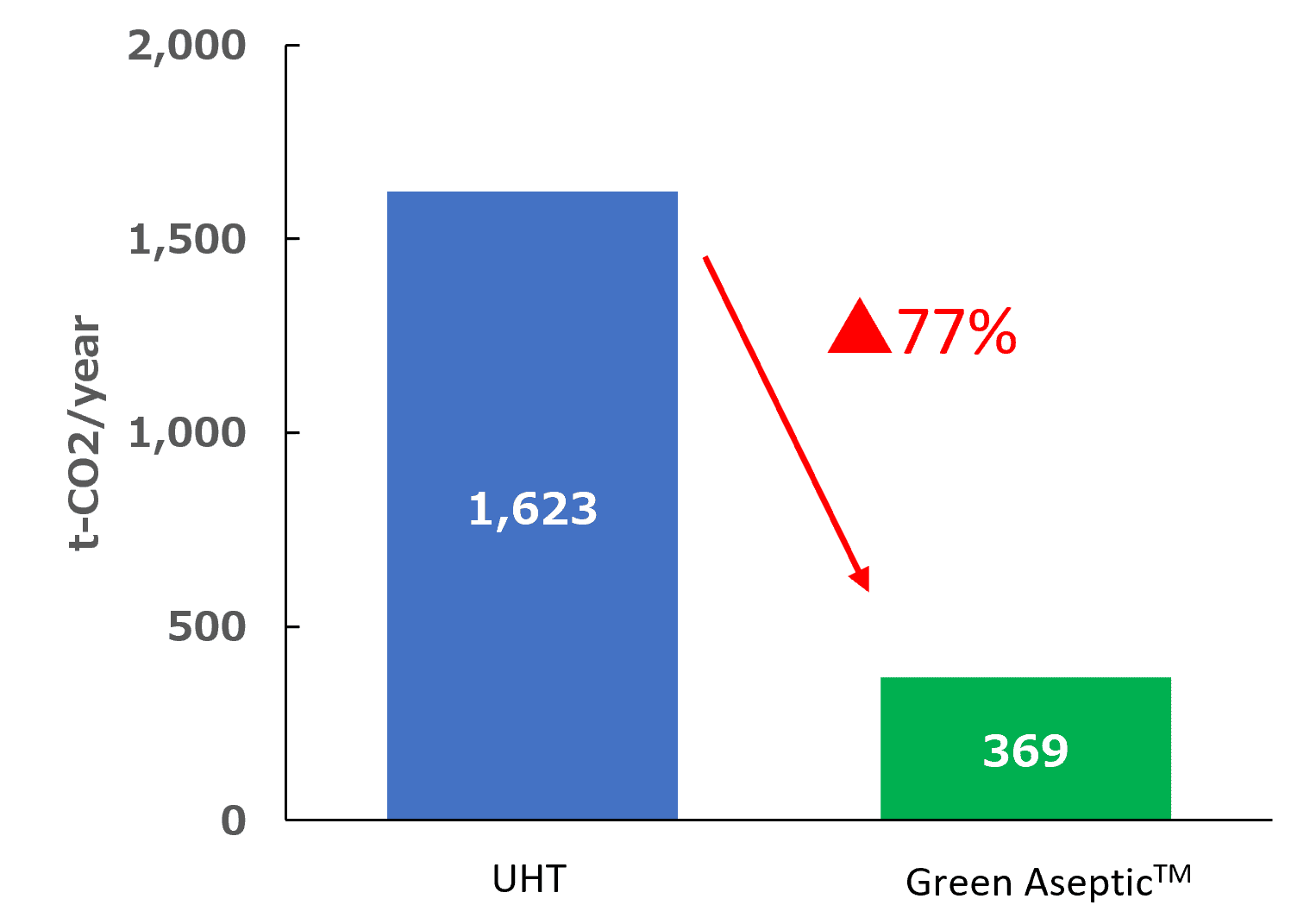
Energy, CO₂ and running-cost savings vs. conventional UHT-based aseptic filling
Energy consumptions
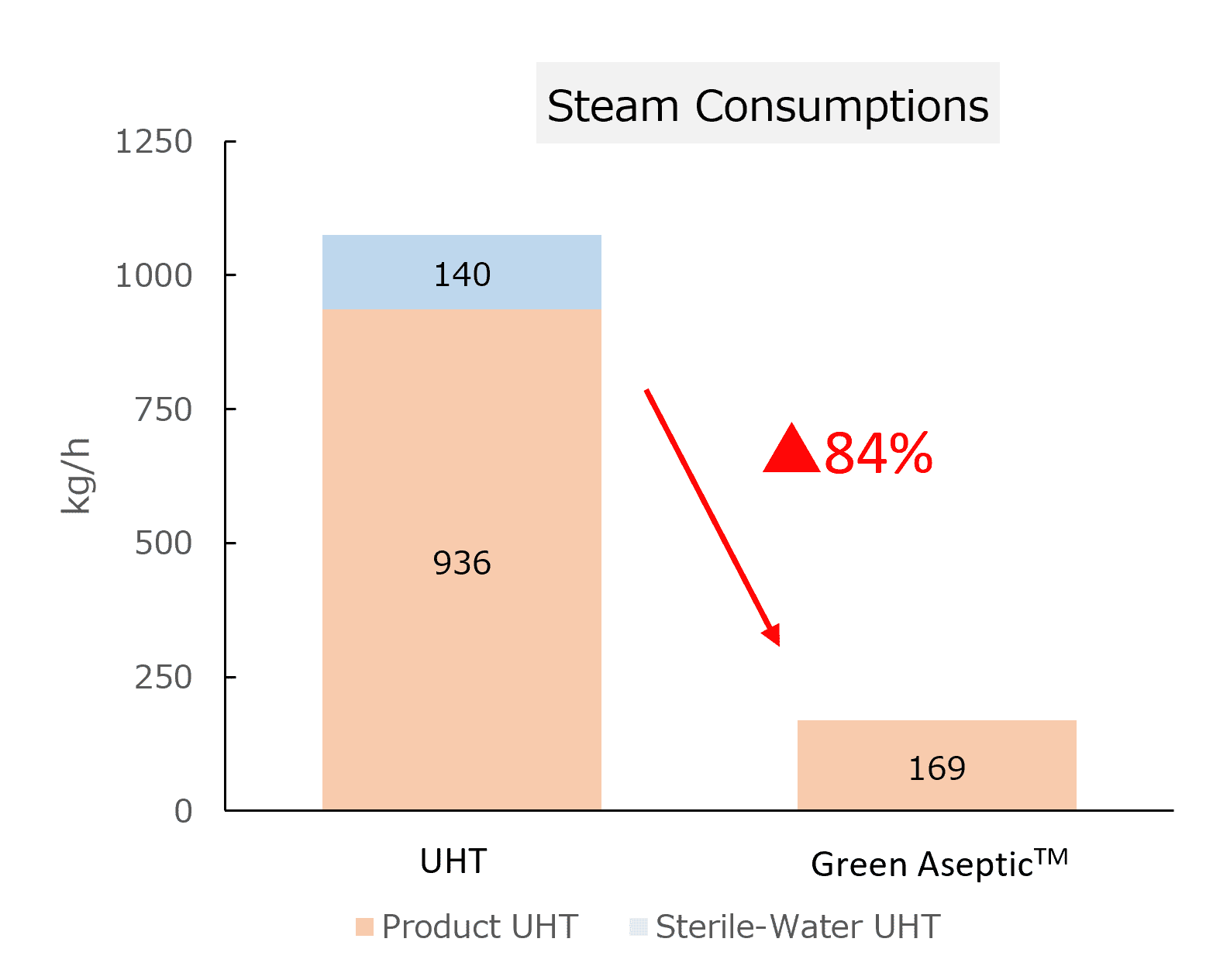
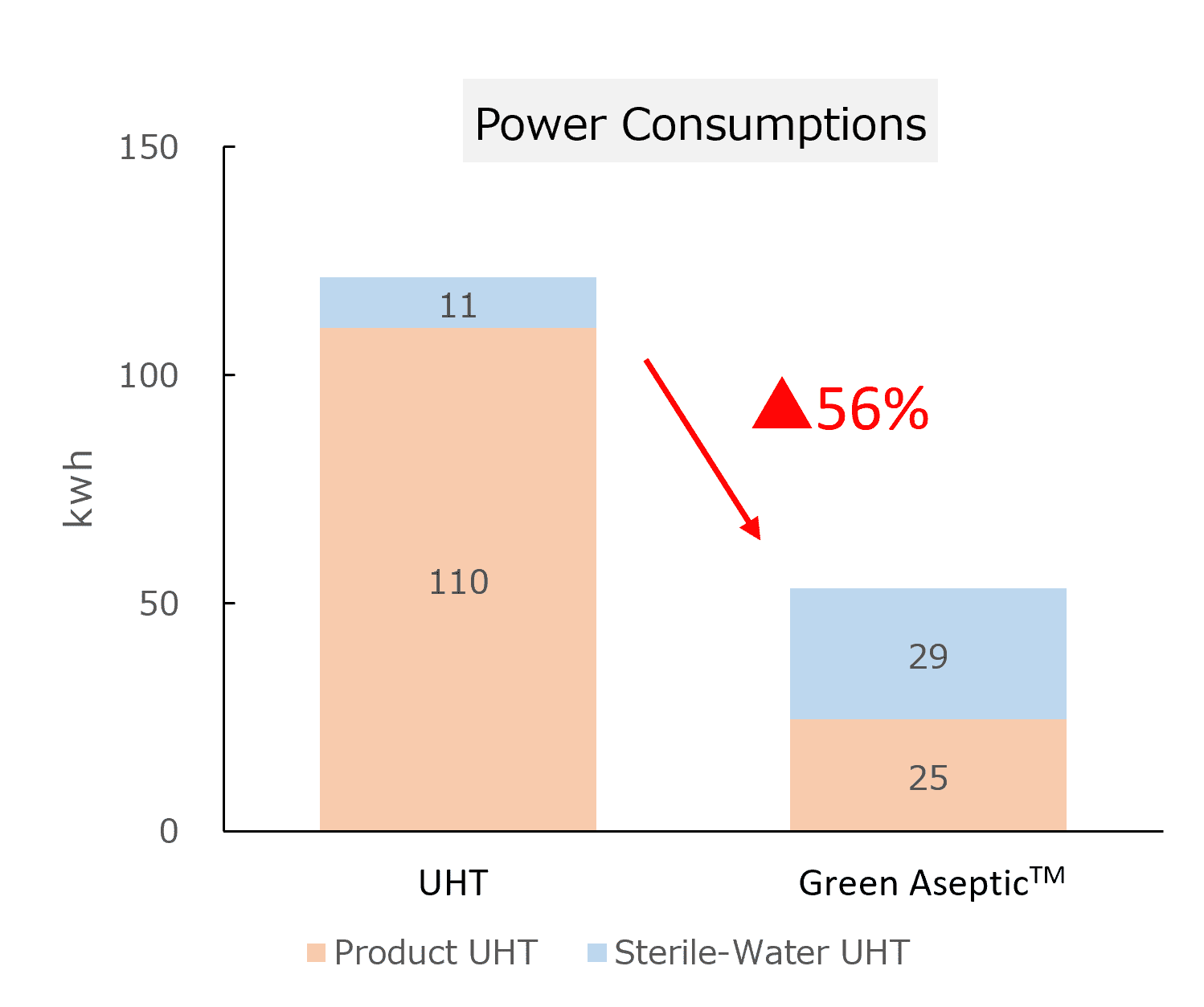
CO₂ emissions
Running costs
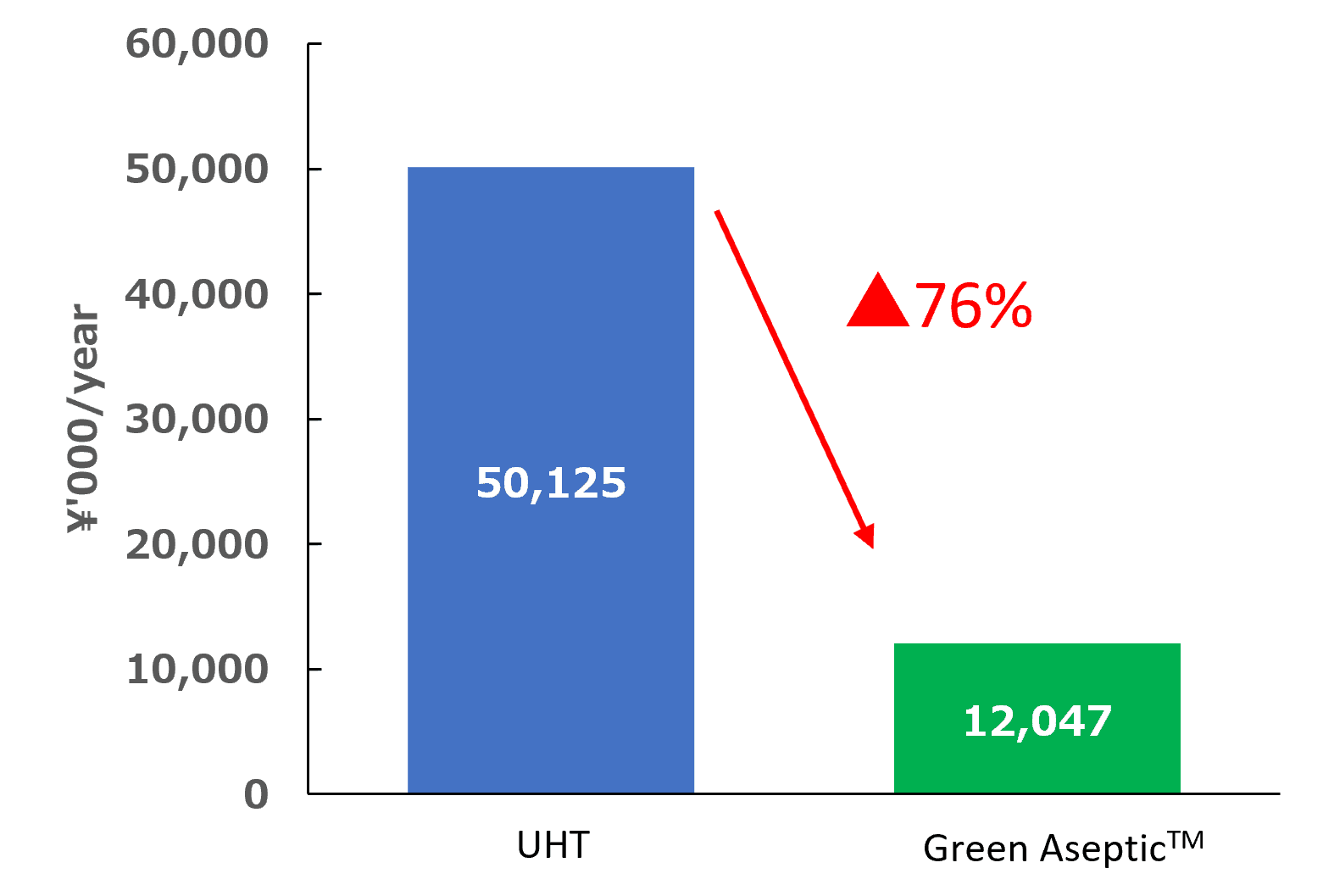
Assumption: 5x dilution ratio (600 bpm)
Case study of Green Aseptic implementation
Tea Filling Machine Case Study — 36,000 bph PET Bottle Line at Shizuoka Soft-Drink Plant (Japan)
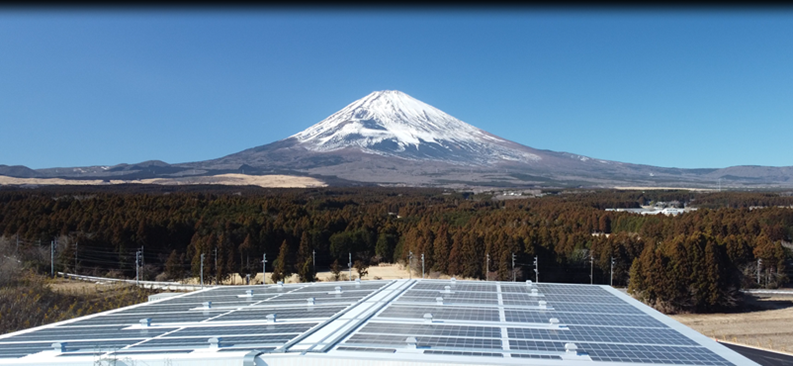
A major beverage producer in Shizuoka began commercial tea production in April 2024 using DNP’s Green Aseptic PET-bottle system. Concentrated tea extract is first heat-sterilized in a compact UHT sterilizer and then diluted with sterile water produced by non-heat sterilization that combines medium-pressure UV lamps (Atlantium HOD) and 0.1 µm sterilization filters. After aseptic blending, the line fills 500ml bottles at 36,000bph, with the same non-heated sterile water replacing all conventional rinsing steps. Three media-fill runs of over 10,000 bottles each showed zero spoilage. The process also reduces energy consumption and CO₂ emissions by approximately 80 %, setting a new sustainability benchmark for low-acid beverages.