
DNP Aseptic PET Cups
DNP aseptic PET cup solution combines high-barrier PET packaging with aseptic filling technology to support longer shelf life, may contribute to reducing food waste and enable more flexible beverage distribution.
The solution can be designed for extended shelf life (ESL) products distributed under chilled conditions. DNP supports commercialization by supplying PET cup preforms, lidding materials, related blow-molding and aseptic-filling equipment, and package and production-line design support.
DNP does not provide contract beverage filling services.
What are aseptic PET cups?
Aseptic PET cups are beverage containers designed for use with controlled sterilization and filling processes. By combining a high-barrier PET cup, suitable lidding materials, and an aseptic filling system, the solution helps protect beverage quality throughout storage and distribution.
In this context, ESL refers to products distributed under chilled conditions for a longer period than conventional chilled beverages. Package and filling specifications depend on the beverage formulation, required shelf life, distribution temperature, and applicable regulations.
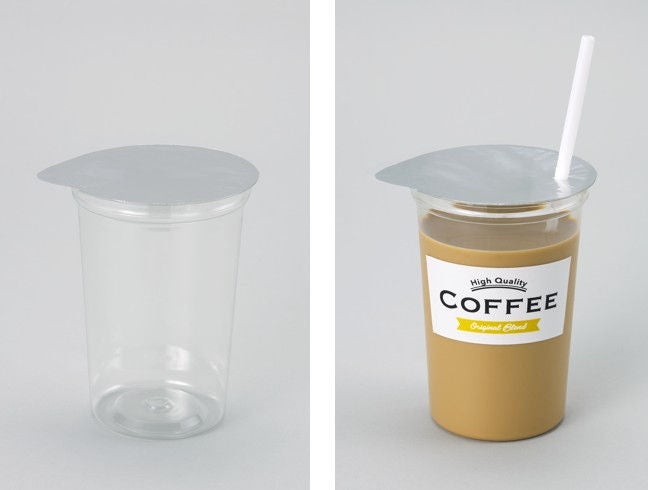
DNP applies its experience in PET bottle design and molding to cup-shaped containers. DNP develops the cup, lid, molding conditions, sterilization process, and filling requirements as an integrated beverage packaging system rather than as separate components.
Potential applications
DNP aseptic PET cups support beverage applications that require longer shelf life, high transparency, or a transition from conventional PP or PS cups.
Potential applications include:
| Application | Examples |
|---|---|
| Dairy beverages | Milk-based drinks, café lattes, yogurt-based drinks, and fermented milk drinks |
| Coffee and tea beverages | Chilled coffee, milk tea, matcha drinks, and ready-to-drink beverages |
| Plant-based beverages | Soy, oat and almond drinks |
| Functional beverages | Nutritional beverages, protein drinks, and health-oriented products |
| Dessert-style beverages | Smoothies, drinkable desserts, and products with visually distinctive colors or textures |
DNP evaluates suitability individually based on pH, viscosity, ingredients, particles, sterilization requirements, filling conditions, target shelf life, and distribution temperature.
Key features of DNP aseptic PET cups
DNP aseptic PET cup solution combines aseptic filling technology, ESL capabilities, rPET, high transparency, and barrier performance to enhance the value of beverage products.
ESL through aseptic filling and barrier design
DNP combines high-barrier PET cup design with aseptic filling technology to help protect beverages from microbial contamination, oxygen, and factors that can affect product quality.
The system can be configured for ESL products distributed under chilled conditions. Longer product life can help reduce disposal losses, improve inventory flexibility, and expand market reach.
The required shelf life depends on the beverage formulation, package structure, filling process, storage temperature, and distribution conditions. Shelf-life performance must therefore be verified by testing the intended product.
Impact resistance and oxygen barrier performance
PET cups can be designed to provide impact resistance against handling, transportation, and retail distribution.
The package structure can also be optimized to provide appropriate barrier performance based on the beverage characteristics and storage conditions.
Additionally, oxygen-barrier performance is up to 25% higher than selected DNP conventional PET cup specifications under defined test conditions. This can help reduce oxidation-related deterioration in product quality and contribute to extending shelf life.
Use of Recycled PET (rPET)
DNP PET cup solution can incorporate rPET according to quality requirements, regulatory requirements, and beverage compatibility.
Using rPET can help reduce the amount of virgin fossil-based plastic used, depending on the recycled-content ratio and product specifications. Longer shelf life can also help reduce product disposal losses.
High transparency that enhances product appeal
PET's high transparency keeps the beverage visible, helping brands communicate its color, texture, and quality directly to consumers.
This visibility can help consumers better understand the product appearance at the point of sale.
Blow molding also offers greater flexibility in cup design, enabling the package to reflect the product concept and brand identity.
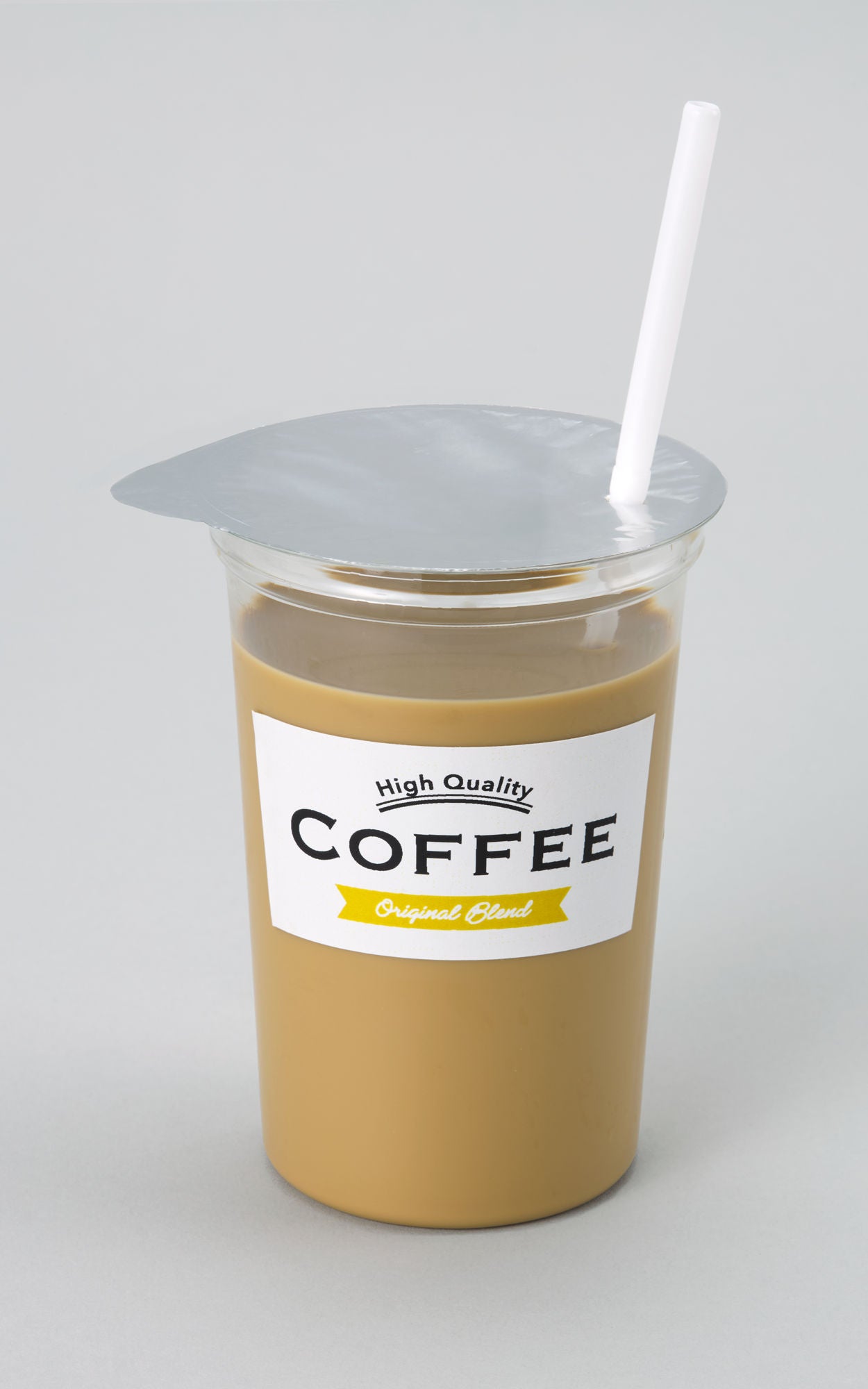
DNP total solution for commercializing aseptic PET cups
DNP provides more than individual package components. DNP helps customers develop the overall system required to commercialize beverages in aseptic PET cups.
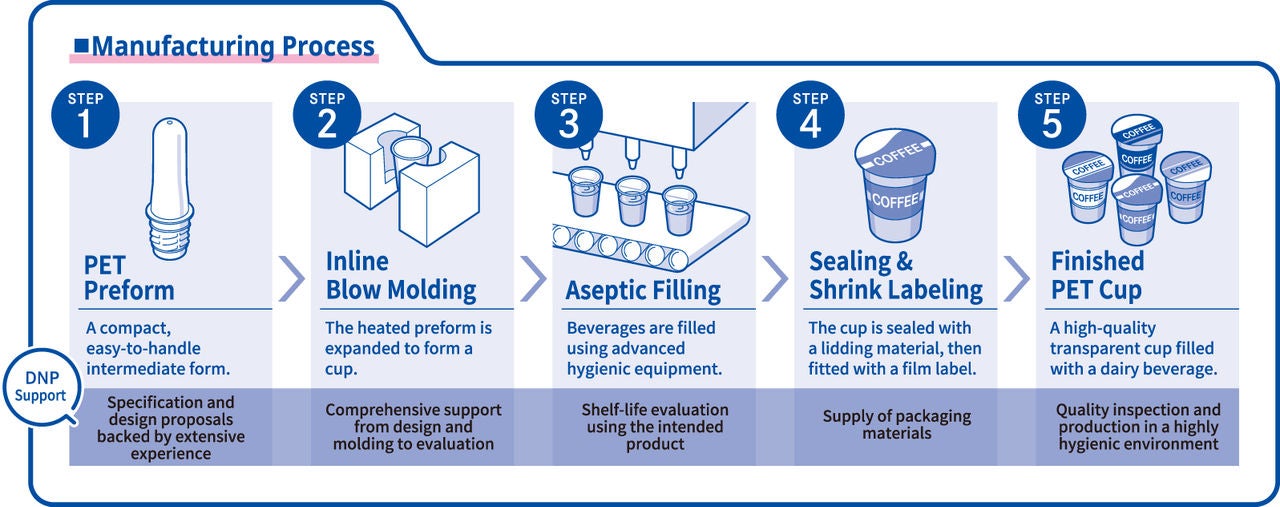
The scope includes package design, preform development, lidding-material design, blow molding, labeling, aseptic-filling equipment, testing, and mass-production start-up. By coordinating package design and aseptic-process design, DNP helps establish a production system suited to the beverage and its distribution requirements.
DNP supplies PET cup preforms, lidding materials, and related blow-molding and aseptic-filling equipment. DNP does not operate as a contract beverage filler.
Custom design based on product concept and beverage requirements
DNP develops the cup and lidding specifications according to the product concept, beverage formulation, fill volume, target shelf life, distribution temperature, sales format, and design requirements.
DNP considers cup shape, material structure, rPET use, barrier properties, impact resistance, sealability, opening performance, and labeling requirements. DNP supports both new product development and the transition from PP or PS cups to PET-based packaging.
For chilled ESL products, the design focuses on achieving the required shelf life under refrigerated conditions.
Integrated support from blow molding to aseptic filling
DNP supports the production process from PET cup preform design and supply through blow molding, labeling, cup sterilization, aseptic filling, lidding, and sealing.
DNP evaluates the cup, lid, molding conditions, sterilization requirements, filling equipment, and line-handling conditions together. This integrated approach helps reduce compatibility issues between package components and equipment and supports stable line operation.
The proposed production configuration can include cup preforms, blow-molding equipment, shrink-labeling equipment, aseptic cup-filling equipment, and easy-peel lidding materials.
Support from prototyping and evaluation to mass production
DNP supports prototype production and evaluation before commercial-scale implementation.
Depending on the product requirements, DNP evaluates shelf-life performance, seal integrity, opening performance, oxygen-barrier properties, drop-impact resistance, molding suitability, filling compatibility, and line conveyance.
Based on the results, DNP adjusts the package specifications and production conditions, then supports equipment implementation, line commissioning, and preparation for stable mass production. A specific shelf-life claim is established only after testing with the intended beverage and its storage conditions.
Challenges addressed by aseptic PET cups
| Customer challenge | How DNP aseptic PET cup solution helps |
|---|---|
| Extending the shelf life of chilled beverages | Aseptic filling and barrier package design help maintain product quality and support ESL distribution under chilled conditions. |
| Reducing unsold products and expiration-related waste | A longer sales period can help reduce food waste and product disposal costs. |
| Improving production and inventory flexibility | A longer product shelf life provides greater flexibility in production scheduling, stock allocation, and shipment planning. |
| Expanding distribution into distant markets | Chilled ESL configurations can provide more time for transportation and sales. |
| Replacing conventional PP or PS cups | PET and recycled PET (rPET) options provide an alternative for businesses considering a transition from conventional PP or PS cups. |
| Improving product visibility at the point of sale | PET's high transparency allows consumers to see the beverage's color, texture, and appearance. |
| Developing both the package and the production system | DNP supports package design, blow molding, aseptic filling equipment, testing, and production-line start-up. |
A longer shelf life can help reduce food waste and disposal costs, improve inventory efficiency, and expand distribution reach.
Frequently asked questions
- Question
What is the difference between aseptic filling and ESL?
- Answer
Aseptic filling refers to a controlled process in which the product, package, and filling environment are sterilized to the required level.
ESL refers to products that remain under chilled distribution but have a longer shelf life than conventional chilled products. DNP PET cup solution supports ESL applications under chilled distribution.
- Question
By how much can shelf life be extended?
- Answer
There is no fixed extension period that applies to all beverages. Shelf life depends on the formulation, package structure, sterilization and filling conditions, storage temperature, and distribution environment. Testing with the intended product is required.
- Question
What does DNP supply?
- Answer
DNP supplies PET cup preforms, lidding materials, and related blow-molding and aseptic-filling equipment. DNP also supports package design, equipment configuration, testing, and production-line start-up.
- Question
Does DNP provide contract beverage filling?
- Answer
No. DNP does not provide contract beverage filling services. DNP supplies package components and equipment and supports customers in establishing their own production system or working with a filling partner.
- Question
Can rPET be used in the cups?
- Answer
Yes. Container designs incorporating rPET can be considered. The standard specification for this product uses 10% recycled PET resin. The final recycled-content ratio and whether rPET can be used are determined and proposed based on factors such as required quality, applicable regulations, and compatibility with the beverage.
- Question
Are PET cups a suitable replacement for PP or PS cups?
- Answer
PET cups are an option when a customer requires high transparency, impact resistance, oxygen barrier performance, rPET use, or aseptic filling compatibility.
They may also provide an alternative for customers considering a transition from conventional PP or PS cups. The suitability of each material depends on the beverage, equipment, distribution requirements, applicable regulations, and local recycling infrastructure.
- Question
What types of beverages can be packaged?
- Answer
Potential applications include dairy beverages, coffee, tea, plant-based beverages, functional beverages, and drinkable desserts. Each product must be evaluated according to its formulation and processing requirements.
- Question
Can DNP customize the cup shape, volume, and lidding materials?
- Answer
Yes. DNP can develop cup shapes, sizes, material structures, barrier specifications, and lidding configurations based on the product concept, beverage characteristics, and manufacturing conditions.
- Question
Does DNP support prototyping, testing, and mass-production start-up?
- Answer
Yes. DNP supports prototyping, shelf-life testing, seal-integrity evaluation, barrier testing, filling compatibility, equipment implementation, line commissioning, and preparation for stable mass production.
For customers considering product development using aseptic PET cups
DNP provides integrated support tailored to the beverage, distribution conditions and target shelf life, from PET cup and lidding-material design to blow molding, aseptic filling, prototyping and evaluation, and mass-production start-up.
Contact DNP to discuss product development or transitioning from PP or PS cups to PET cups.
Please note that inquiries from individual consumers cannot be accepted.