



The Origins of
Ichigaya no Mori (Ichigaya Forest)

A New Urban Forest Born
from Human Hands
Rediscovering
Ichigaya from Every Angle
The Ichigaya district of Tokyo—where Shueisha, the predecessor of Dai Nippon Printing (DNP), opened a factory in 1886—has grown together with the local community for nearly 140 years. In this vibrant subcenter of Tokyo, DNP is working to realize ”sustainable and enriching well‑being", by combining its unique strengths in P&I (Printing & Information) and deepening collaboration with partners to create new value.
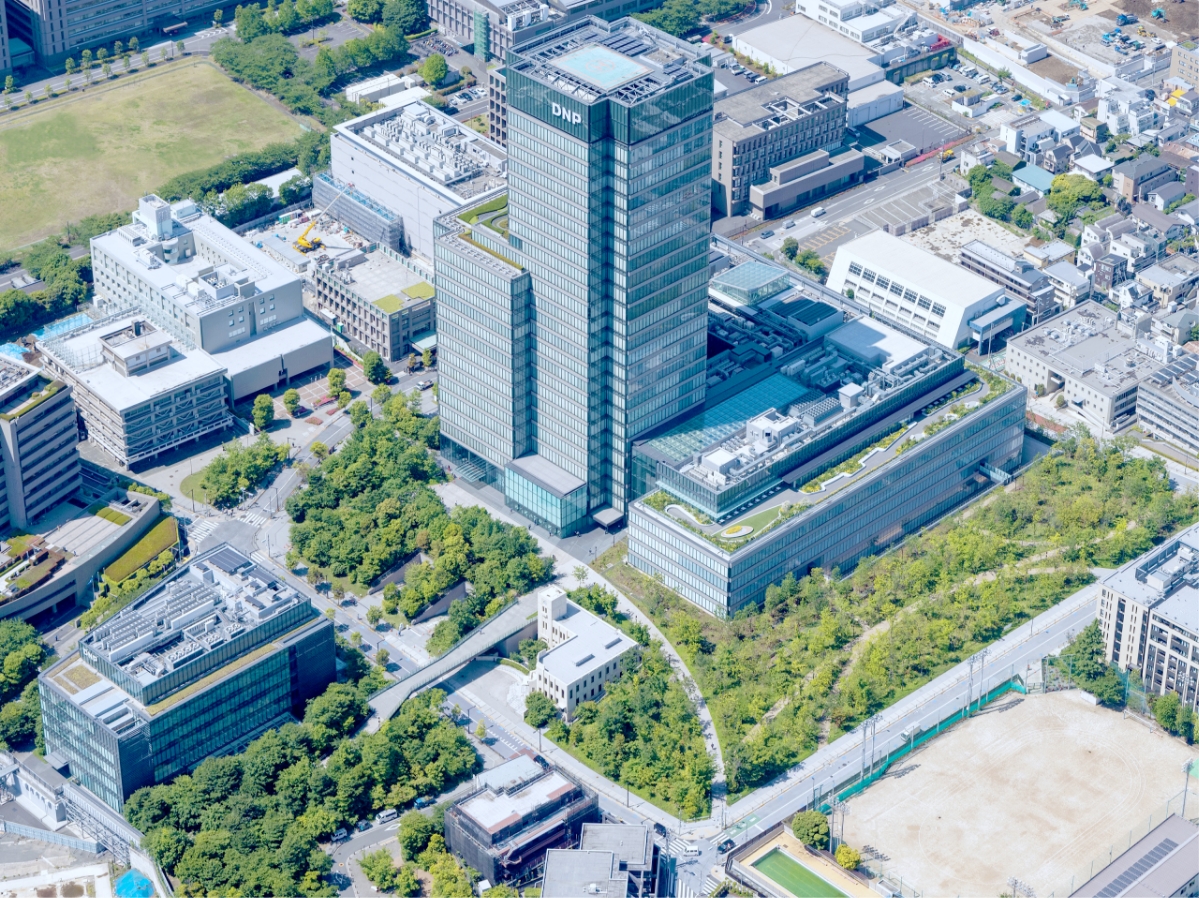
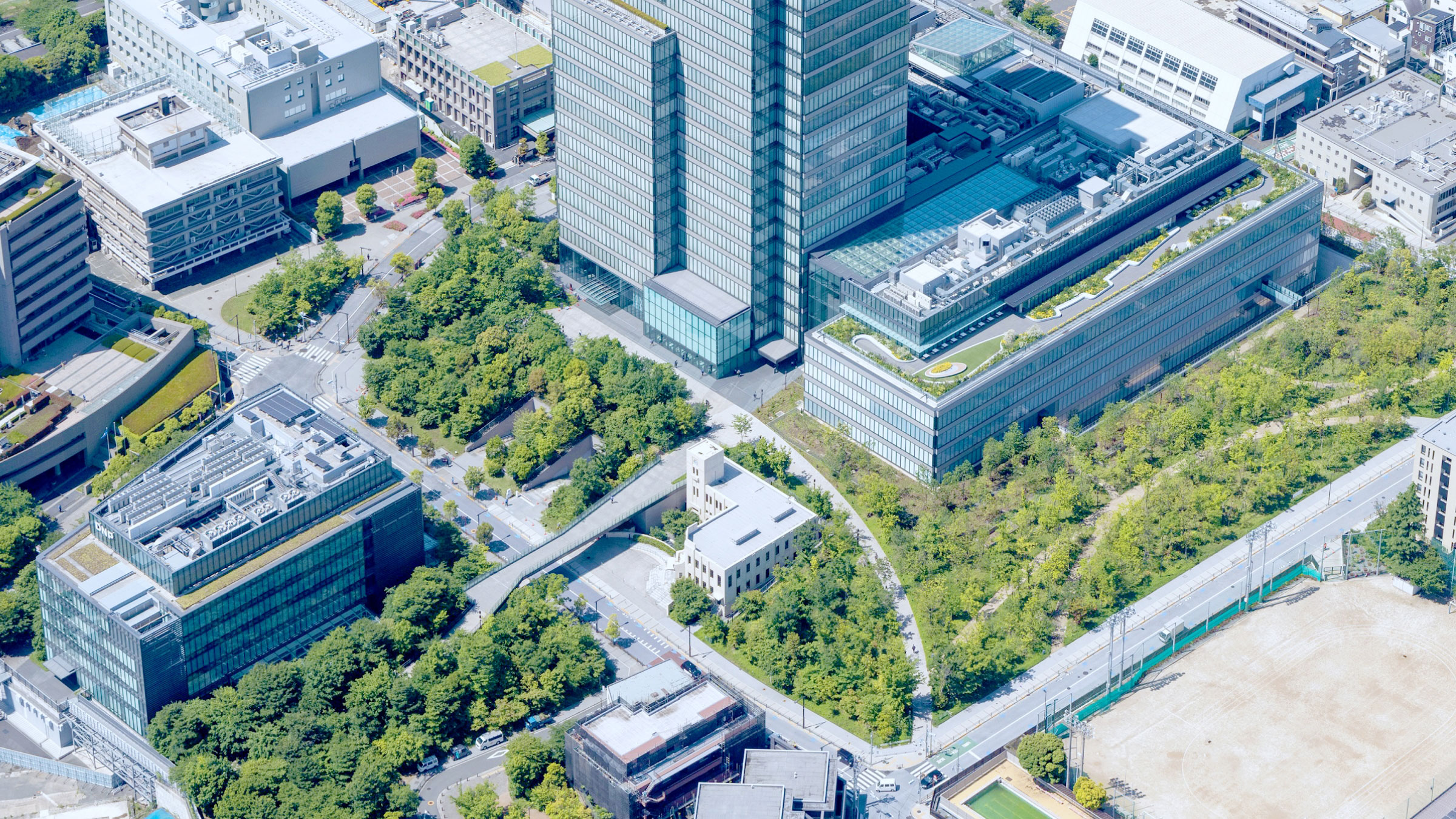
We also remain committed to fostering harmony between people and nature and proactively contributing to local environmental development. Ichigaya no Mori (Ichigaya Forest), a green space that gently surrounds our head office, was created as part of the redevelopment of the Ichigaya district, a core hub for value creation. Professionals in urban development, architecture, and landscape design carefully considered what embodies the character of DNP and the essence of Ichigaya in planning this new type of urban forest.
Located on the eastern edge of the Musashino Plateau, the site draws inspiration from the Musashino woodlands. By planting only native species that originally grew in this area, we aim to recreate a forest that is as close as possible to Ichigaya’s natural environment.
Because the forest is a rare large-scale green space in central Tokyo, we have also been mindful of its impact on the surrounding environment. To ensure the safety and peace of mind of those who live and work here—and to support biodiversity—we manage trees and undergrowth with care. Excessive intervention could undermine the forest’s natural state, so we maintain a thoughtful balance between safety, hygiene, disaster prevention, and ecological preservation.
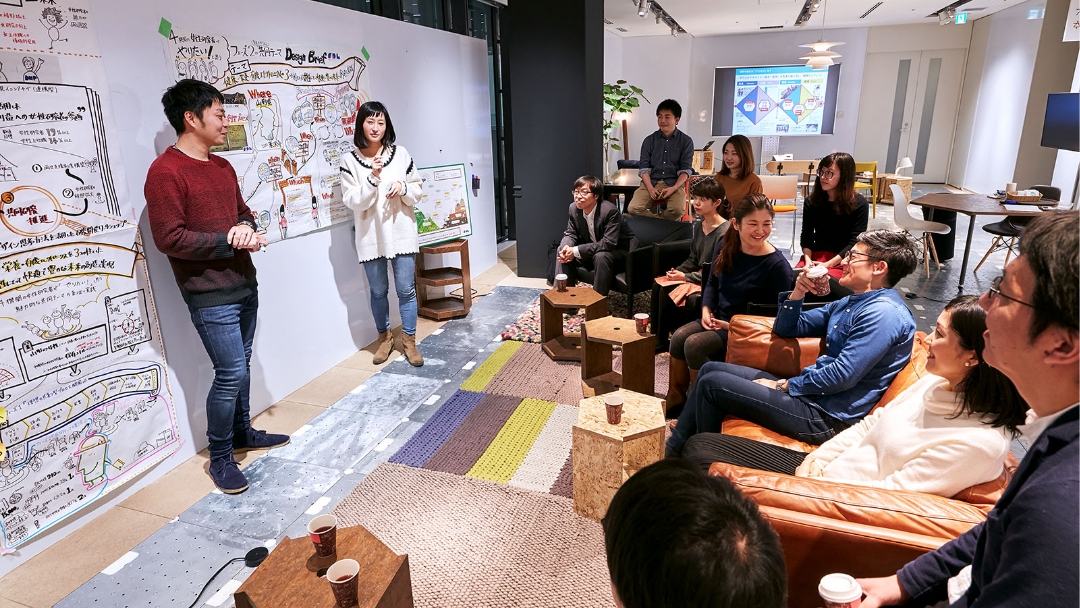
Through redevelopment, we have brought together diverse business functions—including sales, planning, technology, and development—to foster “TAIWA (dialogue) and cooperation”, deepening collaboration with partners and driving further creation of new value. The Ichigaya district is not only a place where our business grows—it is also a place where people and nature co-create.
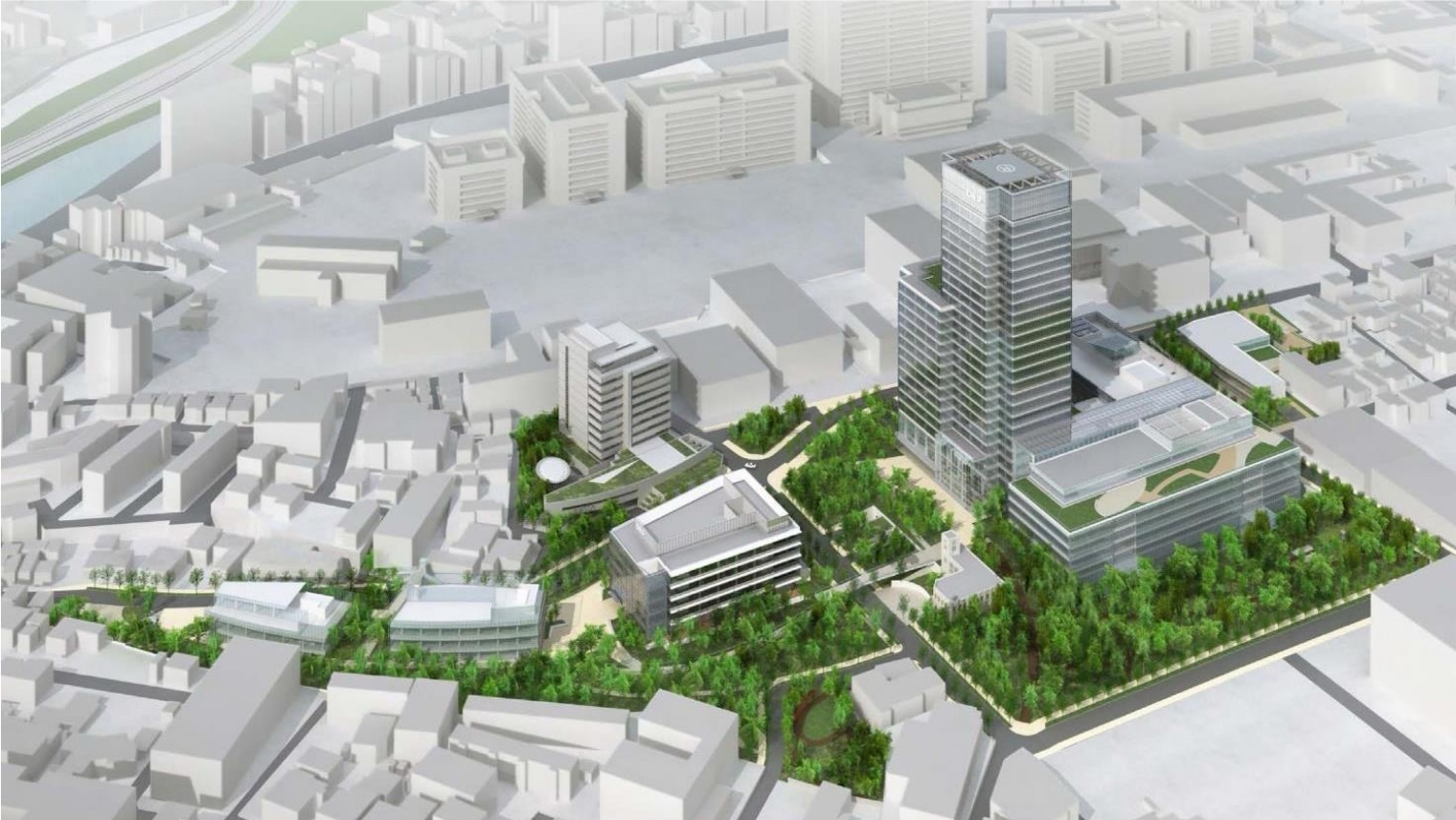
From the master planning stage of the Ichigaya District Redevelopment Project, it was already clear that much of the site would be embraced by lush greenery.
What Defines a
DNP-Style Corporate Green Space?
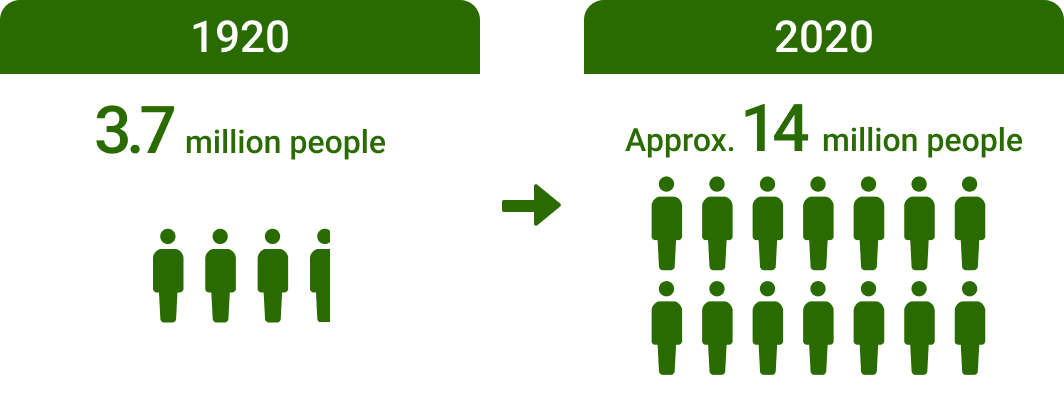
Tokyo’s environment has changed dramatically over the past century. Its population grew from about 3.7 million in 1920 to around 14 million in the 2020 census, while the city’s green coverage rate—defined as the proportion of land covered by forests, farmland, parks, and other greenery—is estimated to have declined by more than 50% over the same period.
Against this backdrop, we conducted extensive research into the area’s topography, natural vegetation, and local history to create a green space truly suited to the Ichigaya district. Drawing inspiration from nearby landscapes such as the Ninomaru Garden of the Imperial Palace, we carefully examined which plants to use and how to arrange them. Our study process included creating scale models and testing mock-ups that featured actual tree plantings to simulate and verify the design.
Through this work, we arrived at the core concept for Ichigaya no Mori (Ichigaya Forest):
“A diverse natural forest centered on bright, welcoming deciduous broad-leaved trees, interwoven with evergreens that evoke a sense of majesty and tranquility.”
The site—once known as Choenji Valley—is characterized by varied terrain. In Ichigaya no Mori, we recreated a natural forest rich in diversity by arranging vegetation according to landforms such as ridges, valleys, and slopes. The forest incorporates a layered structure of tall trees, shrubs, and herbaceous plants, and combines taller and lower herbaceous species to form a dynamic, three-dimensional landscape.
We aim to create an environment that looks a hundred years ahead—one that harmonizes with surrounding green spaces such as Shinjuku Gyoen National Garden and the Imperial Palace—going beyond simple corporate greening to contribute to the wider landscape.
- Population (1920 → 2020)
-
- Green coverage (past 100 years)
-

What Is a Corporate Green Space?
Across Japan, prefectures and municipalities have established ordinances to promote greening and conserve the natural environment.
These ordinances encourage—or in some cases require—the greening of public land, private business sites, and residential areas, with some specifying minimum greening ratios.
They also set forth regulations for the preservation of green spaces, greening agreements, and programs for designating and subsidizing preserved trees.
A corporate green space refers to a nature-oriented area—centered on planted vegetation—that companies develop on their own premises in accordance with these regulations.
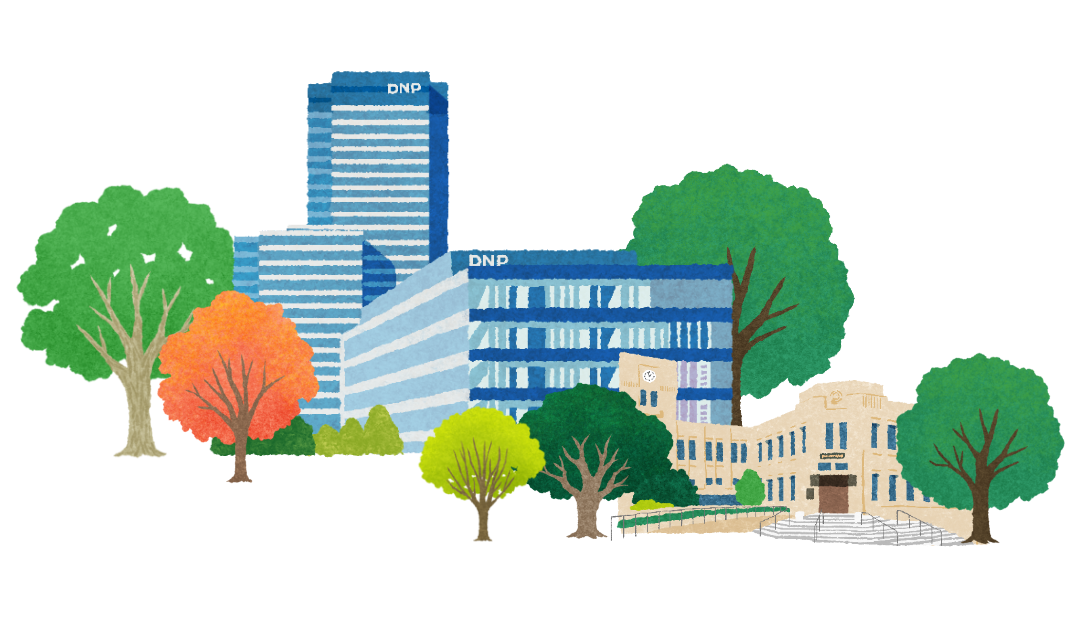
Ichigaya no Mori (Ichigaya Forest):
A Forest Designed with Regeneration,
Circularity, and Purpose at Its Core
Ichigaya no Mori (Ichigaya Forest) was envisioned from the earliest design stages as a project grounded in the principles of regeneration and circularity. Although it is an intentionally created forest, the plan sought to establish a natural cycle in which nutrients accumulate in the soil and trees can grow independently. About half of the forest sits on an engineered platform, yet natural soil—rather than lightweight artificial soil—is used to support this cycle.
A key principle of the forest’s management is returning what the forest produces back into it. Fallen branches are left in loose piles within the green space, while materials collected from walking paths are composted into fertilizer. These practices, carried out by DNP employees, help maintain and reinforce a natural cycle of ecological regeneration.
Ichigaya no Mori also contributes to environmental sustainability as a system in harmony with its surroundings. It serves as green infrastructure by helping to mitigate the urban heat island effect, promoting rainwater infiltration to reduce flood risk, and creating networks that support the movement and habitats of wildlife connecting with neighboring forests and green spaces.
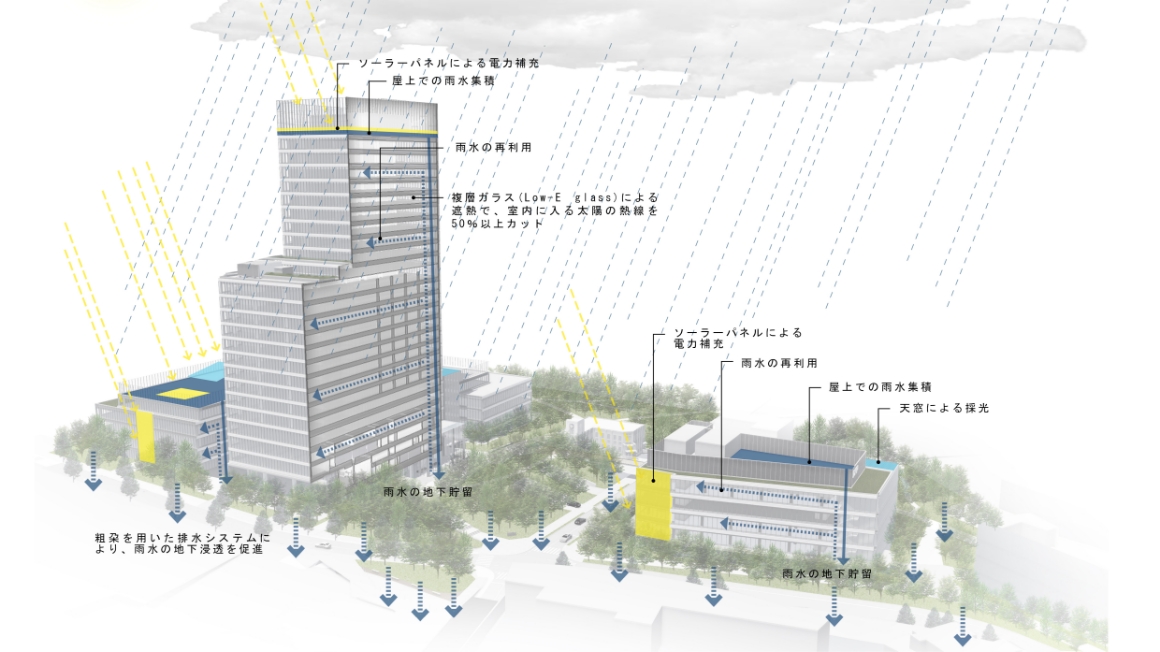
Various eco-friendly systems to reduce carbon dioxide emissions and enhance rainwater infiltration.
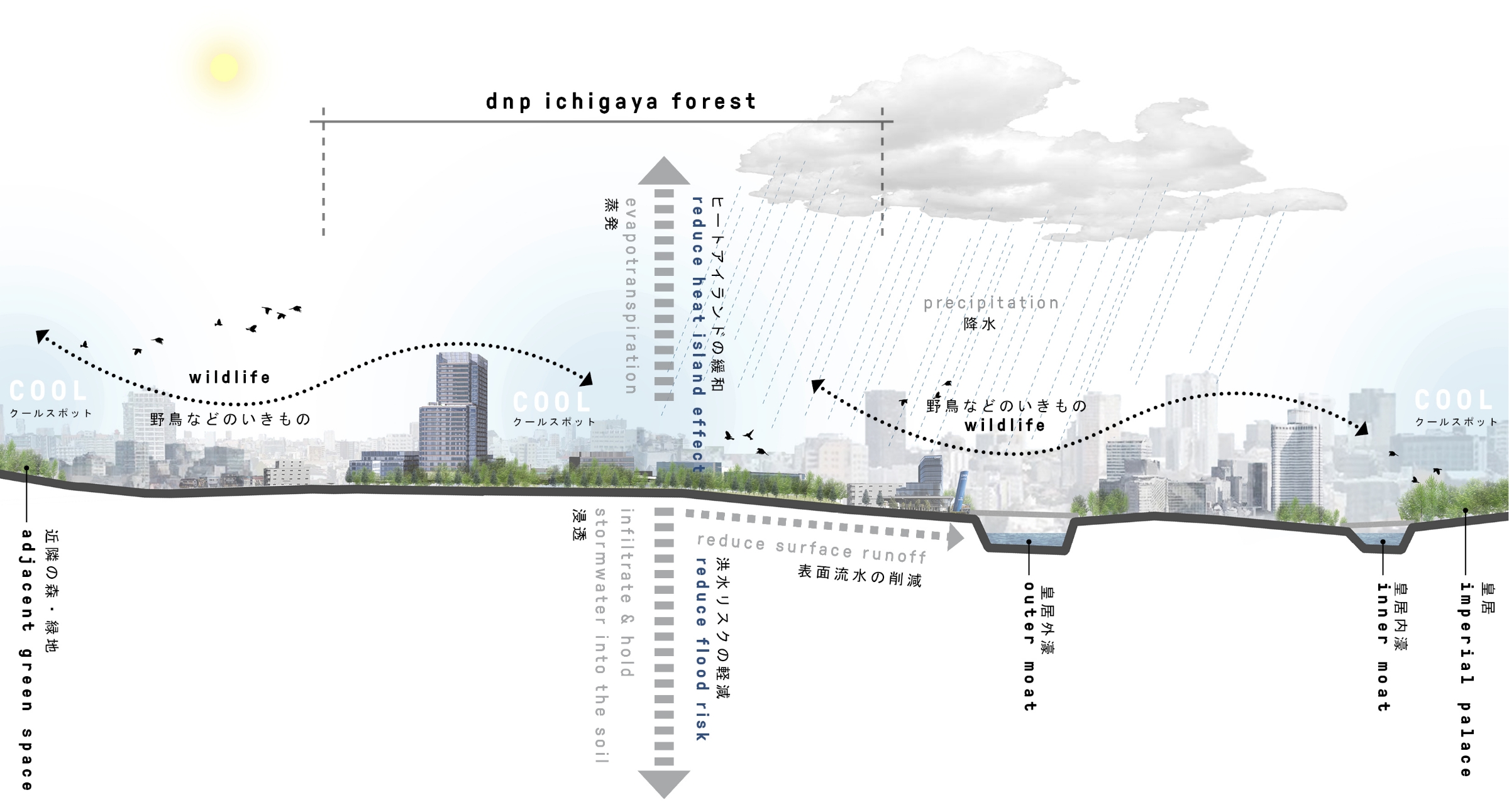
Envisioned as key green infrastructure for the greater Tokyo area, supporting a more attractive and resilient urban environment
Key Priorities at the Initial Planning Stage
Since the first area of Ichigaya no Mori (Ichigaya Forest) was created in 2015, the green space has been expanded in stages. As of March 2024, approximately 15,000 square meters of the planned total area of about 20,000 square meters have been completed. The planning of the project is based on several key priorities.
The first priority is to create a green space that is unique to Ichigaya. Inspired by the Musashino woodlands that once existed in this area, the aim is to form a diverse forest that closely reflects the region’s natural vegetation, using trees and plants native to the area.
Unlike typical landscaping, which sources plants from across Japan, Ichigaya no Mori (Ichigaya Forest) restricts procurement to the eight prefectures of the Kanto region to prevent insects and fungi naturally adhering to root-ball soil from being introduced from outside the region. In practice, DNP sourced more than 20 species of tall trees, over 70 species of shrubs, and native groundcover plants from Tokyo, Chiba, Ibaraki, Tochigi, and Gunma. Moreover, tree specimens were intentionally selected for their natural forms—curved trunks, single‑sided branching, and other natural irregularities—to better reflect the shapes found in natural forests.
The second priority is safety, hygiene, and disaster preparedness. As a green space integrated with the surrounding neighborhood, the project includes sidewalk expansion, maintenance of groundcover, and branch pruning to ensure a comfortable and safe public environment. For example, while considering the natural stratified structure of forests, the project avoids placing foliage at heights that could obstruct visibility.
The third priority is coexistence with the local community. Ichigaya no Mori (Ichigaya Forest) not only improves the working environment for DNP employees but also provides residents with an accessible space where they can experience nature. By absorbing carbon dioxide, mitigating rising temperatures, and conserving biodiversity, the project contributes to sustainability and environmental harmony within an urban setting.
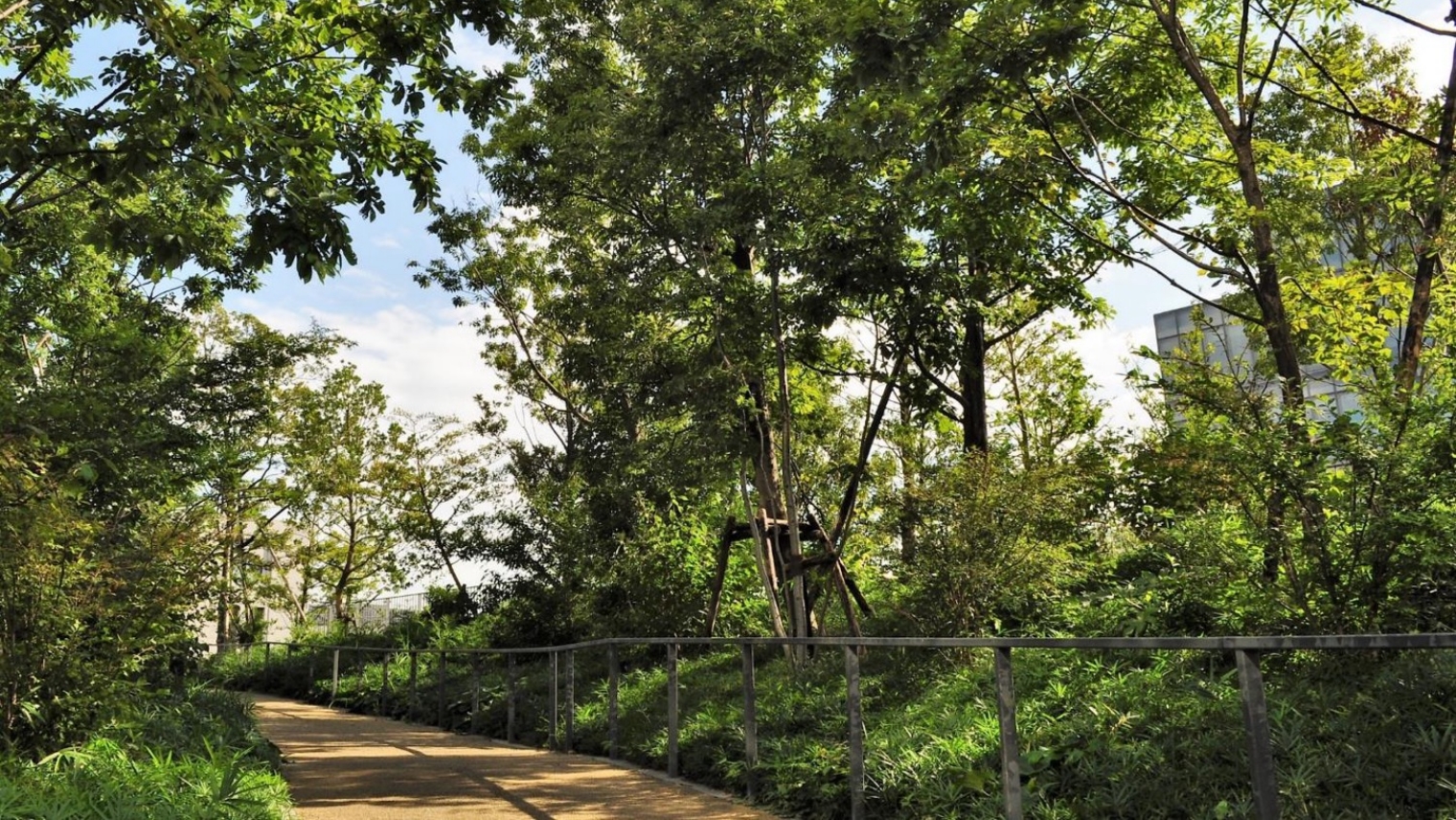
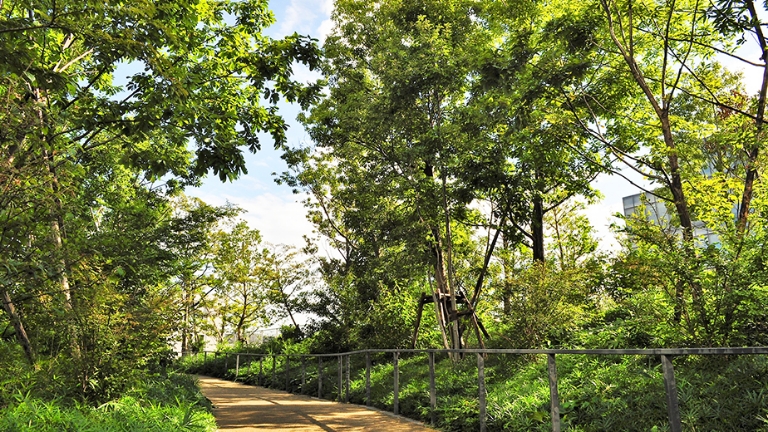
A walkway in Ichigaya no Mori (Ichigaya Forest), inspired by the Musashino woodlands.


Where Diverse People Gather and
“Seeds of New Value”
Begin to Grow
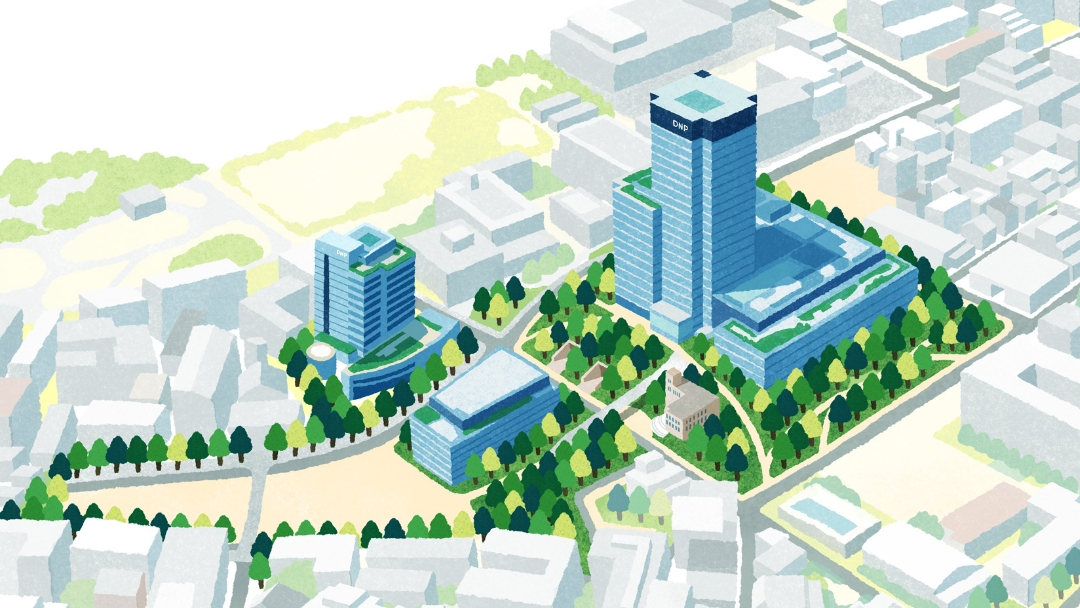


Highlights Map of Ichigaya no Mori (Ichigaya Forest)
Environment/Social/
Governance

DNP releases information such as news releases and videos through its official accounts. Please take a look.