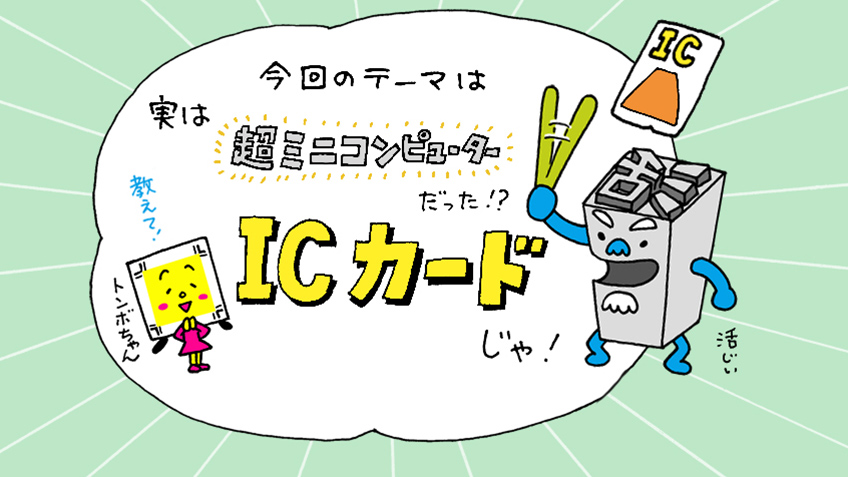
When transportation smart card first appeared 25 years ago in 2001, many people were amazed at how convenient it was to be able to pass through ticket gates with just a tap. Today, smart card are widely used for transportation cards, cash cards, credit cards, smartphone SIM cards, and even government-issued cards such as driver's licenses and My Number cards, making them an indispensable part of our lives. In this article, we will introduce the structure and workings of smart card, as well as their latest features.
Characters

Katsujii... Kinzoku Katsujii is like a living encyclopedia: his career as a movable type spans over 100 years. Here, he shares his extensive knowledge of the DNP Group, teaching all kinds of things with his many years of experience.

Tonbo-chan... A character born from the tonbo register marks* used to align printed materials. She has a meticulous personality, hates anything misaligned, and supports Katsujii with her careful attention to detail.
- Register marks: A printing term for registration in multi-color printing refers to the precise positional accuracy when overlapping color plates. This alignment is achieved using register marks known as "tonbo."
Smart cards are like tiny brains! ― A smart, micro-PC that authenticates with a card reader to help prevent fraud
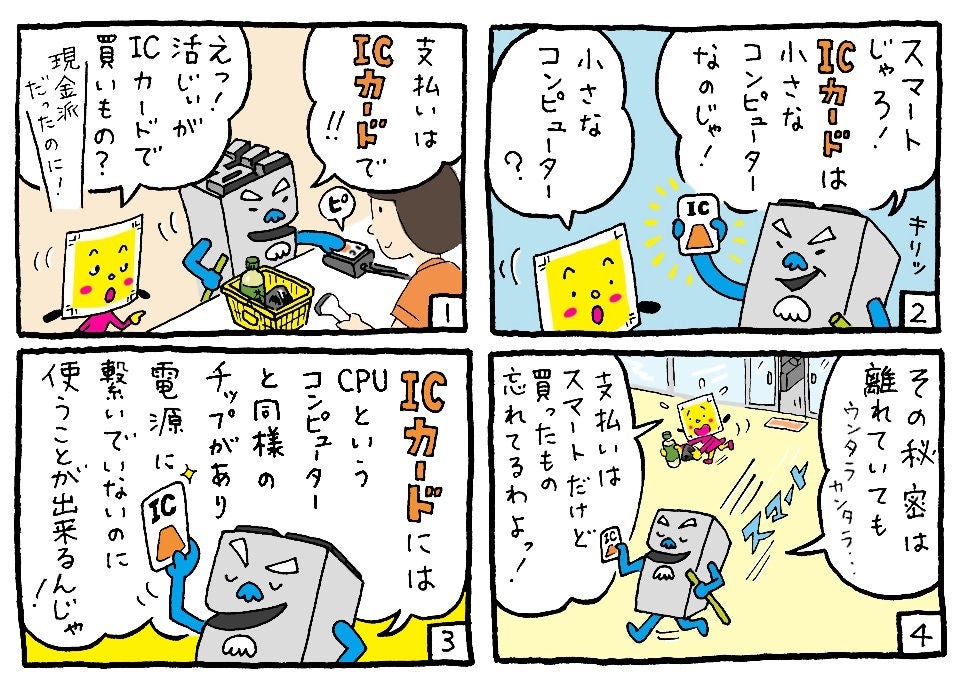
A smart card is embedded with an Integrated Circuit (IC) chip. The chip consists of a central processing unit (CPU, often called the brain of a computer) and memory, giving it a basic structure nearly identical to that of a personal computer. However, because smart cards do not have their own power source, they require a card reader or other external source of electricity to be used.
Black magnetic-striped cards that were standard before smart cards simply read the information recorded on the magnetic stripe with a card reader. Smart cards, however, receive inquiries from the card reader, and the IC chip itself processes information and responds. More specifically, smart cards communicate with the card reader. The IC chip's programming performs operations such as authenticating the reader to verify it is not counterfeit and exchanging data related to card lock features.
Using two or more stacked cards should be avoided; this has to do with how contactless smart cards communicate, which we will discuss later. One reason is that in such cases the reader cannot determine which card it should exchange information with. Another reason is that, as mentioned earlier, smart cards are powered by the card reader, so if multiple cards try to communicate at the same time, there may not be enough power for them to function properly. However, some transportation smart cards are designed to allow multiple smart cards to be used stacked on top of each other.
Smart cards decide how to communicate based on the application ― Three main types: contact, contactless, and dual interface
There are various ways to classify smart cards, but here we will classify them by how they communicate and look at the three most common types of smart cards: contact, contactless, and dual interface.
Contact smart card
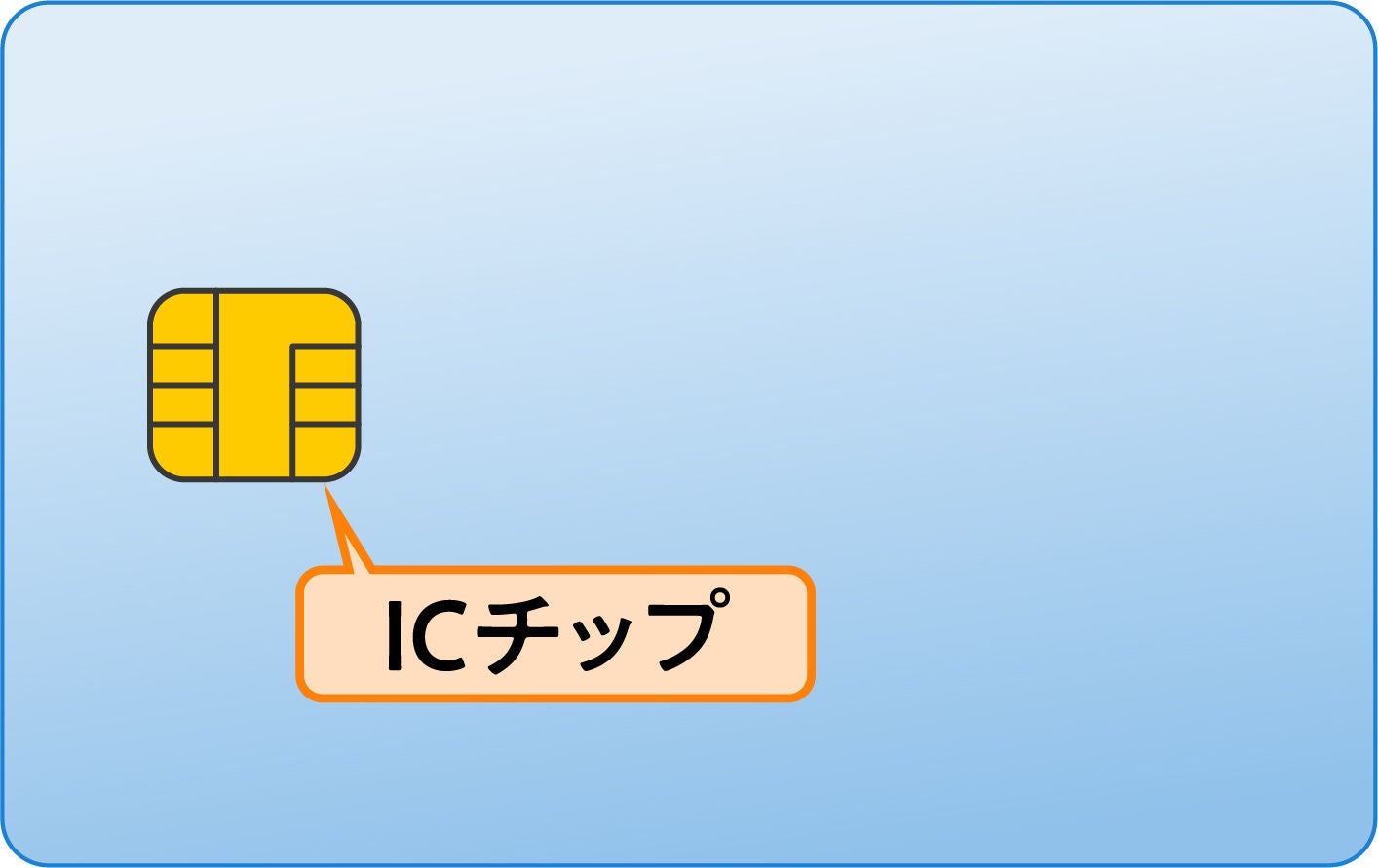
The card reader comes into direct contact with the gold portion of the card with the built-in IC chip, which is often seen on the front. This allows for more stable communication. It is used for cards like ATM cards and credit cards that require stable connections for monetary and similar transactions.
Contactless smart card
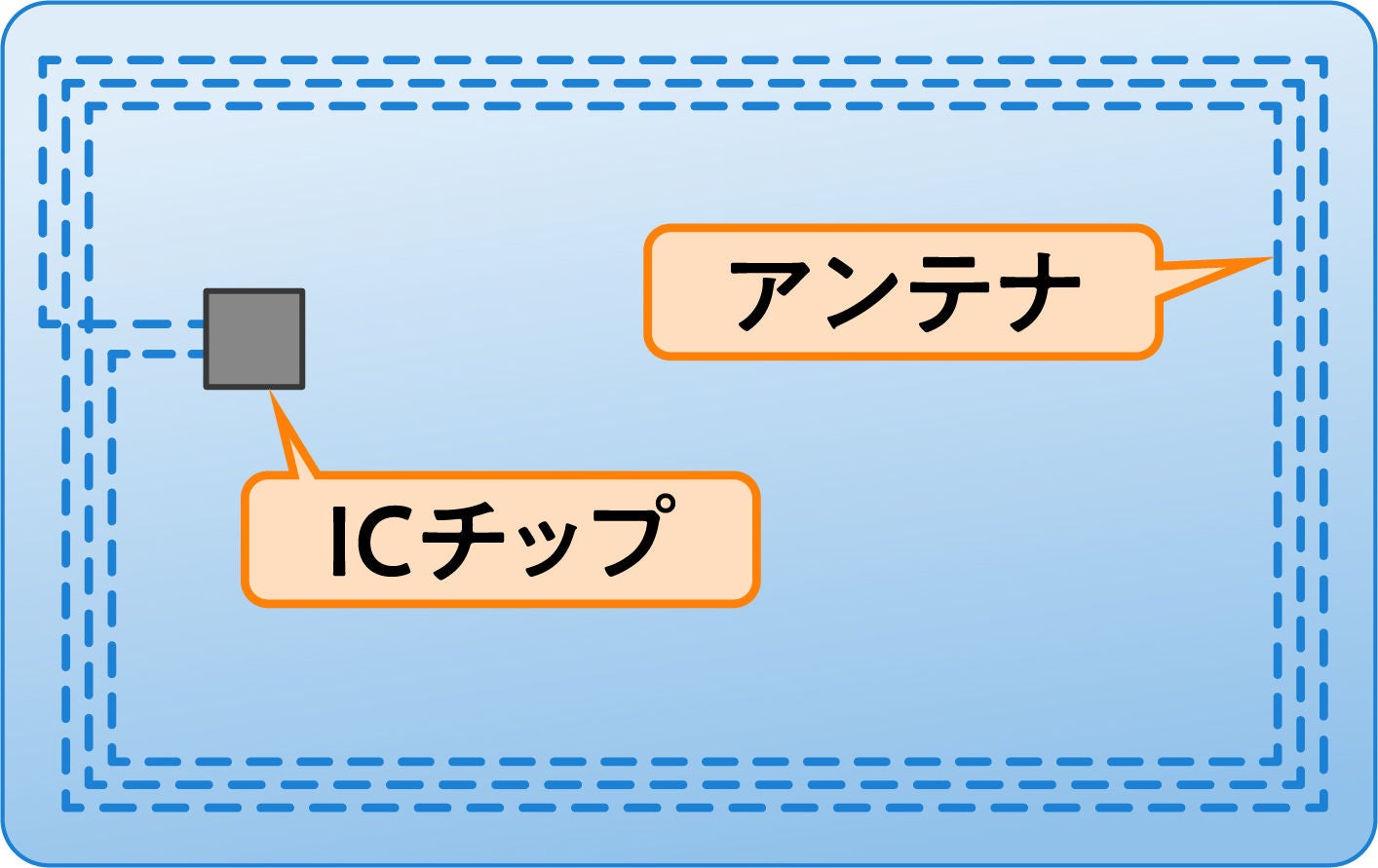
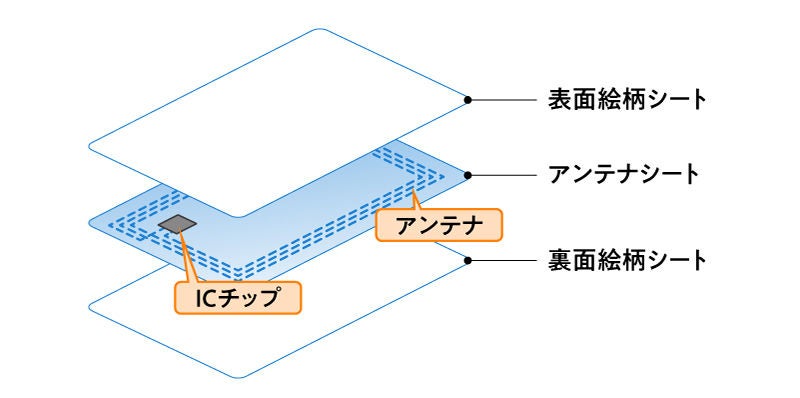
smart card are basically made by bonding together multiple layers. An antenna installed inside the card, along with an IC chip, sends and receives radio waves, allowing communication without the need to directly touch the card reader. They are used in transportation smart card, driver's licenses, and more, and with the recent increase in small-value payments using cards, they are also being used in credit cards and prepaid cards.
Dual interface smart card
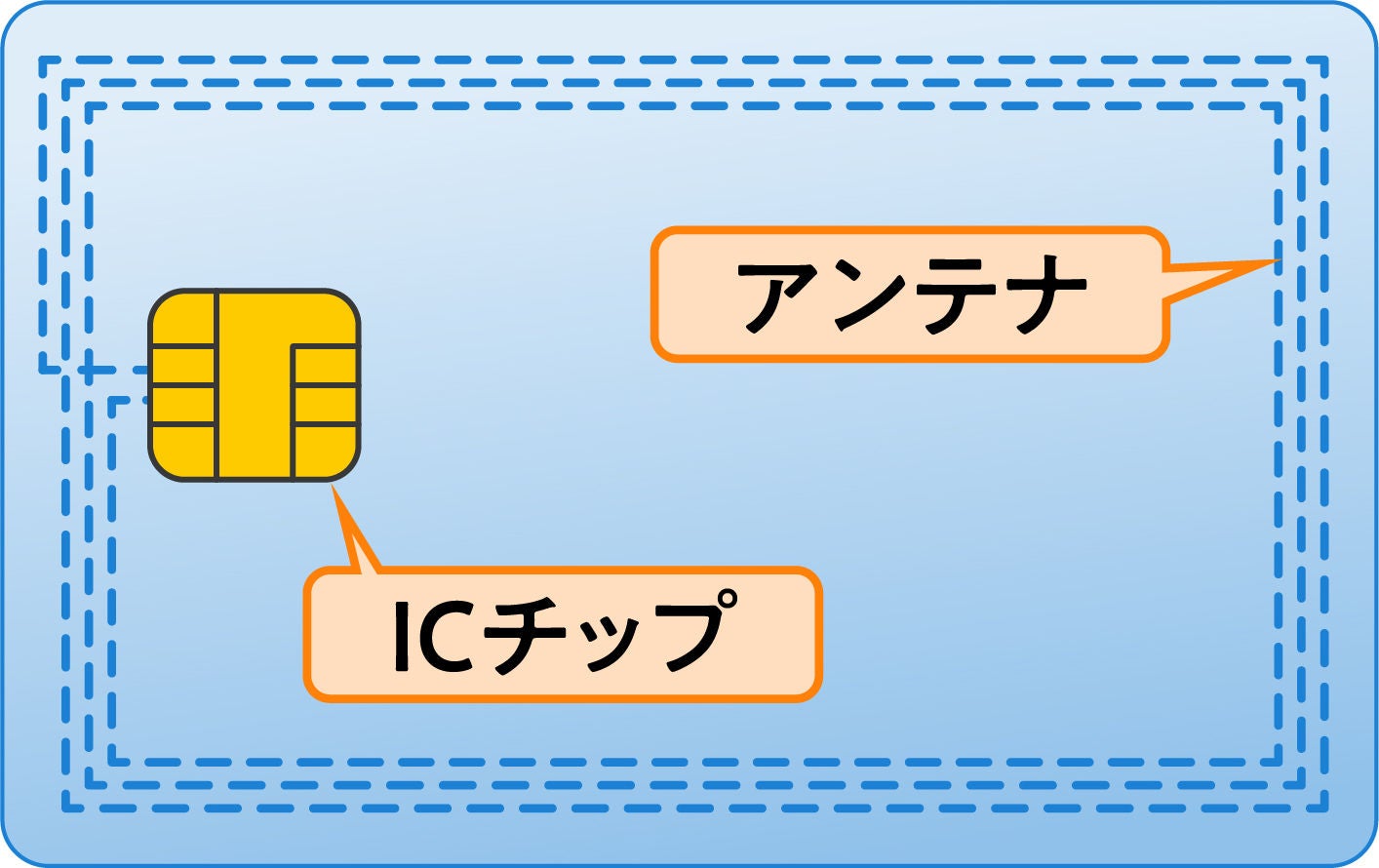
Equipped with both a contact terminal and a contactless antenna, these combine the functionality of both communication methods. This allows features to be added to the card, like enabling a contact credit card to also support contactless payments.
What exactly is going on between a contactless smart card and the card reader?
Let's look at how a typical contactless transportation smart card communicates with a card reader.
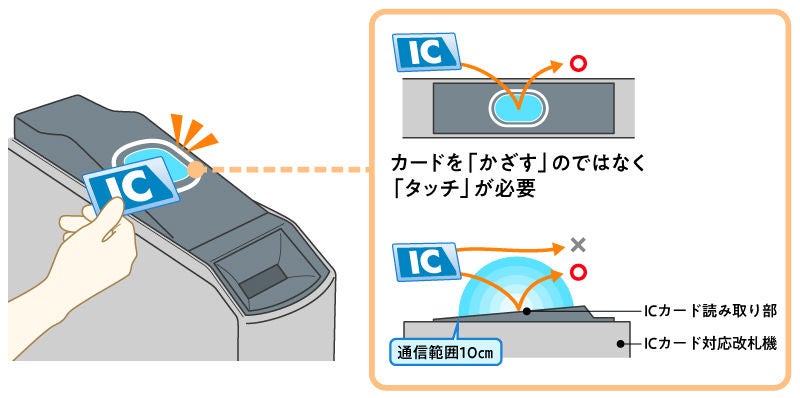
<Communication between a transportation smart card and a ticket gate when entering>
- The ticket gate constantly emits radio waves within a hemispherical area about 10 cm from smart card touch panel, asking, "Do you have a transportation smart card?"
- The moment the transportation smart card comes within range of these radio waves, it receives a charge and starts operating.
- The transportation smart card and the ticket gate exchange information, confirming they are each authentic.
- The ticket gate writes information such as "Boarding from XX Station" onto the smart card and allows entry.
Contactless transportation smart cards can be communicated with by simply holding them over the reader. However, prompting an actual tap creates a brief interval between the card's initial detection and its steady positioning, which allows the data exchange to take place.
Fingerprint authentication included! - DNP's strengths drive the evolution of future smart card-
There are many different types of smart cards, and more advanced types are now available, including cards with fingerprint authentication feature.
A smart card with fingerprint authentication developed by DNP in 2021 integrates a fingerprint sensor into a widely used contactless FeliCa smart card. The card owner's pre-registered fingerprint data is stored on the card. When it is used, the sensor reads the user's fingerprint, compares it with the stored data, and only communicates with the card reader if they match.
Smart cards have long been used for security purposes, similar to card keys. However, they cannot identify the user, making it possible for unauthorized users to use them. A smart card with fingerprint authentication, on the other hand, can only be used by its owner, providing extremely high levels of security. Fingerprint-authenticating smart cards will likely be used for applications like cards holding large amounts of electronic money and employee ID cards that control access to company premises.
Even with the addition of new functions such as fingerprint authentication, the card thickness must remain within the approximately 0.8mm specified by international standards. Contactless smart card are made up of multiple layers, including the IC chip and antenna, but precisely because DNP holds the top share of the domestic smart card, it has been able to use the design technology it has cultivated over many years to successfully add fingerprint authentication functionality without changing the card's thickness.
DNP's unique strength lies in its technological development capabilities, enabling it to build IC chip software from scratch. Another one is its manufacturing expertise, which allows it to create smart cards from diverse materials that meet strict requirements for shape, durability, and more. Together, these capabilities enable DNP to produce a wide variety of smart cards.
Recently, as the Japanese government has been promoting cashless payments, transactions using smartphones are on the rise. However, high-security smart cards, which can be used with simple actions such as inserting the card into a card reader or with just a tap, remain even more familiar to people in Japan. These cards are easy to use for people of all ages, making them universally valued. As various applications expand to include payments, identity verification, and membership cards, DNP will continue to develop advanced features that will create future standards.

Nowadays, with just a smart card, you can do everything from shopping to completing government paperwork... Now that's convenient.

That's right, smart cards are hard at work supporting life day-to-day. They may look like an ordinary card, but inside, they're packed with cutting-edge technology.
- Please note that the information contained in this story was accurate as of the publication date.
更新日:2025年11月20日
First published: May 27, 2021 by DNP Features Editorial Department