
DNP's Basic Technologies
Since our founding, DNP has developed a wide range of technologies cultivated through our commitment to providing products and services that meet society's needs. By integrating DNP’s unique printing process technologies with the latest innovations, we continuously evolve and enhance our core technologies through a sophisticated synergy of expertise.
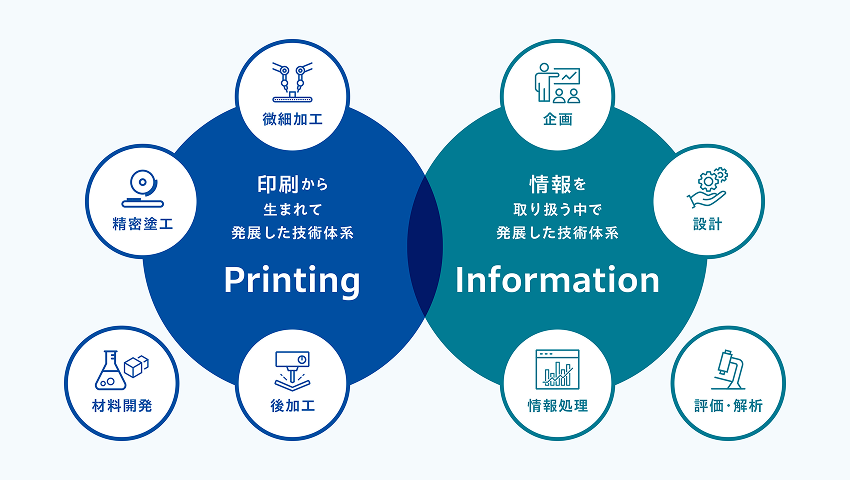
Information Technology
Project Planning
The technology to define what to create and why—and to drive projects forward through dialogue.
Book printing process example
Project Planning
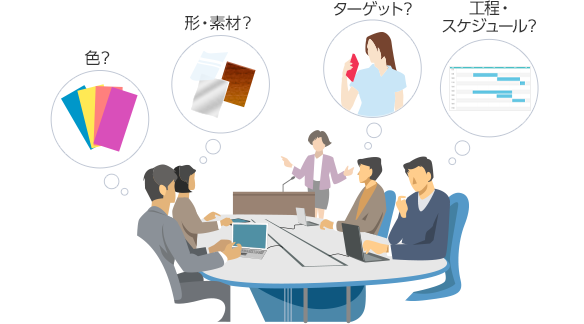
Based on the content and target audience, we calculate the number of colors, printing format, paper type and thickness, printing method, production line, schedule, and costs. We then recommend the most efficient approach and prepare the necessary manuscript and materials for submission.
The technology used in this printing process

Publishing solutions
We can select the most suitable content from all media, including paper, digital, and online, and propose effective methods of expression, such as still images, videos, CG, and AR/VR.
Branding design
We research companies and products to assess management strengths and weaknesses, and recommend optimal strategies for improvement.

Sales promotion
We manage every stage of the process, from marketing research and planning to production, delivery, and measurement of promotional tool effectiveness. This approach ensures comprehensive design and execution.
Design
Technology for robust and precise design to realize how things are made.
Book printing process example
Design
This process, called book design, is divided into two parts: the main text and the cover. It concretizes the book concept developed during the planning stage, including the book’s size, cover type, main text font, and number of pages.

The technology used in this printing process
Package design
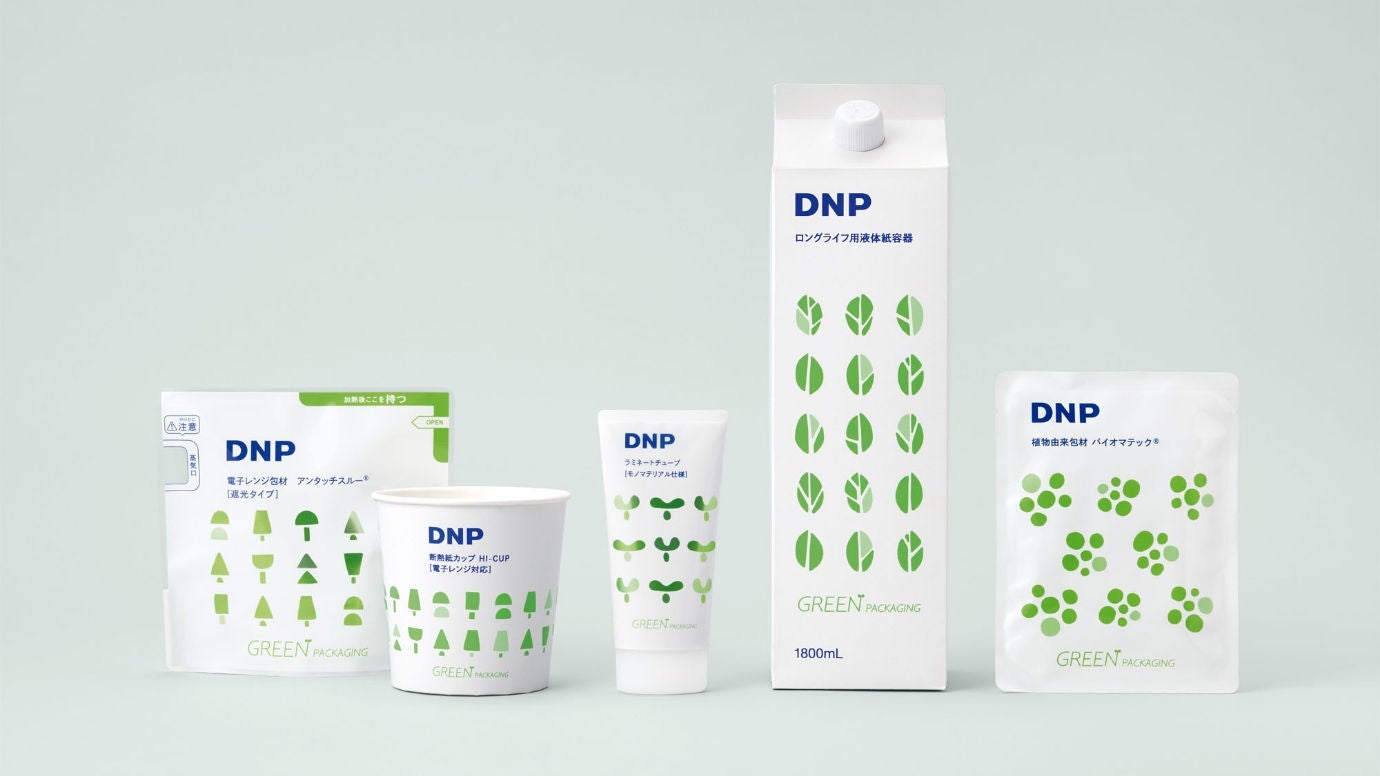
With a commitment to user well-being, product integrity, and environmental sustainability we engage in research and development, product planning and design, and application development related to packaging.
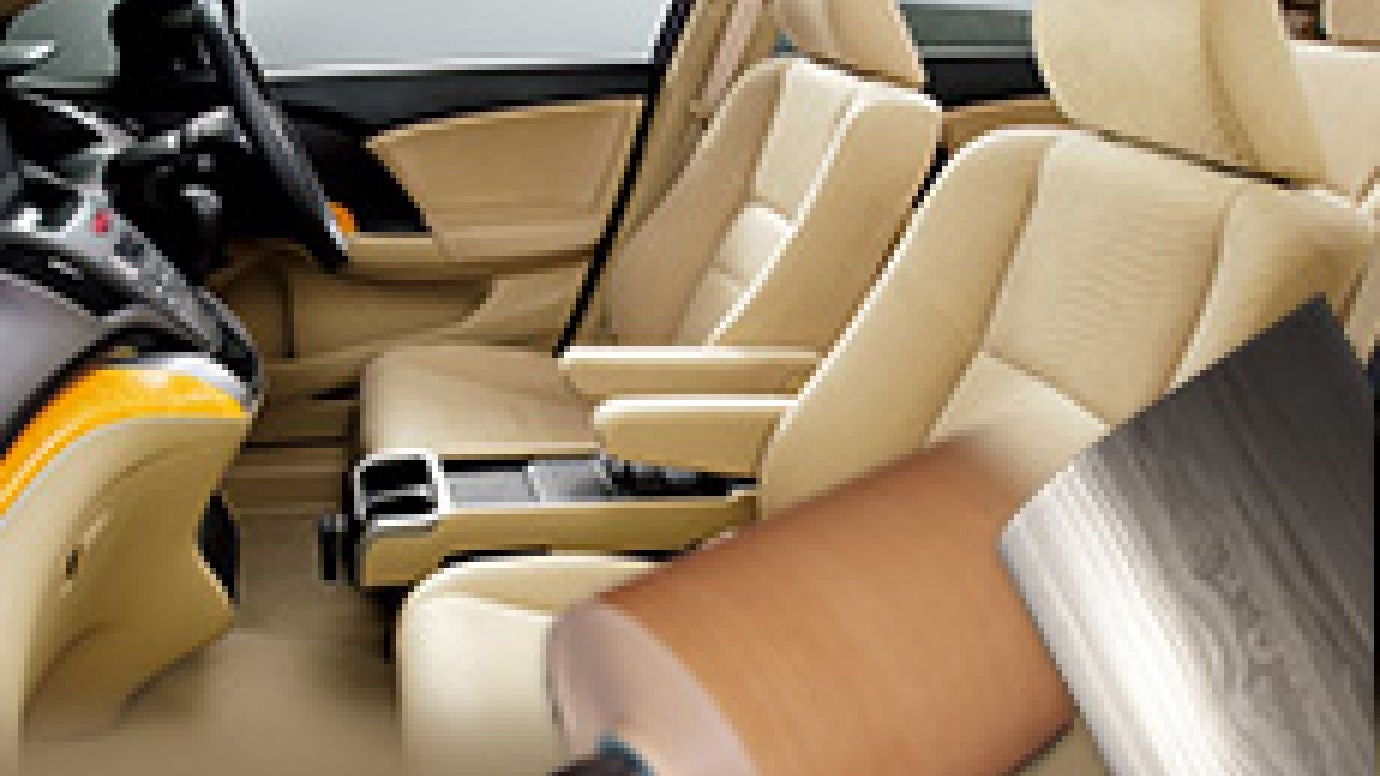
Living space design
With a track record of manufacturing interior and exterior materials for homes, offices, medical facilities, automobiles, and trains, we have expanded into a variety of products and services for creating comfortable spaces.
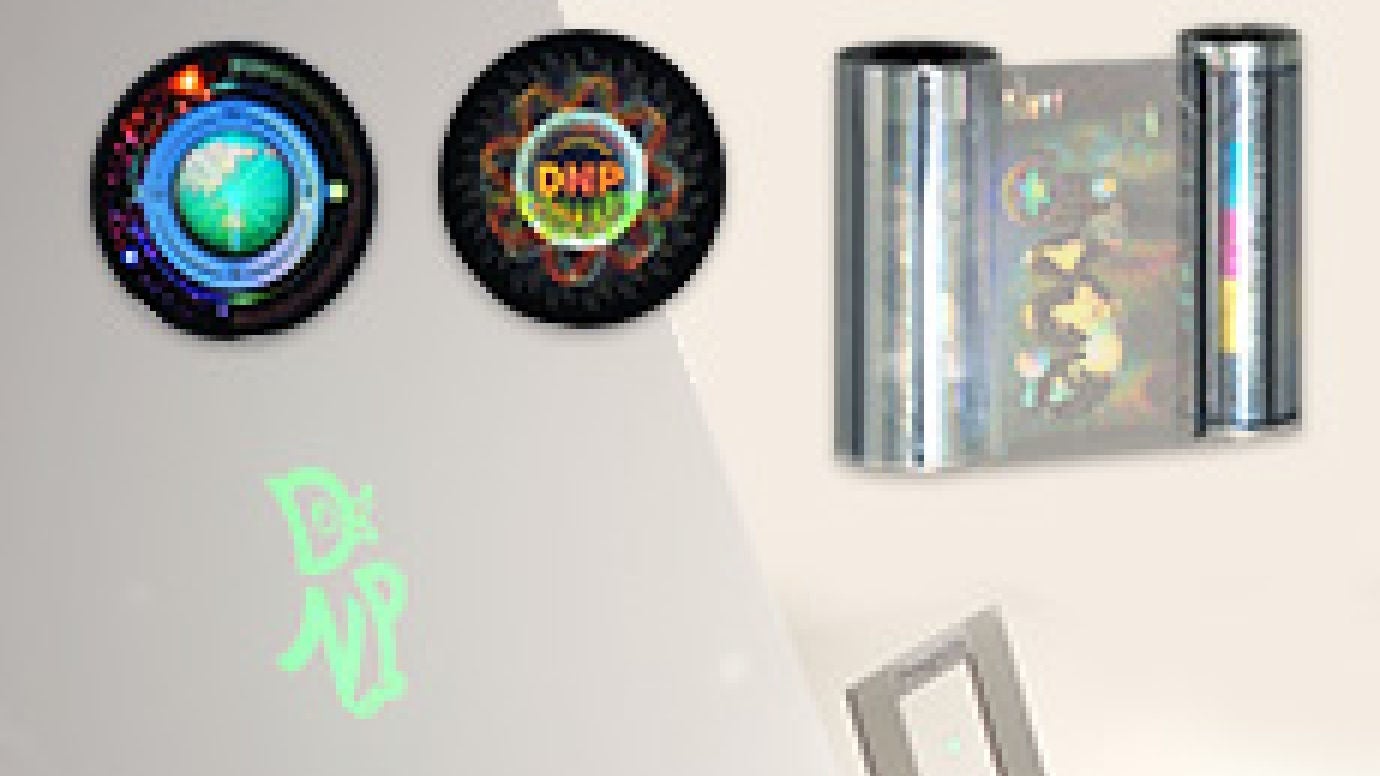
Optical design
A technology that precisely controls the direction and color of light to bring out a product’s functionality. It controls the surface shape and layer structure of a product, including manufacturing variations, at the micrometer and nanometer scale.
Information processing
Technology that safely collects, organizes, analyzes, and processes all kinds of information to create new value and ways of using it.
Book printing process example
Process information
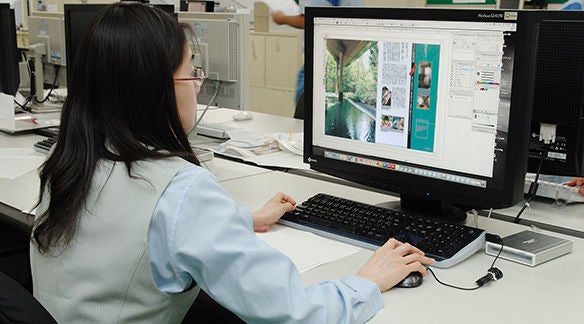
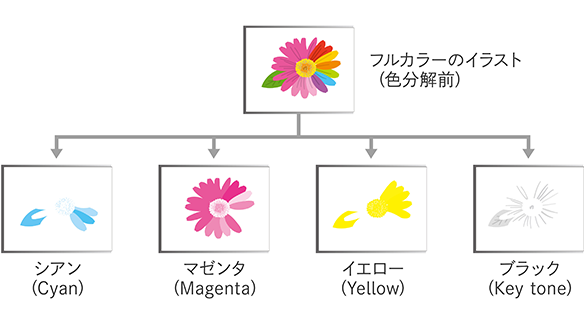
This stage involves organizing text and photo materials, designing layouts, and performing editing tasks. It also includes image processing, such as adjusting photo and illustration colors or removing unnecessary elements. Preparatory work before printing, such as separating the manuscript into the four colors cyan, magenta, yellow, and black, is performed at this stage, which is also referred to as the prepress stage.
Printing Technology
Microfabrication
A technology that applies high-precision, detailed processing to base materials such as metal, glass, and resin to impart the effects and functions necessary to achieve a desired goal.
Book printing process example
Making printing plates and press plates
With the progress of digitalization, direct output printing has become one available method. However, for high-volume printing, creating printing plates to be set on the press remains essential. These plates vary depending on the specific printing method. While the use of workstations for direct plate output has become commonplace, the traditional process of creating a film intermediate to produce a plate is generally referred to as platemaking.
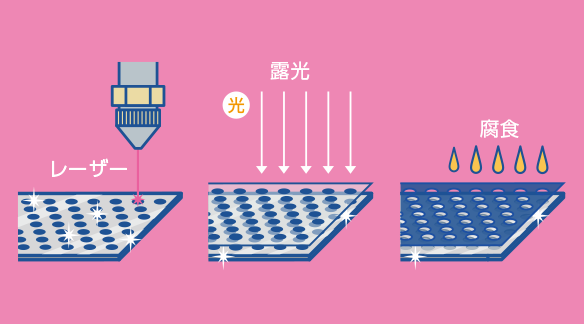 Etching-based gravure platemaking
Precision coating
A technology that forms a single or multi-layer coating of various materials uniformly and evenly on the surface of substrates such as paper, resin, metal, and glass.
Book printing process example
Ink is applied to the printing plate and spread thinly and evenly onto paper or film. Printing methods include letterpress printing, lithographic printing (offset printing), intaglio printing (gravure printing), as well as stencil printing (silk printing) and digital printing (direct output), and each method requires a different printing plate.
Main printing methods
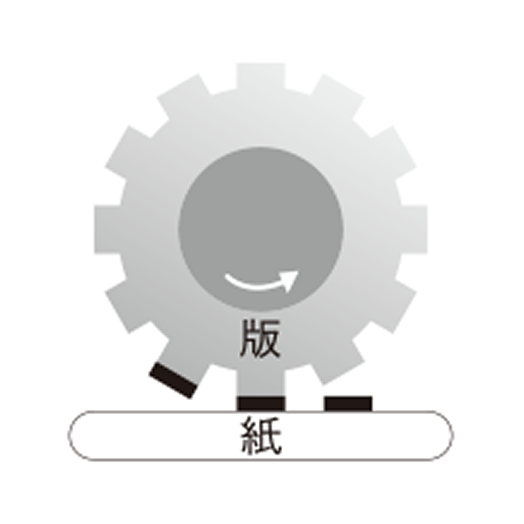
Letterpress printing
Ink is applied to the raised areas of the plate and printed directly. This method is mainly used for books and comic magazines.

Offset printing
Taking advantage of the repulsive properties of water and oil, oil-based ink is first transferred to a rubber blanket and then indirectly printed. It is mainly used for color printing of magazines, posters, etc.

Gravure printing
Ink is applied to the recessed areas of the plate, and a blade is used to scrape off the ink from areas other than the text or image you want to print. Pressure is applied to print the ink remaining in the recessed areas directly onto paper or other materials. This method is primarily suitable for printing photographs, as it produces fine tonal gradations such as shading.
Post-processing
Technology that achieves the necessary safety, durability, and convenience according to the product's usage environment and purpose.
Book printing process example
Binding and finishing
Large sheets printed with multiple pages are folded and gathered in the correct order for binding. After binding, the edges are trimmed to their final size. In the case of hardcover, which often features more elaborate cover designs, the interior pages are sometimes trimmed before the cover is wrapped around them. Finally, the product is finished in a functional form tailored to its intended use.
Printed sheets are stacked and bound together to form a book
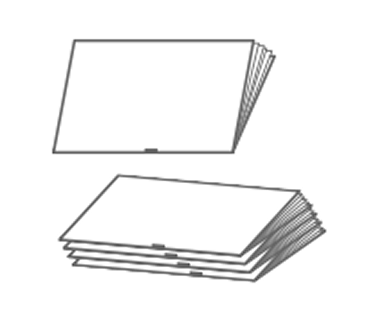
Folding and collating
The printed paper is folded and gathered into the correct sequence.
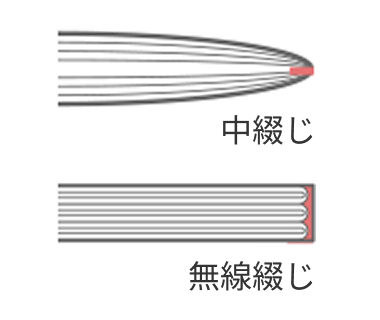
Binding
The collated sections are bound and fitted with a cover.
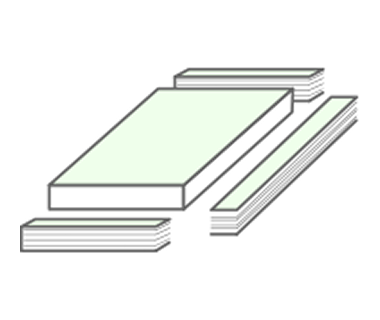
Cutting
Three sides are precisely cut to the final dimensions.
Material development, evaluation, and analysis
Materials development
A technology for synthesizing or dispersing and mixing new materials, and for designing and manufacturing inks, adhesives, photosensitive materials, coating materials, etc.
The technology used in this printing process
Colorants and photosensitive materials
Materials for expressing color and for recording images and shadows created by light. They are processed with high precision so that they can be used in photolithography, which requires precision on the micron level.
Polymer materials
Polymer materials, such as plastics and fibers, are among the materials that play an important role in our daily lives, along with inorganic materials such as metals and ceramics.
Organic synthesis technology
This technology synthesizes organic materials to make them suitable for various products. We manufacture functional coating materials, photoresists for cutting-edge photomasks, and active pharmaceutical ingredients for pharmaceuticals.
Dispersion and compounding technology
This is an important technology that influences the performance of materials. We design the composition of raw materials to ensure the materials' functions perform at their best and to maintain consistent quality by dispersing the materials evenly and uniformly.
Evaluation and analysis
This technology is essential for product assurance of electronic components, which require nano-level precision, and for defect repair to increase yields.
The technology used in this printing process
Analytical design
We design optimized evaluation methods, analytical instruments, and processing systems. The key to success lies in our ability to deliver results both rapidly and accurately.
Analytical technology
This technology leverages advanced, state-of-the-art analytical instruments to analyze component structures and related characteristics. To support these capabilities, DNP has established large-scale evaluation and analysis centers.
Simulation technology
This technology creates a database and analyzes the behavior of materials and airflow on production lines based on specific objectives, and predicts the results of line operation, as well as the performance and quality of products and materials. This allows for the optimization of high-quality material designs and the design of efficient and stable production lines.
Database analysis technology
By cross-referencing data from various analytical instruments with our analysis database, we can identify product defects and other issues with high precision in a short timeframe.
Related pages
We will introduce examples of research and development that combine fundamental technologies and involve collaboration with many partners.