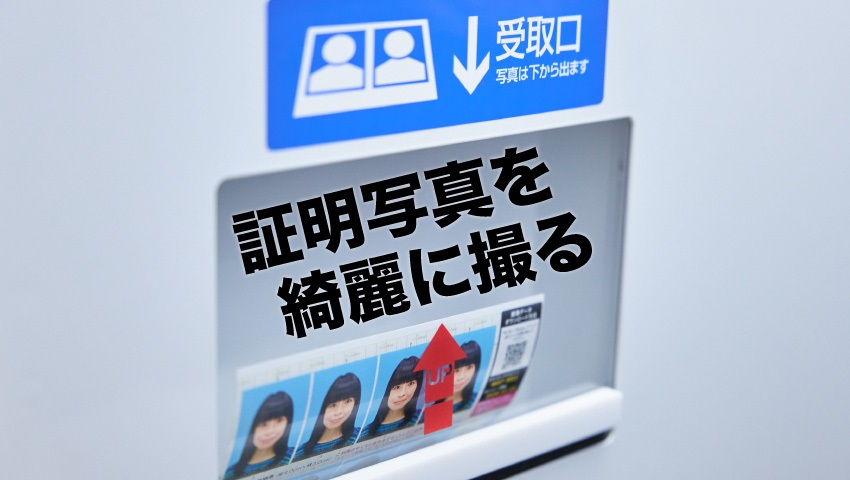
We live in an age when it is common to enhance, correct, or process photos using smartphone apps. While ID photo booths fulfill their primary function of taking photos for IDs, they can also improve how faces appear through photographic techniques and image correction features. Why do ID photo booths feature "technology to take great photos," and what kind of trial and error do developers go through to do this? Here, two specialists uncover the secrets: Yuka Kubo, Ph.D. a media environmentalist who studies the cultural and technological concept of enhancement in visual communication, and a developer of the DNP ID photo booth services in Japan!
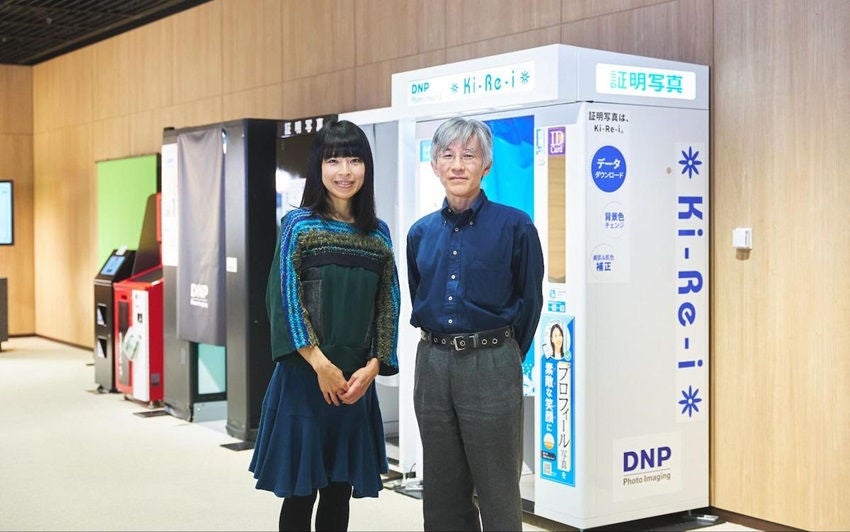
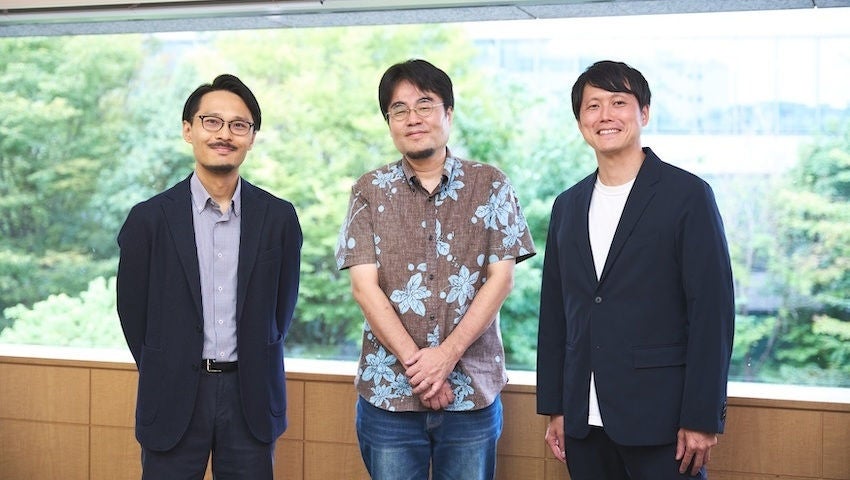
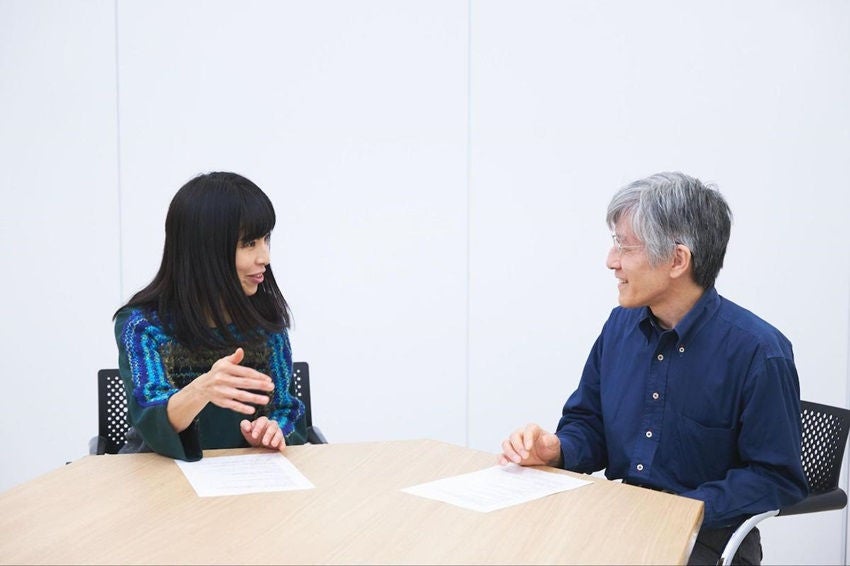
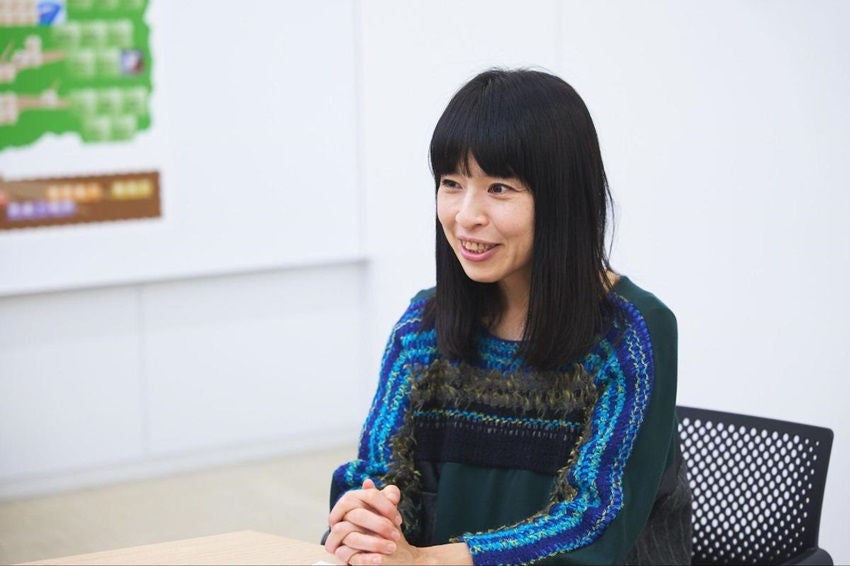
Left: Yuka Kubo, Ph.D.
Media environment scholar. Born in Tokyo in 1978. Graduated from the Department of System Design Engineering, Faculty of Science and Technology, Keio University. Completed a Ph.D. in Environmental Studies at the University of Tokyo’s Graduate School of Frontier Sciences in 2006. Previously held positions include Special Assistant Professor at the University of Tokyo's Research Center for Advanced Science and Technology, Lecturer at the Tokyo University of Technology's Faculty of Media Studies, and Special Researcher at the University of Tokyo's Graduate School of Information Science and Technology. Her publications include "The Birth of Mori : The Japanese Aesthetics Created by Girls and Technology" (2019, Ohta Publishing Company), and "The End of Ganguro: A Study of Gyaru Culture" (2024, East Press)
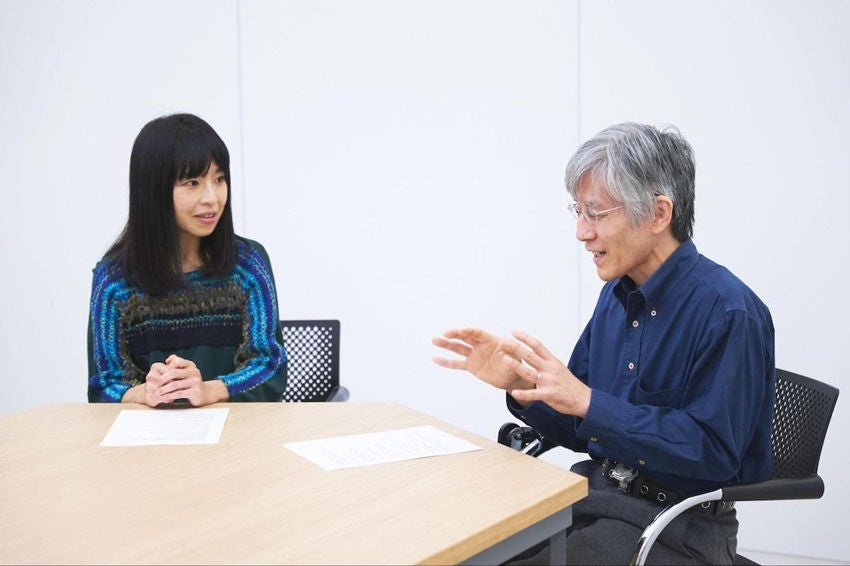
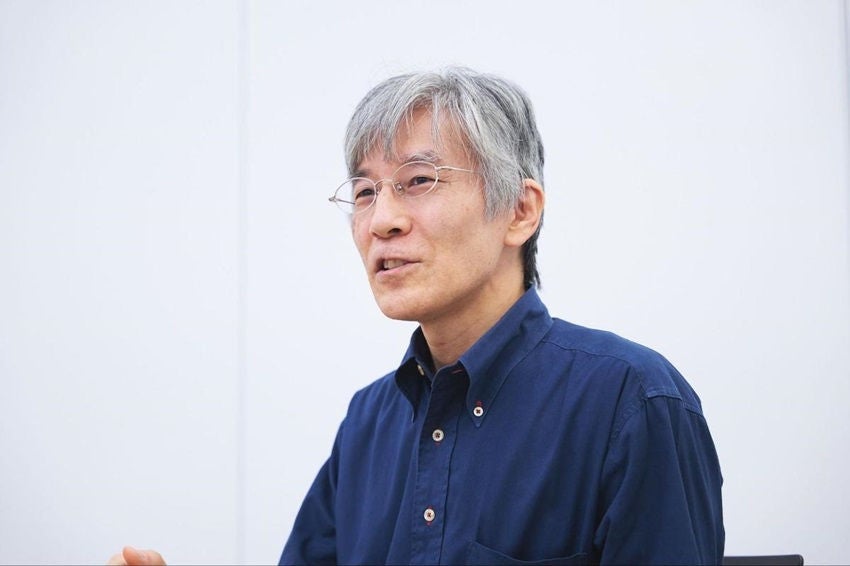
Right: Toshihiko Ochiai
Dai Nippon Printing Co., Ltd., Imaging Communications Operations, Quality Assurance Division. Principal Engineer of the DNP ID photo booth. Has been involved in the development of the photo booth for about 20 years.
Photo studio-level lighting! Why the DNP ID photo booth takes such great photos
—Before we begin the interview, I would like to have Dr. Kubo take an ID photo with the DNP ID photo booth. Dr. Kubo, have you taken one recently?
Yuka Kubo, Ph.D. (below, Kubo): I took one six months ago (laughs). But I have never taken one in front of other people, so I’m a bit nervous.
I have a simple question: How do you determine the size of ID photo booths? I always think that they are exactly right, not too cramped.
Mr. Toshihiko Ochiai (below, Ochiai): They are designed to be compact enough for various locations, while ensuring the minimum distance between the subject and the camera for taking a proper photograph.
Kubo: They need to fit in stations and buildings, while still taking great photos, so the size has been decided based on such requests.
About the curtains on ID photo booths, is there more to them than providing privacy?
Ochiai: They are important because of the lighting. To take great photos regardless of the lighting conditions of the booth’s environment, it is better to close the curtains.
Originally, ID photo booths were developed with the goal of automatically taking these photos quickly and easily. They used to even be called "speed photo machines." Before, this would have been done in photo studios.
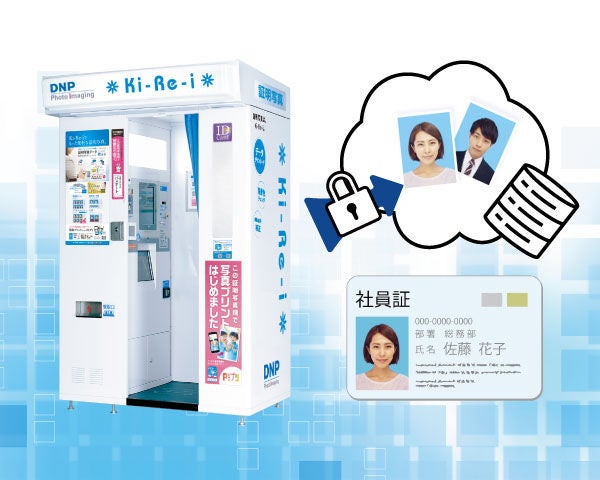
The concept behind the DNP ID photo booth is to recreate photo studio lighting in an ID photo booth. That's why we've designed them with a lighting environment like a photo studio. In fact, these booths have five strobe lights.
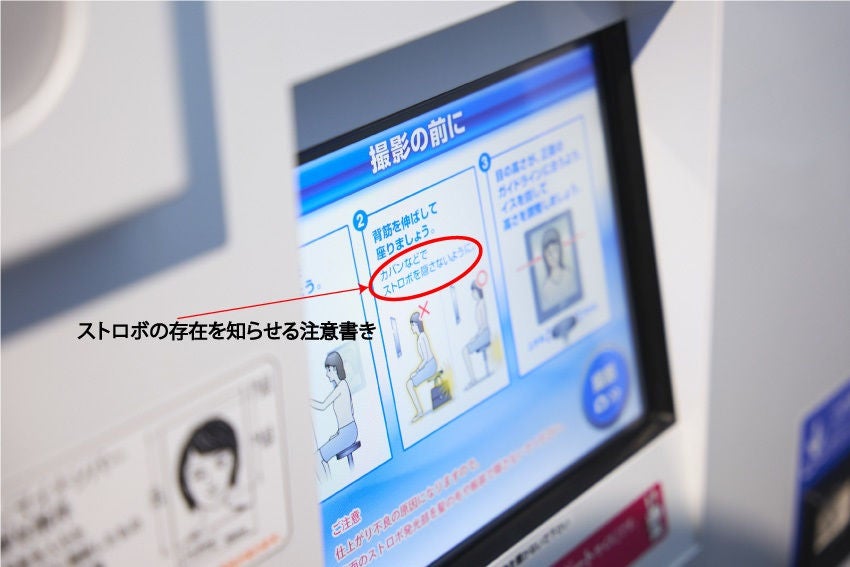 An important notice not covering the strobe lights
Kubo: That is quite a lot! It really does make it a lot brighter when you take a photo.
Ochiai: We also paid close attention to the positioning of the strobe lights. Instead of shining directly on the subject, the light reflects off the walls of the booth to brighten the entire space. In photo studios, light is directed from various angles using reflectors, so we recreated that here.
Kubo: So, the walls are white because it better reflects the light?
Ochiai: Yes, exactly. And the back of the curtain is light gray, which reflects light. The theory is that closing the curtains will reflect lighter and help with brightness inside the booth.
Kubo: I see. When you think about it, lighting is essential for taking great photos. Young people use lighting techniques to brighten their photos, like taking pictures in front of vending machines or in the passenger seat of a car, where the light is more likely to illuminate their face. Some even say they avoid going out at night because they look better in photos taken during the day (laughs).
—Image processing technology is remarkably advanced nowadays, so as someone who is not an expert, I figured that even if a photo was taken in a somewhat dark place, you could just brighten it up with some processing, but…
Ochiai: It is true that with the latest technology, you might be able to recreate studio lighting through image processing alone. But since ID photo booth manufacturing costs are limited and they’re distributed nationwide, it is essential to think about how to take photos with good lighting without image processing.
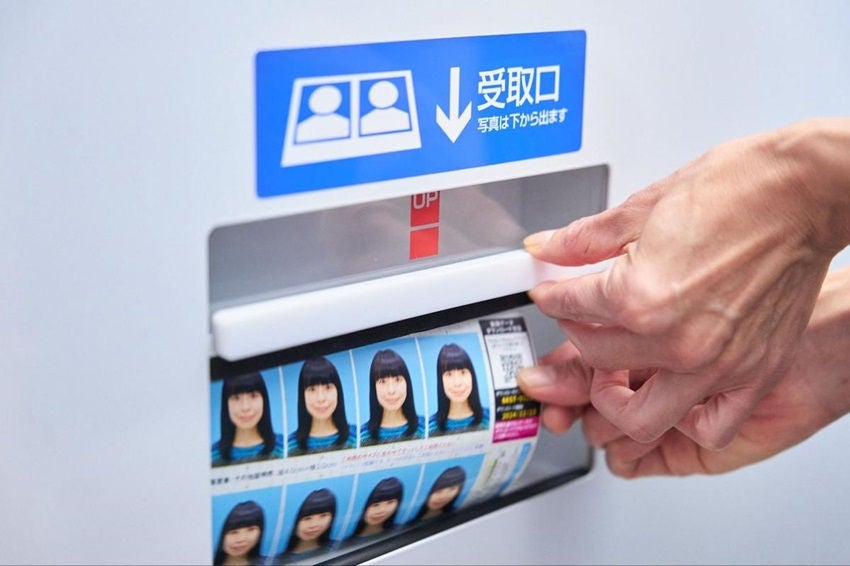 Dr. Kubo’s photo is ready!
Kubo: With advances in image processing technology, photo sticker machines still place significant importance on lighting. Thanks to that, I was able to take great ID photos.
-
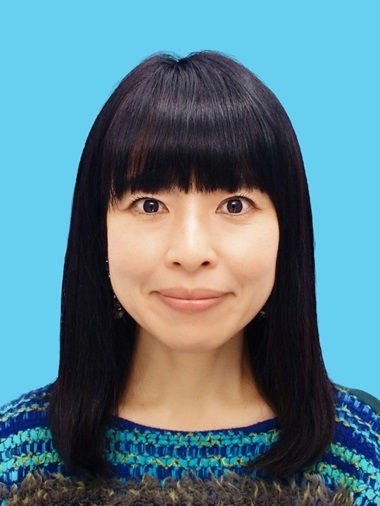 Dr. Kubo’s ID photo
I see that besides ID photos, there is also a "Profile Photo" mode.
Ochiai: Please try this out too. It is a recent feature that lets you take photos for use with online chat platforms or social media. As opportunities for web meetings, business chats, and other online communication have increased, so has the demand for better profile photos.
Kubo: So, the way it is taken is different from an ID photo.
Ochiai: First, the icon looks unnatural if they are too close, so we changed the angle of view from the ID photo. We went through a lot of trial and error to research the angle that looks most natural.
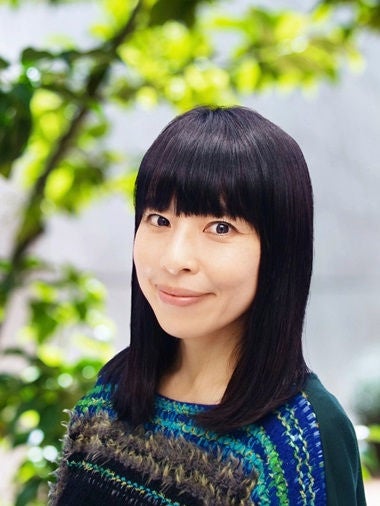 Dr. Kubo’s profile photo
Kubo: That’s true, a photo that’s slightly angled rather than straight on looks more natural, like how you appear in everyday life. This is different from an official ID photo.
Ochiai: There is also audio guidance available. To help you look more natural in photos, there is a "smile exercise" before the shoot where you move your facial muscles along with the audio guide.
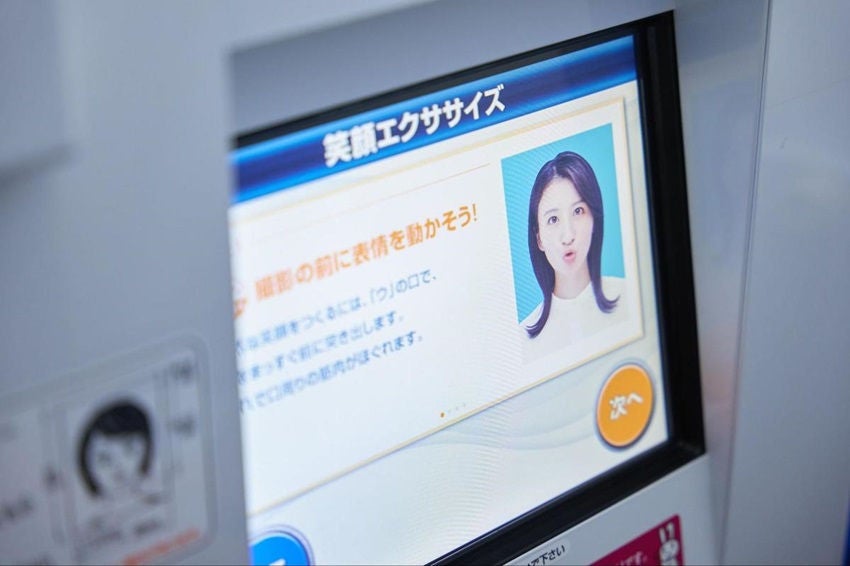 "Smile exercise" guidance screen
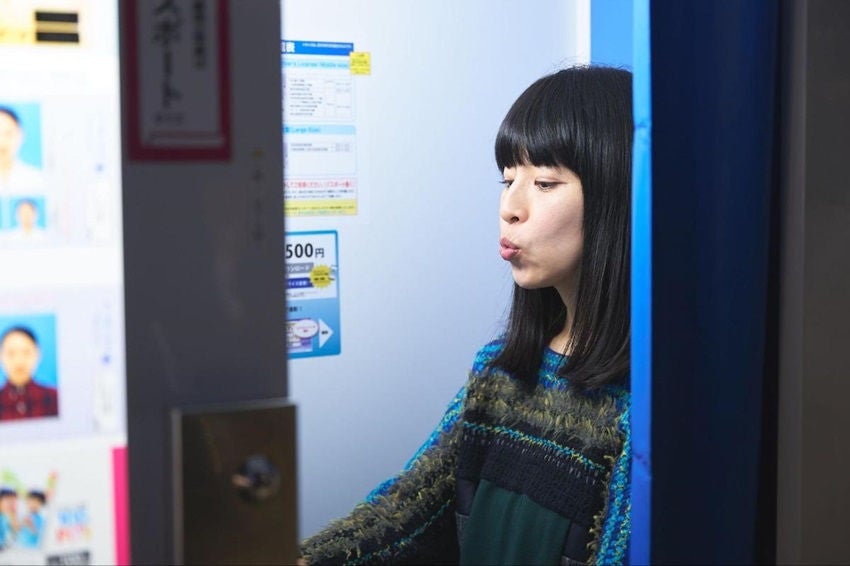 Dr. Kubo trying out the "smile exercise"
Kubo: That's great. I always get nervous when having my picture taken. Having this available would naturally help the corners of my mouth to turn up.
Ochiai: You can also set divergent backgrounds, like an office, a cafe, or a park.
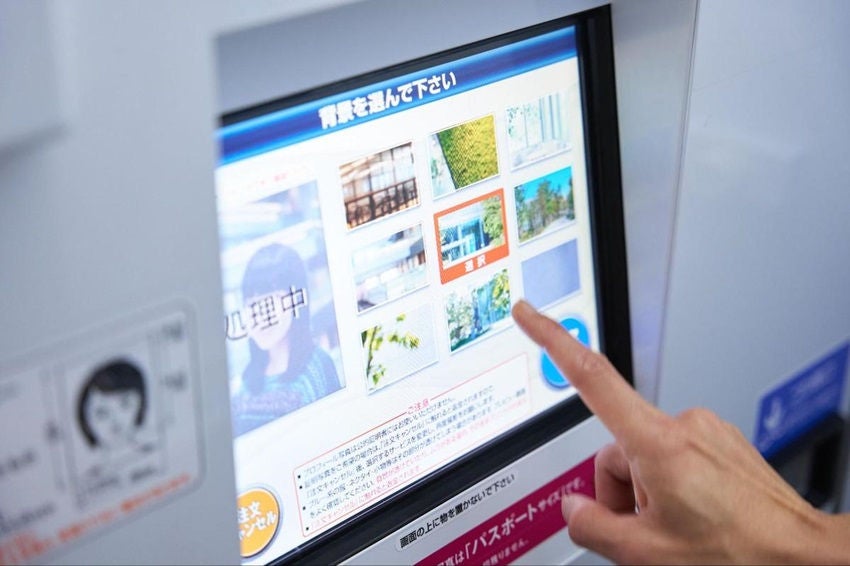 Users can choose their preferred background.
Kubo: It is like a web conferencing platform. When I take an ID photo, I do not pay much attention to the framing, facial expression, or background. It is interesting to see how the unique characteristics of an ID photo stand out because of that.
How to make someone look great without altering their individuality? Trial and error in ID photo image correction
—From here, I’d like to delve deeper into the development story of the ID photo booth. Mr. Ochiai, what challenges did you face during its development?
Ochiai: The challenge, both then and now, is quantifying what takes a great photograph. You could also call it managing image quality. What makes a photo good or bad depends on current trends, but when producing an industrial product, standardization is essential. An ID photo still has to serve its original purpose of verifying identity for official documents. ID photo booths are designed with a delicate balance between what needs to change and what must remain the same.
—This trial and error is reflected in users' reactions, like when they say, "ID photos are much better recently."
Kubo: It’s similar to photo stickers. In the past, when I worked with a photo sticker machine manufacturer, we discussed what, for these stickers, is considered a "good photo." There was a process of adopting enhancements that received positive feedback in group interviews, but it was mostly left to the good sense and experience of the planners.
Ochiai: Quantifying photo stickers certainly seems challenging. But the fundamental difference between photo stickers and ID photos is that the former is a photo you take for yourself, while the latter is a photo you take for someone else. As I mentioned earlier, the primary purpose of an ID photo is to verify someone's identity.
Kubo: I see. I think that one reason photo stickers developed techniques like making the eyes look bigger is the fact that we never directly see ourselves as others see us. For identity verification, someone else must compare your actual appearance with your photo and determine whether you’re the same person.
However, if identity verification is to be conducted, it seems like there would need to be strict ID photo specifications. Is that the case?
Ochiai: There are international standards for passports, but no common standards for many other official documents in Japan. Since the ID photo requirements vary depending on the type of certificate, the reality is that we manufacturers set self-defined standards to meet all of them.
Kubo: I see, I thought there must be some regulations regarding ID photo booths, which is why they allow for image correction.
Ochiai: Of course, providing photos that meet the standards for official documents means we are not just setting specifications as we please. I remember when we released the skin texture and brightness correction feature about 15 years ago—we were pretty nervous about it. I remember asking public institutions, "Is this alright?" But in the end, if users do not use the photos they take, the product will not be viable, so the motivation on the part of developers is to always make sure the image quality is excellent.
Kubo: So, the standards are determined by user needs. In that context, are there any specific standards for image correction that you absolutely must follow?
Ochiai: The aim is to preserve the person’s individuality even after correction. When we say we are making the skin look better, for example, it is not okay to completely remove wrinkles or blemishes, which would erase their unique features. We only reduce them to the point where they are faintly visible. The same goes for moles, which are only corrected so that they do not stand out too much. We try to strike a balance between preserving the distinctive features of the face while making the person feel confident about their looks.
Kubo: In the case of print stickers, this kind of enhancement is not about becoming more beautiful, but about adjusting one’s appearance to fit styles and visual trends shared within youth communities. In Japan, this is called “mori.” Many young users say, "I want to enhance my appearance, but not to the point that I look like someone else." I did some research on what that really means, and it turns out there’s a point where, as you increase the level of enhancement, you suddenly start to look like a different person. I call this the "over-enhancement cliff." The level of enhancement users want is right at the edge, just before going over the cliff. They want to keep what makes them unique.
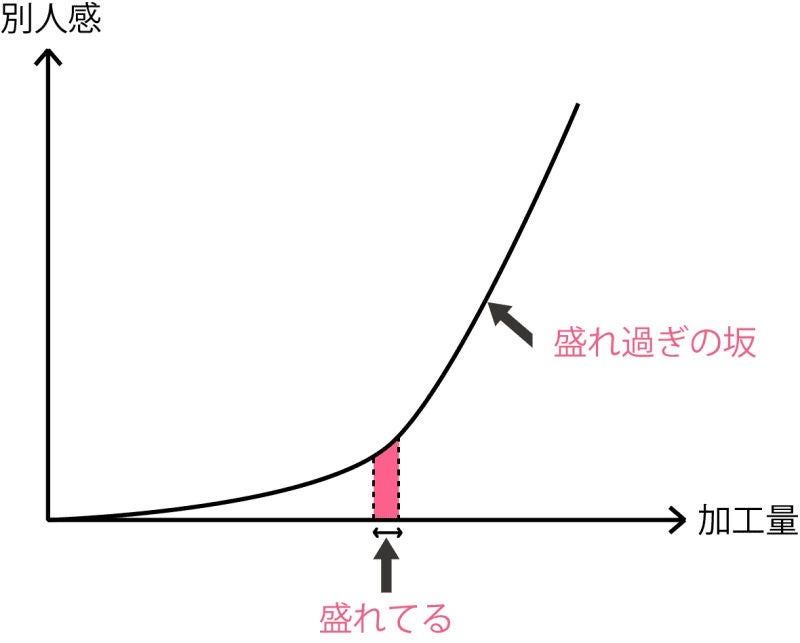 The "over-enhancement cliff" (Image courtesy of: Yuka Kubo, Ph.D.)
Ochiai: That's interesting. Come to think of it, our photo booth used to have a feature that made the skin look impeccable, but it feels like the demand for that kind of effect has fallen in recent years. My impression is that the turning point was around 2010.
Kubo: Around 2010, the trend in photo sticker processing also shifted. The trend up until that point, which had a focus on making the eyes bigger and brightening the skin, moved to more natural enhancement, emphasizing people’s facial contours and complexion.
Ochiai: Although it does not go as far as deepening the facial contours, making the features more defined is in line with the direction of our photo booth’s image correction approach. In fact, the photo quality we are aiming for is quite similar.
Why ID photos are now popular among young people
—Now that you mention it, I had the impression that around 2023, ID photos started gaining attention among young people for allowing them to look "naturally enhanced." Is the image correction trend you mentioned earlier becoming more accepted by younger people?
Kubo: As I mentioned, young people try to express their own style through their photos. There are trends in terms of how they do that, and I’m sure that ID photos probably fit with what people want now. In fact, popular influencers like kemio have even said they "like ID photos."
Since around 2020, more young people have been using ID photos as a form of entertainment. Some get into an ID photo booth with friends, pose, and take photos like they would in a photo sticker machine, then post about the results on Instagram or TikTok*. When I was a student, there was a perception that a license photo taken at an ID photo booth was not something you would want to show others. It really feels like a different era.
Young people also tend to prefer things that are easily accessible but have some depth. They like tools that anyone can use and enjoy together, but since facial photos are like a form of creative work for them, it’s boring if the process is too simple. Maybe that’s why ID photo booths have been a hit. While photo stickers and smartphone apps make it easy to enhance your appearance, they have also become too easy. In that sense, the limitations of ID photo booths are more fun because it is harder to enhance your appearance. It is like the concept of "shu-ha-ri" in traditional Japanese arts and martial arts: first learning and working within “form” that have been established over time within a cultural community, and then expressing their own style. In the same way, young people first work within the socially established "form" of ID photos, and then express their own style. It is like the similar to the Japanese culture of subtly personalizing school uniforms, where students first follow a socially established “form”, and then express their own style.
Ochiai: It seems that it has caught on in a way that we developers never even imagined.
*"Instagram" is registered trademarks of Meta Platforms, Inc.
"TikTok" are registered trademarks of ByteDance Ltd.
Conclusion: What does an ID photo "prove"?
—So, after thinking about ID photos from all these different angles today, what are your thoughts?
Kubo: It was very stimulating. I thought ID photos were bound by rules that have not changed over time, but they are shaped by a tension between what needs to change and what must remain the same.
And while smartphone selfie apps and photo stickers create the face people show to a specific community, I felt that ID photo booths create the face people show to the public. That is something that other photo devices cannot replicate.
In his book, "Mask and Persona," philosopher Watsuji Tetsuro points out that humans always "imagine the other person’s face," even when communicating with someone they do not know. Lately, there has been debate in Japan about whether photos are necessary on resumes, but I think this shows that a face is still essential for communication. At the same time, I think it also shows that it does not require the projection of a “physical face”—a “represented face” is sufficient.
I think that’s exactly what Mr. Ochiai meant when he said ID photos are "photos taken for someone else." ID photo booths are devices that create the "represented face" needed for communication with others. I think the correction and processing functions play a part in that as well. Even as times change, I do not think the need for ID photos will disappear, if the relationship between individuals and the public sphere remains.
- The information in this article was accurate as of the publication date.
February 14, 2025 by DNP Features Editorial Department