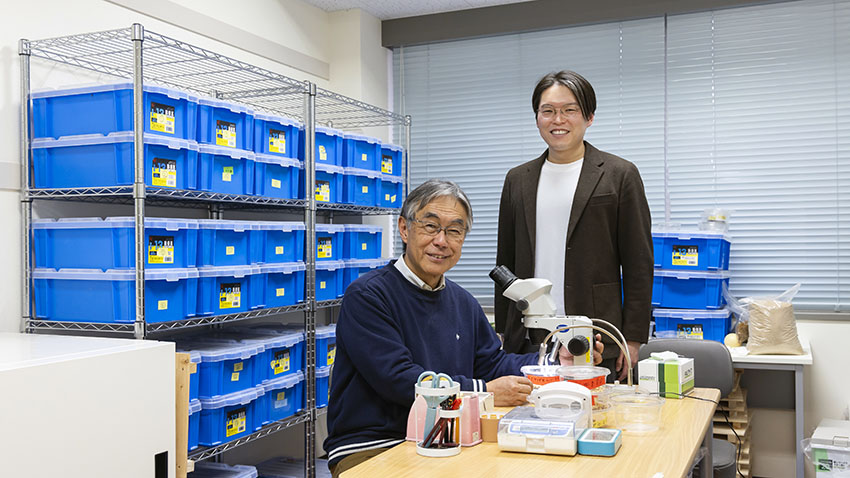
Aquaculture plays a vital role in advancing sustainable food production. However, in recent years, the industry has faced significant challenges, including rising feed costs and a heavy dependence on imports. In response, DNP and Ehime University have launched a new business initiative aimed at developing innovative feed solutions for aquaculture. Working in collaboration with various partners, they seek to address these pressing issues. Professor Takeshi Miura of the Department of Science and Technology for Biological Resources and Environment at Ehime University’s Faculty of Agriculture, along with Yuta Hirai from DNP’s Imaging Communications Operations, share the background and vision behind the project.
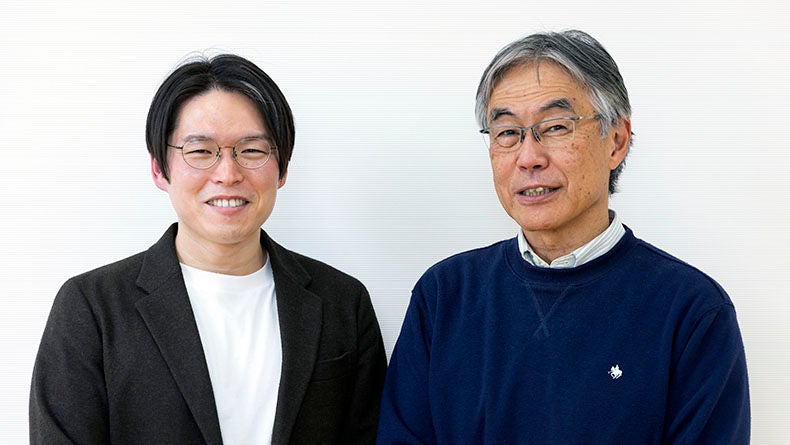
Profile
Ehime University, Department of Science and Technology for Biological Resources and Environment
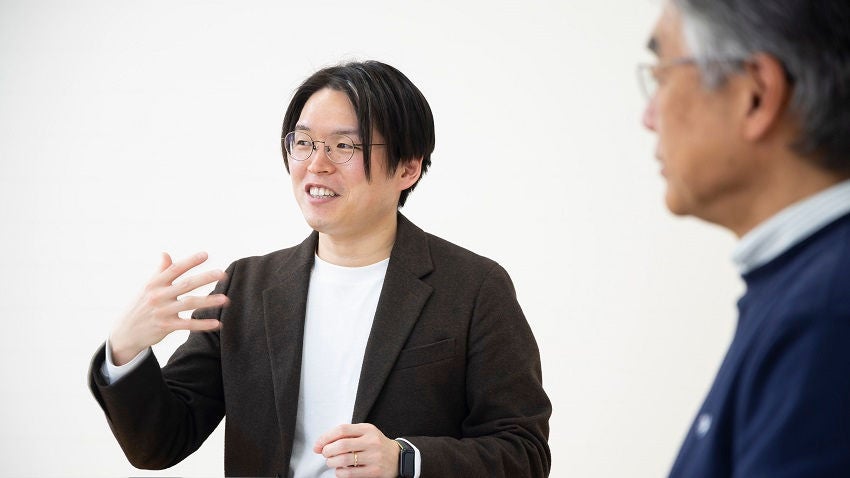
Professor Takeshi Miura (pictured right)
Completed graduate studies at Hokkaido University and holds a Ph.D. in Fisheries Science. His research focuses on developing sustainable bio-production technologies that are environmentally conscious, from the perspective of animal physiology
Dai Nippon Printing Co., Ltd., Imaging Communications Operations, Business Planning and Control Division
Yuta Hirai (pictured left)
After joining the Information Innovation Operations, he transferred to the Imaging Communications Operations. He is currently engaged in the creation of new business ventures.
Creating new businesses based on social issues, without being limited by existing business frameworks
――To start off, what motivated DNP to begin developing insect-based feed for aquaculture?
Hirai:
Our division, Imaging Communications Operations, is working to create future growth opportunities with a view to the next ten years. Rather than simply building on what DNP has done so far, we’ve been exploring new business ideas by focusing on social challenges — and that’s how we arrived at the issue of food.
As the global population grows and diets improve, it is predicted that we could face a “protein crisis” around 2030, where demand outpaces supply. This makes the stable supply of food a major social issue. That’s why we began considering what it would take to continue enjoying the food we’re accustomed to—without increasing environmental impact or costs.
Among potential solutions, we identified insects as a promising option. As a protein-rich resource, insects are attracting growing global interest, with R&D efforts accelerating worldwide.
However, not everyone is comfortable with the idea of eating insects. That’s why we focused on using insects as feed for aquaculture. To continue eating fish safely in the future, we need a stable supply of feed for farmed fish. We believe insect farming for feed manufacturers and aquaculture businesses could be a promising new venture. In fact, according to data from the Ministry of Agriculture, Forestry and Fisheries, the insect feed market is valued at 24.2 trillion yen, and the land-based aquaculture market at 12.8 trillion yen—highlighting the significant business potential.
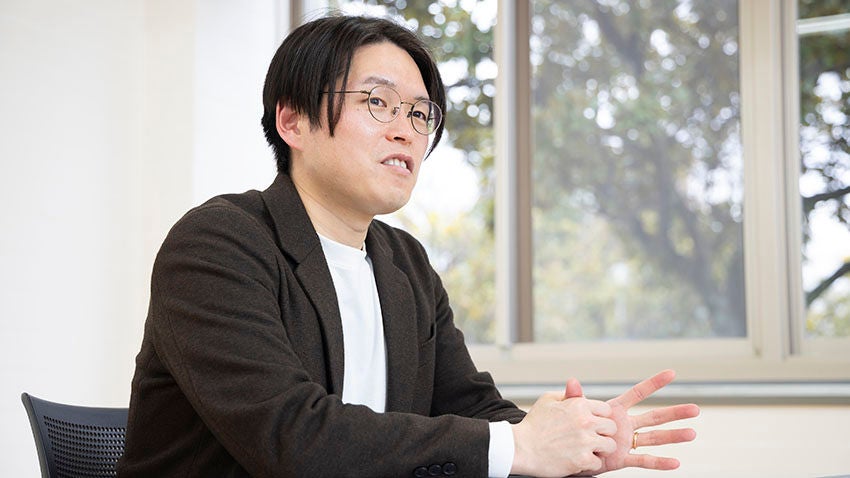 Yuta Hirai of DNP
— How did your joint research with Ehime University come about?
Hirai
Our initial R&D collaboration began with Ainan Liberacio Co., Ltd., a startup originating from Ehime University that has successfully brought to market products made from silkworm pupae. *1 Through them, we were introduced to Professor Takeshi Miura of the same university, who has a world-class track record in researching the use of insects in aquaculture.
The joint research among the three parties officially began in 2022. Ehime University is mainly responsible for fundamental research, while Ainan Liberacio focuses on business growth, scalability, and economic feasibility. DNP is working on developing automated systems for insect breeding, as well as exploring high-value applications for by-products generated through research.
- 1 株式会社愛南リベラシオのWebサイト https://ai-lib.com/
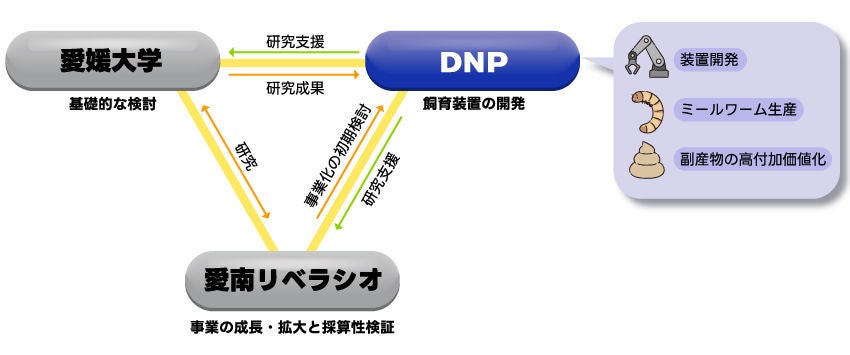 A collaborative research system involving three parties.
To ensure a stable supply of aquaculture feed at low cost
— Based on your many years of research into the use of insects in aquaculture, what do you see as the key challenges facing the aquaculture industry today?
Professor Miura
One of the serious issues facing Japan's aquaculture industry is feed. When farming marine fish such as sea bream or yellowtail, the main ingredient in their feed is fishmeal. However, this process often consumes more wild fish than the number of farmed fish it produces, which raises serious concerns about sustainability.
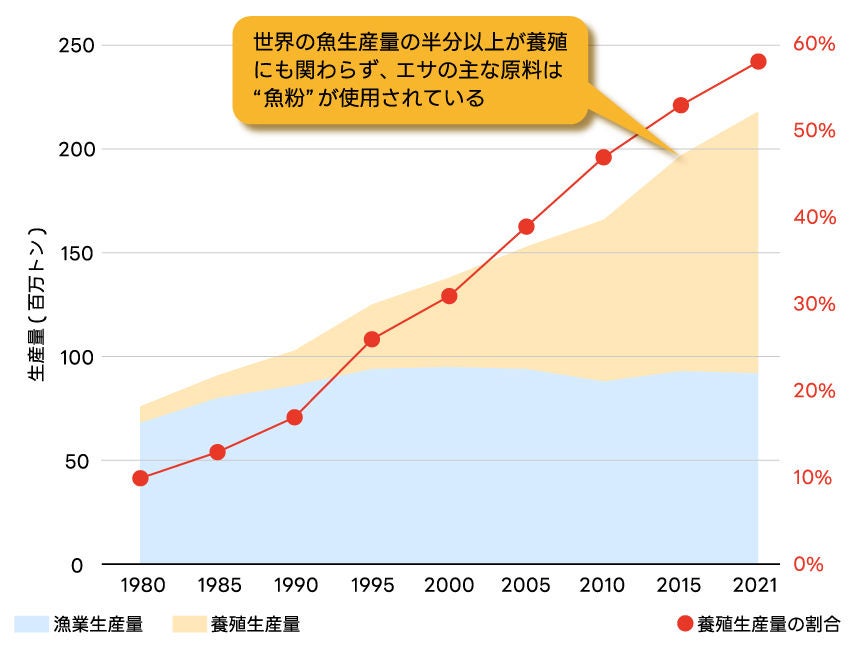 Trends in global fisheries and aquaculture production
出典:水産庁 令和4年度水産白書よりDNP作図 https://www.jfa.maff.go.jp/j/kikaku/wpaper/r04_h/trend/1/t1_4_1.html
In addition, a large portion of the wild fish used for feed is imported, making the supply vulnerable to sharp price increases. It's said that more than 70% of aquaculture costs come from feed alone, so domestic production of alternative feeds to replace fishmeal is essential to ensure a stable and low-cost supply.
There has been research and development into plant-based protein feeds, such as those made from soybeans and corn. However, for carnivorous fish like tuna, these feeds are harder to digest and don’t provide sufficient nutrition.
On top of that, alternative feeds must be made from materials that humans don’t eat and that are inexpensive—otherwise, they end up competing with the human food supply. In this respect, insects hold tremendous potential.
—What are the characteristics of insects used as feed?
Professor Miura
We are studying mealworm larvae—larvae of the Tenebrio molitor beetle—as a feed source. They contain all essential amino acids required by humans.
Insects have as much or more protein than meat or fish, and are also packed with vitamins and minerals. They offer additional benefits such as low environmental impact during production and ease of growth management. Among them, mealworms stand out for their hygienic qualities: they don’t move around much and can be raised on dry feed, making them particularly suitable for large-scale feed production.
We believe that by processing grown mealworms into powder and mixing them into fish feed, we can create affordable feed that supports fish growth. By adjusting the feed composition and cultivation methods, we can even develop specialized feeds that boost fish immunity or alter meat quality. As our research progresses, we’re discovering that mealworms have even greater potential than we initially thought, with a wide range of applications.
Characteristics of mealworms
1) High protein: equivalent to or greater than meat and fish
2) High nutritional value: rich in vitamins and minerals
3) Low environmental impact during growth: low greenhouse gas emissions, minimal land use, and low water consumption
4) Easy growth management: Growth rate can be controlled by environmental regulation.
5) Low mobility: They don't move around much.
6) Low moisture: Raised on dry feed (hygienic).
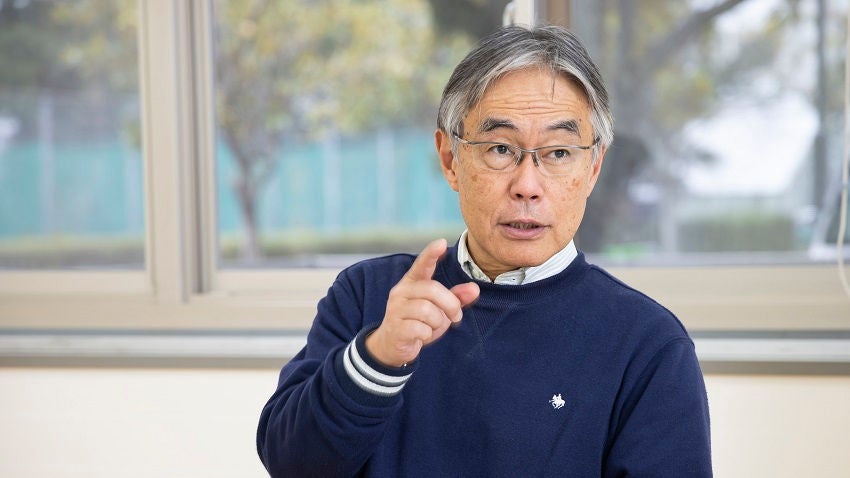 Professor Miura
DNP's strong commitment and drive for commercialization
— Professor Miura, what impression did you have of DNP when they approached you about the joint research?
Professor Miura
I’ve received inquiries from various companies in the past—requests to hear about my work or to engage in joint research. However, to be honest, many of those discussions ended with just exchanging information and nothing more. In contrast, Mr. Hirai from DNP didn’t just listen; he said, “Let’s work together.” That was a very welcome offer.
Insect-based feed has huge potential, but honestly, Japan’s R&D is behind the rest of the world. We need to get people in Japan to understand its importance, make the feed practical, and implement it in society. Universities can only do so much, so having companies to work alongside us is crucial. That’s why I feel truly encouraged that a company like DNP, with its broad network and diverse business areas, has stepped forward to joining us.
Hirai
When I first met Professor Miura, I imagine he wondered why DNP was venturing into the insect feed sector. This field lies outside DNP’s traditional business domains, and my division—the Imaging Communications Operations—focuses on photo related products and services, with no direct connection to that area.
I conveyed that I truly believe this project can be realized by harnessing “DNP’s collective spirit,” and that collaboration with Ehime University is essential. My explanation might not have been perfect, but I was glad that Professor Miura shared my enthusiasm.
After receiving a positive response regarding the joint research, I immediately began building the project team. Since this project couldn’t be completed by my department alone, I leveraged internal networks extensively, with support from my supervisor, to bring together willing members from other departments as well.
Build a food residues network, explore the potential of mealworms, and pave the way for social implementation
— Could you tell us about the specific process?
Professor Miura
To put mealworms into practical use as feed, the first step is to determine what kinds of environments and diets are best suited for their growth and to establish efficient production methods. Our laboratory is conducting basic research for this part.
To figure out what feed works best, we’re currently giving mealworms different types of feed and tracking their growth. We mostly use leftover food that people throw away, but Mr. Hirai often brings in feed options we could never obtain on our own — which always amazes me.
Hirai
DNP has relationships with a wide range of companies across various industries throughout Japan, and we draw on these connections to obtain waste materials generated during manufacturing processes in sectors such as food service, retail, and food production. From these sources, we’ve identified several promising feed candidates. If we can establish a “food residues network,” we believe it could contribute to reducing food loss in the future. Additionally, we collaborate with DNP’s technology and R&D divisions to support analyses that cannot be conducted within the university, such as component analysis and image processing.
As we move toward practical implementation, large-scale production through manual labor is not feasible, making automation of the breeding process essential. In collaboration with Professor Miura, DNP has been identifying which steps can be automated and compiling key parameters for breeding environments and operating conditions that enhance efficiency. Throughout this effort, we’ve also identified opportunities to apply DNP’s production technologies—such as aseptic filling systems—along with its operational and maintenance expertise.
We are currently developing a functional prototype based on the collected data to validate core functions and design before moving to mass production. Our goal is to introduce a pilot-scale plant at a research institute by FY2025 and have a commercial-scale facility operational sometime between FY2028 and FY2030.
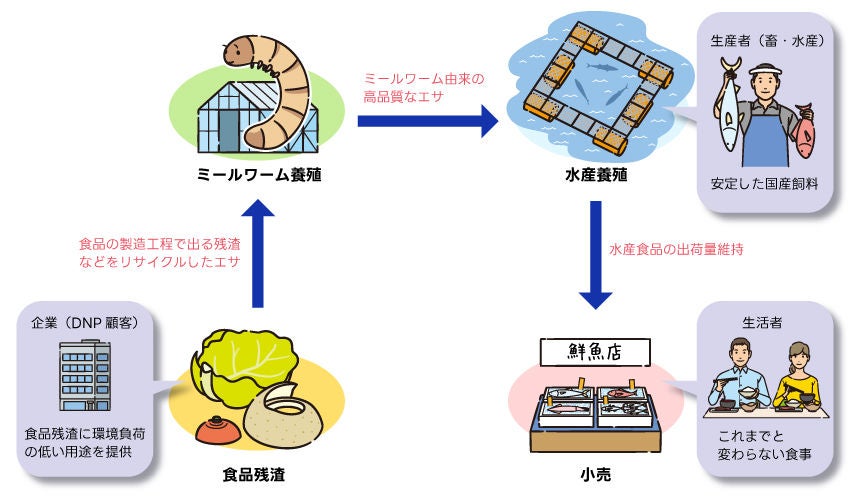 Image of a food waste network
— Has the usefulness of using mealworms as feed already been confirmed?
Professor Miura
Our laboratory has a network with aquaculture businesses, and our strength lies in being able to carry out everything from research to practical demonstration experiments. We have conducted demonstration experiments in which feed containing about 20% mealworm mixed with fish meal was given to farmed fish (red sea bream). The first batch of farmed fish has already been shipped and was even served in DNP’s company cafeteria.
DNP’s company cafeteria served 600 servings of sea bream chazuke and 220 servings of sea bream salt ramen made from farmed red sea bream (Ehime Dai) raised on insect-based feed over three days. All servings sold out each day.
Employees who tried the dishes gave feedback such as, “I had no resistance to it,” and “It was delicious.”
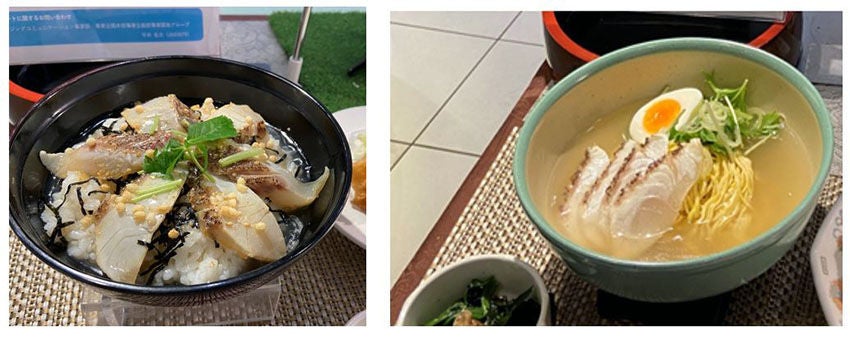 Sea bream rice porridge (left), sea bream salt ramen (right)
— Have you come across any other ways to use mealworms besides as feed for farmed fish during your research?
Professor Miura
I believe that in R&D, it’s important to explore various possibilities rather than narrowing down to a single outcome for social implementation.
Currently, we are focusing on adding value to mealworm frass (excrement). During their growth, mealworms produce frass weighing about five times their body mass, and we are researching ways to utilize it effectively. At present, frass is mainly used as a low-cost fertilizer, but if we can enhance certain functions to increase its value, it could not only eliminate disposal costs but also generate profits. Achieving this would help reduce overall feed costs.
We also gained new insights through suggestions from DNP. Since we are aquaculture specialists, we have been considering the use of mealworms primarily as fish feed. However, DNP proposed that mealworms could potentially be used as livestock feed as well and introduced us to various contacts in the livestock industry.
By exchanging ideas, we’ve realized that insect-derived functional components could help tackle problems in livestock farming too. While we tend to think within our narrow field of expertise, collaborating with DNP has opened up these broader possibilities, which we consider a significant benefit of our partnership.
Hirai
For this initiative, Hokkaido Coca-Cola Bottling Co., Ltd., a member of the DNP group with expertise in Hokkaido’s livestock industry, has been collaborating with us. I had previously discussed livestock-related challenges with their representative, which led me to consult Professor Miura about the potential use of insects as a solution. This has reinforced my appreciation for the value of our internal corporate network.
Progressing one step at a time together with a broad network of partners across diverse domains
— How do you evaluate DNP’s efforts so far? And what are your expectations for DNP going forward?
Professor Miura
DNP sets concrete objectives and advances steadily by gathering data and insights to achieve them. Unlike universities, which often engage in research without fixed endpoints, DNP’s unique strength as a business lies in its drive to commercialize innovations and create value.
As a university involved in industry-academia collaboration, I fully recognize the importance of producing tangible outcomes. Although our target is to launch a commercial plant by 2028, we are determined to meet interim milestones beforehand, enabling DNP to gauge the business potential early on. This commitment also reflects our desire to reciprocate the enthusiasm and dedication shown by Mr. Hirai and his colleagues.
— Earlier, you mentioned the creation of future growth opportunities with a view toward the next ten years. Could you share your current outlook on that?
Hirai
This project is a socially significant initiative aimed at building a “circular food model,” but I don’t intend to leave it at just that. I want to deliver solid results and develop them into a sustainable business. To that end, I believe we need to start operating a commercial plant around 2028 to 2030.
Working backward, we need to build a laboratory-scale mealworm farming plant by the end of FY2024 and gradually scale it up. It’s a long-term project, but we intend to make steady progress step by step.
Many colleagues across different departments have supported us so far—from selecting and providing food residues to analyzing results and developing equipment. I’m deeply grateful for their contributions. But as the project grows, we’ll need to expand partnerships even further—not just within the company, but externally as well.
To be honest, I never expected to be involved in aquaculture feed, especially mealworms. But having the chance to shape a business through our own ideas and initiatives has become deeply fulfilling. I hope that more people—both inside and outside the company—will take interest and join this effort.
- Please note that the information provided is current as of the publication date.
May 20, 2024 by DNP Features Editorial Department