DNP is currently pursuing value creation in the new business field of energy with the goal of creating a “self-producing, self-consuming energy society *1” where energy is generated and utilized locally. At the forefront of this effort is the Microbial Power Generation Project, which produces energy from microbes. This joint research project between Osaka Metropolitan University, TMEIC Corporation, and DNP has the potential to transform wastewater treatment plants from facilities that consume energy into facilities that generate electricity. The project was also presented at Expo 2025 Osaka, Kansai, Japan, and we’ve asked key members to share about the latest developments.
- 1. For more details, please refer to the column at the end of this article, “DNP's vision for a self-producing, self-consuming energy society”.
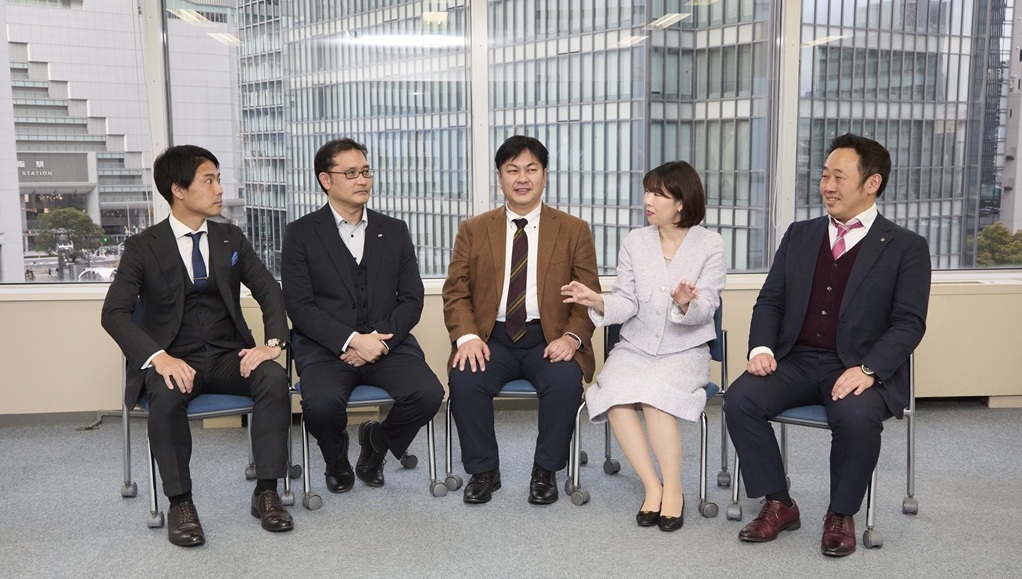
(From left to right)
Takashi Kitagaki , Group Manager of the Carbon Neutral & DX Business Development Group, Carbon Neutral & DX Innovation Center, Industrial & Energy Systems Division 1, TMEIC Corporation
Shiho Tokonami, Professor at Osaka Metropolitan University's Graduate School of Engineering and Deputy Director of the Research Institute for Light-induced Acceleration System (RILACS)
Takuya Iida, Professor at Osaka Metropolitan University's Graduate School of Science and Director of the Research Institute for Light-induced Acceleration System (RILACS)
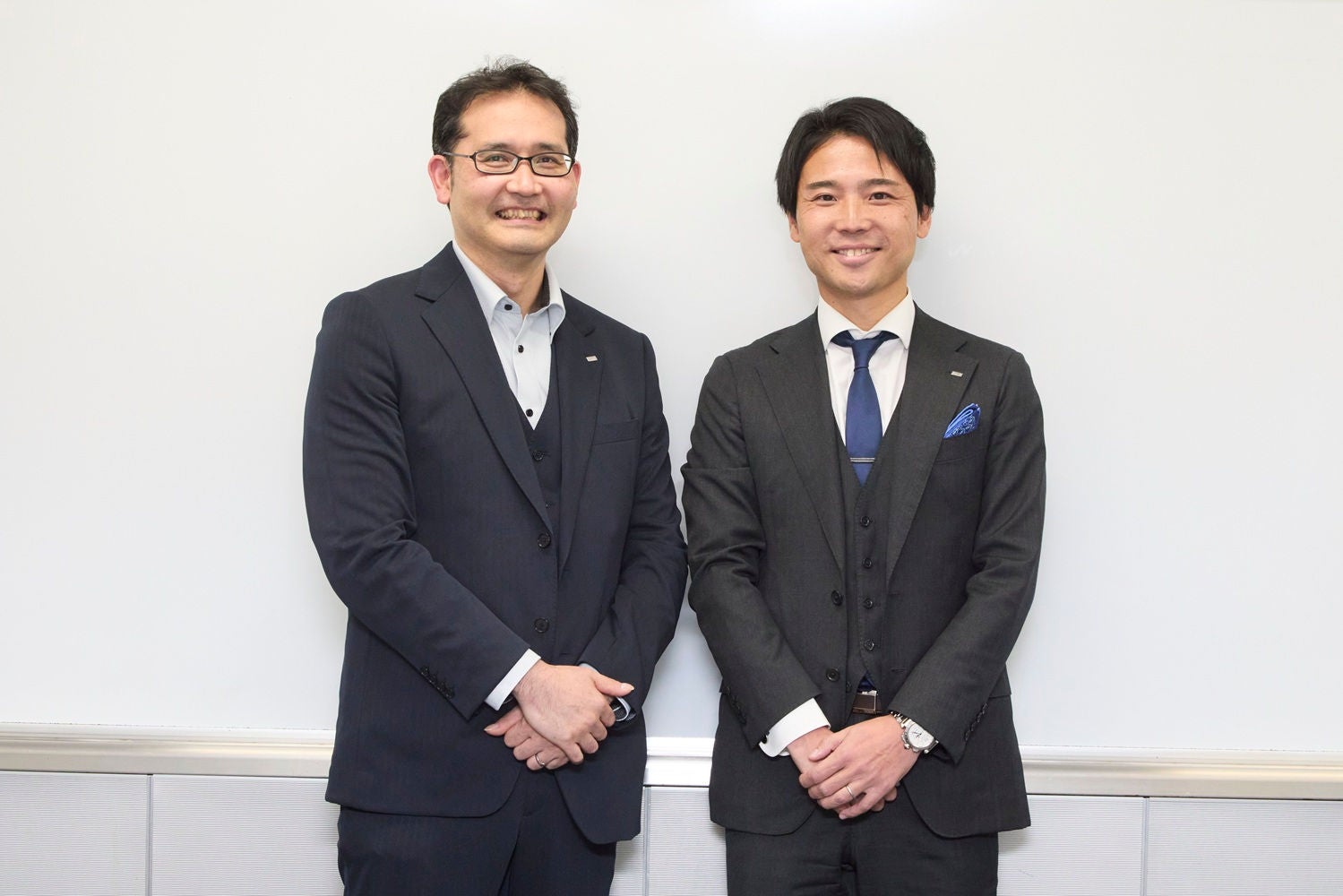
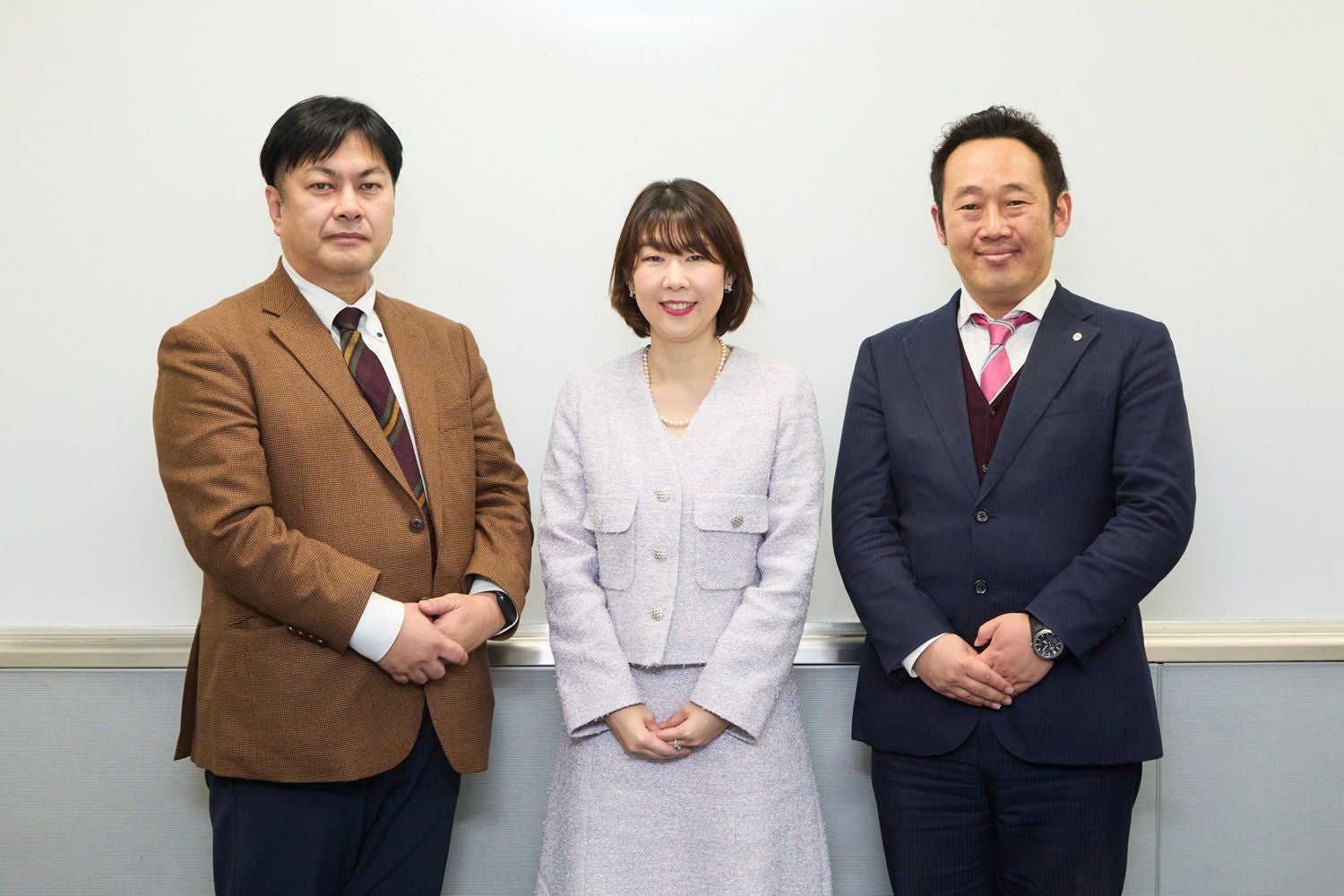
(From left to right)
Mikio Ishikawa, Principal Researcher in the Development Division, Fine Devices Operations at Dai Nippon Printing Co., Ltd.
Shunsuke Iuchi, Leader of the Osaka-Kansai Expo Promotion Committee at Dai Nippon Printing Co., Ltd.'s Marketing Division
What is microbial power generation? How a chance encounter led to an inevitable technological collaboration
— Could you tell us how this three-party joint project began?
Mikio Ishikawa (hereinafter, Ishikawa): It all started in 2021 when I attended a research presentation by Professor Tokonami as part of the young researcher support initiative WAKASAPO run by the New Energy and Industrial Technology Development Organization (NEDO). A photograph of the honeycomb structure used as a substrate for collecting microbes was displayed on the screen. The moment I saw it, I instinctively felt like DNP's technologies could be of use.
I have spent much of my career working in lithography, specifically in the development of patterning technologies that precisely form intended microscopic structures (patterns) on material surfaces. These microfabrication technologies, which form the foundation of printing, are most commonly used in fields such as displays and semiconductors. However, I felt that they might also be applicable to environmental and energy-related challenges, so I immediately contacted Professor Tokonami to discuss the possibility of collaborative research.
— The moment you saw the photograph, you felt DNP's technologies could be helpful. How did DNP's printing technologies connect to this research?
Ishikawa: Specifically, it was the technology to precisely fabricate honeycomb substrates used to collect microbes. With our microfabrication technology, DNP has the ability to reliably manufacture and mass-produce structures ranging in size from 1 micrometer (μm: one-millionth of a meter) down to the nanoscale (one-billionth of a meter).
Professor Tokonami told us she was looking for a partner capable of mass-producing the substrates, and I thought, “Well, then, we're the obvious choice.”
 Mikio Ishikawa
Osaka Metropolitan University's Professor Tokonami (hereinafter, Tokonami): At the time, our lab was conducting experiments using cells (the basic units that make up a battery) measuring 2 cm on each side, but we had no way to increase the cells’ surface area and were struggling to scale the technology. I felt that this partnership would be extremely important for accelerating our research and advancing it toward practical application.
— How does microbial power generation work?
Tokonami: When microbes break down organic matter, they release electrons, which are then captured by electrodes and converted into electricity. The microbes used are extremely small, measuring just 2 to 3 μm, which is approximately one-hundredth the thickness of a human hair. For example, generating enough electricity to power an LED light bulb requires approximately 30 million microbes to be accumulated within a single cell, and three cells must then be connected in series.
In our research, electricity is generated using microbe-filled wastewater from factories, retail stores, and households. Another simultaneous goal is to purify the wastewater by having the microbes break down organic matter.
 Professor Shiho Tokonami
— Are special microbes required?
Tokonami: No. The microbes we use are found in our everyday environment. There are, of course, specific microbes that can produce higher electrical output, but the microbes used in the power generation system that we want to commercialize are not bound to specific locations or conditions.
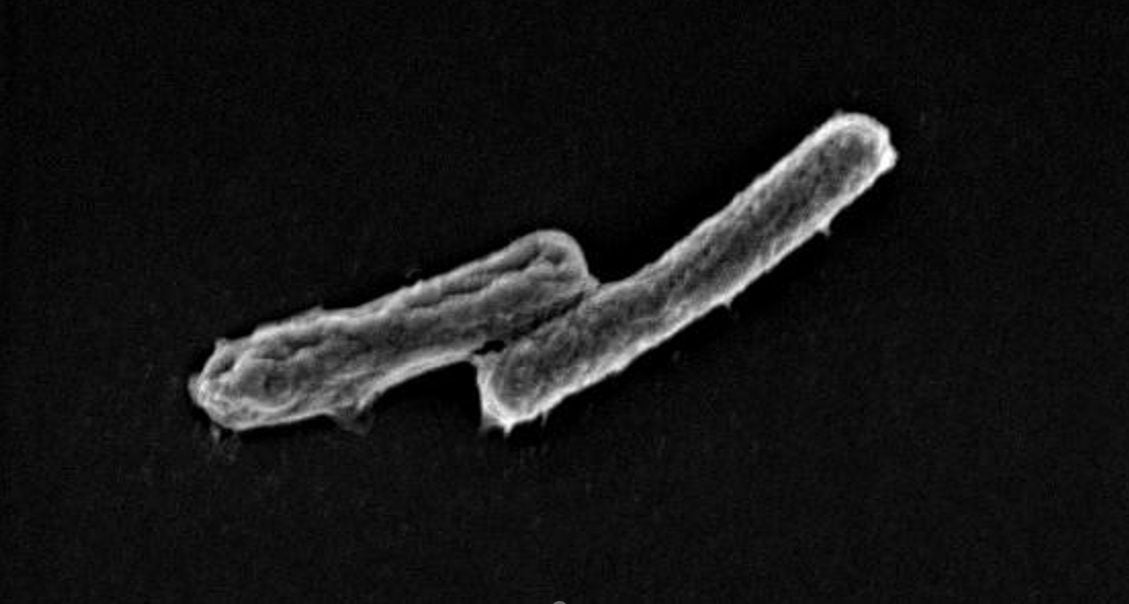 An example of the microbes used in Professor Tokonami’s laboratory. Shewanella releases electrons while metabolizing organic matter and became a catalyst for research into electricity-generating microbes following its discovery in the late 1980s.
Image courtesy of Professor Shiho Tokonami, Graduate School of Engineering / the Research Institute for Light-induced Acceleration System (RILACS), Osaka Metropolitan University
An example of the microbes used in Professor Tokonami’s laboratory. Shewanella releases electrons while metabolizing organic matter and became a catalyst for research into electricity-generating microbes following its discovery in the late 1980s.
Image courtesy of Professor Shiho Tokonami, Graduate School of Engineering / the Research Institute for Light-induced Acceleration System (RILACS), Osaka Metropolitan University
Osaka Metropolitan University's Professor Iida (hereinafter, Iida): Although microbial power generation has long been recognized as a technology, it took many years to reach practical application. The issue was that the amount of electricity that could be generated through microbial power generation was simply too low. Our joint research began when Professor Tokonami proposed the idea: “What if we could densely accumulate microbes that contribute to power generation?”
As part of this collaborative research, I have been working on a technology called optical condensation, which uses light to collect microbes. With this technology, a thin gold film is first formed on a honeycomb substrate that serves as the electrode of the cell, and laser light is then directed onto it. When the gold film is exposed to the laser, its electrons vibrate, generating localized heat. This heat warms the surrounding water, creating vertical convection. To compensate for the resulting low-density region, liquid flows across a wide area of the substrate (horizontal convection). Microbes dispersed throughout the surrounding liquid are carried by this convection and drawn into the honeycomb structure.
In addition, irradiation with laser light generates microscopic bubbles, and flows associated with density variations on the bubble surfaces also help promote the accumulation of microbes.
At the same time, if the temperature inside the cell becomes too high, the microbes will die. To address this issue, we use a polymer with low thermal conductivity for the cell walls. By using this polymer, heating is limited to the vicinity of the partition walls exposed to the laser, suppressing any rise in temperature throughout the cell as a whole. As a result, we are able to maintain an environment suitable for microbes while achieving stable, continuous accumulation of microbes and power generation.
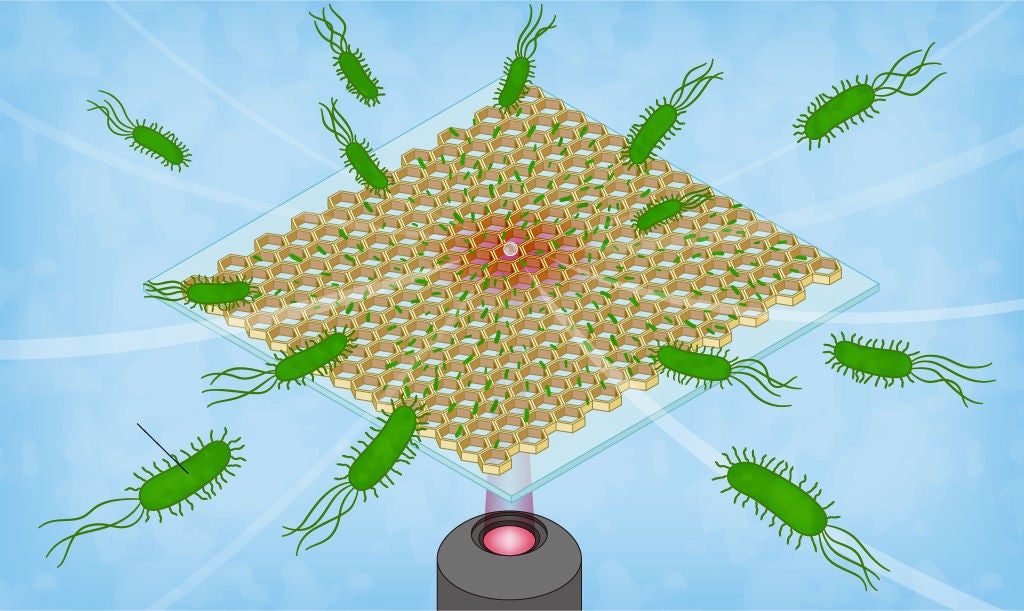 An image of microbes being collected via optical condensation. The cell interior features a honeycomb structure divided by hexagonal walls. Of the shapes that can cover a flat surface without gaps (triangles, squares, and hexagons), hexagons offer superior structural strength, making them well suited for cell structures that accumulate microbes.
— How did TMEIC become involved in the project?
TMEIC’s Kitagaki (hereinafter, Kitagaki): Although TMEIC is not a battery cell manufacturer, we have extensive experience and advanced technological capabilities in areas such as the control of power generation and energy storage systems, as well as power conversion. What drew our attention was microbial power generation’s ability to generate electricity from unused biomass (renewable biological resources), such as industrial and household wastewater containing organic matter, as well as the fact that it is a clean power generation method that produces electricity through chemical reactions rather than combustion, similar to fuel cells.
A related technology is biogas power generation, where biomass is converted into methane gas through the action of microbes, and electricity is generated using gas turbines and other equipment. However, because combustion is involved, exhaust gases are produced. In contrast, the microbial power generation technology used in this project does not involve a combustion process and therefore does not generate exhaust gases. It was this advantage that led us to join the project.
The cutting edge of microbial power generation: integrating world-leading technologies
— How are the expertise and technologies of the three organizations integrated, and what role does each play?
Tokonami: Osaka Metropolitan University is responsible for the fundamental research, focusing on how to efficiently extract electrons and on optical condensation, a technology that uses light to collect microbes.
Ishikawa: DNP's role is to precisely manufacture the honeycomb substrates used to collect those microbes. Through designs that balance structural strength and efficiency, we are able to create microstructures ranging from 1 μm down to the nanoscale.
Kitagaki: TMEIC is responsible for thin-film deposition technology for the electrodes, technologies for converting and storing the electricity generated by the cells, and serving as the system integrator.
Only when these three elements of fundamental research by Osaka Metropolitan University, DNP's mass-production technology, and TMEIC's systems for delivering electricity to society come together does microbial power generation move beyond the research stage and begin to show a clear path toward practical application.
— How did the three organizations work together to advance development toward practical application?
Ishikawa: I reached out immediately, but to be honest, when I first spoke with Professor Tokonami, I did not yet have a complete picture of how the technology could be commercialized. At the time, each cell was extremely small, so I wondered whether it would really be possible to generate enough electricity for practical use. So I asked Professor Tokonami that question directly. She then explained optical condensation, the technology used to collect microbes, in detail. I felt it was a highly original approach, both in theory and in terms of practical implementation. Because I was convinced at such an early stage, I was able to approach my company with genuine enthusiasm.
I was extremely nervous when we delivered our first sample substrates manufactured using microfabrication technology to Professor Tokonami. I handed them over wondering whether they would actually be useful. Then, almost immediately, I received a message saying, “We achieved significantly better results than before!” That was the moment I first felt confident that the technology was working.
Tokonami: Until then, we had been using glass substrates, which would sometimes break during measurement, creating a major limitation in terms of maintaining continuity in our experiments. Once DNP began providing us with hundreds of substrates made from polyethylene terephthalate (PET), we were able to evaluate a much broader range of experimental conditions, significantly accelerating our research. As a result, we achieved approximately a twofold increase in power output within a single year.
Iida: What impressed me most was the process the companies used to identify and organize challenges. For example, when they proposed creating a database of experimental conditions, including the components and compositions used in battery fabrication, I was initially hesitant because I thought it would place a significant burden on the researchers in Professor Tokonami's laboratory. However, DNP and TMEIC went on to comprehensively compile all of those issues into a database. This approach is not often seen in a university research environment with limited personnel, and I realized that it was a major difference in style.
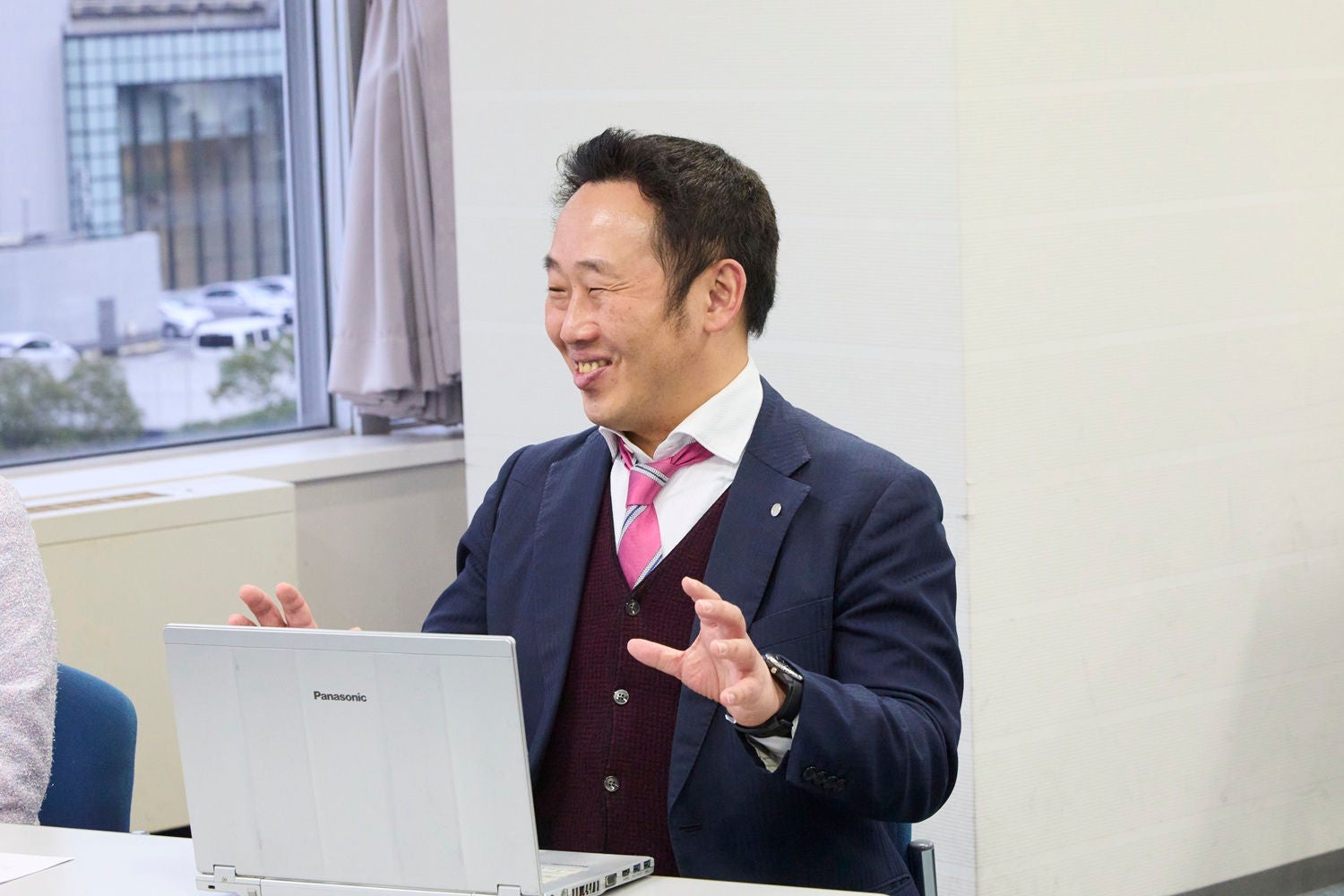 Professor Takuya Iida
Kitagaki: To advance social implementation, I believe it is necessary to visualize the challenges, including peripheral issues beyond the core research, and work together to resolve them. For this project, we organized the issues by clarifying which ones should be addressed jointly with the university and which areas should apply existing technologies.
Tokonami: Even so, new challenges emerged every time we scaled. When we increased the cell size from 2 cm on each side to 4 cm, and then to 10 cm on each side, unexpected problems arose. Each time, we consulted DNP and TMEIC, asking, “Can this be solved?” and continued making improvements. Once one challenge was overcome, the next one would inevitably appear. It was a repeating process.
Kitagaki: In general, university research tends to emphasize in-depth exploration at the lab scale (a small scale during the initial stage), while companies like ours focus on scaling up toward practical application. You could say this reflects the difference between research-focused development and technology-focused development. Although these differences in perspective exist, in this project, the three organizations are working toward the shared goal of practical application on an equal footing, exchanging opinions frankly regardless of their respective positions as we address the challenges. I feel that this is quite rare and valuable for an industry-academia collaboration project.
Since microbial power generation is not yet an established technology and we are still in the process of building a path toward practical application through trial and error, that may also be one reason why the three organizations are able to work together on an equal footing.
— Microbial power generation developed by Professors Tokonami and Iida has achieved an unprecedented level of power output, but what exactly makes it superior?
Iida: There are other studies on microbial power generation, but the uniqueness and defining feature of the approach Professor Tokonami and I have pursued is its ability to use light to instantly collect microbes at densities that are orders of magnitude higher than those achieved with conventional methods.
Tokonami: In other microbial power generation studies, microbes must first be cultivated in order to increase their numbers, which means the system cannot be started immediately when electricity is needed. In other words, it takes a certain amount of time before stable power generation can be achieved. In our research, however, optical condensation can collect tens of thousands of cells within several tens of seconds to several minutes, enabling power generation in a very short time. I believe this immediacy is a major strength.
— How much electricity can actually be generated?
Tokonami: At present, we have successfully lit an LED by connecting three cells in series. Once scaled, we plan to secure a level of power generation suitable for practical application.
Kitagaki: At the lab level, we have reached the stage where the cells can be scaled up to 10 cm on each side. We have also succeeded in generating even greater power by stacking cells that had previously been operated as single cells.
But at the same time, challenges related to stability have also become apparent. Our next step is to optimize the system, stabilizing it as both a power source and as a wastewater treatment method while also aiming for further scaling.
 Takashi Kitagaki
Creating a larger cycle through microorganisms: the future of wastewater treatment plants as power plants
— During your presentation at the Expo, you also spoke about the idea that “wastewater treatment plants could become power plants.” Could you tell us about the future the three organizations envision?
Tokonami: The summer of 2025 brought record-breaking temperatures, making the effects of climate change feel more immediate than ever. When I think about the future, I cannot help but feel a strong sense of urgency when considering whether the Earth will remain a sustainable environment for the next generation and those that follow. With that awareness in mind, I believe microbial power generation can play an important role as one of the sustainable energy technologies of the future.
Right now, wastewater treatment plants consume enormous amounts of energy to process water. However, if microbial power generation is put into practical use, it will become possible to recover energy directly from the treatment process itself. In other words, wastewater treatment plants could be transformed from facilities that consume electricity into facilities that generate it. We refer to this concept as “environmentally restorative microbial power generation.”
Kitagaki: If microbial power generation is commercialized, it will become possible to integrate wastewater treatment plants and power plants at the same location. Another major advantage is that the scale of the system can be flexibly designed according to specific applications and requirements. It can be deployed not only as a large-scale centralized facility but also as a small- or medium-scale distributed system, which is why we believe it has the potential to help address social challenges facing Japan, such as excessive concentration in major cities and depopulation in rural areas.
Ishikawa: This technology can simultaneously generate three forms of value from wastewater without releasing heat or CO2 into the environment: purified water, oxygen, and electricity. It purifies water and helps keep the air clean as well. We believe it represents a power generation system with characteristics unlike anything that has existed before.
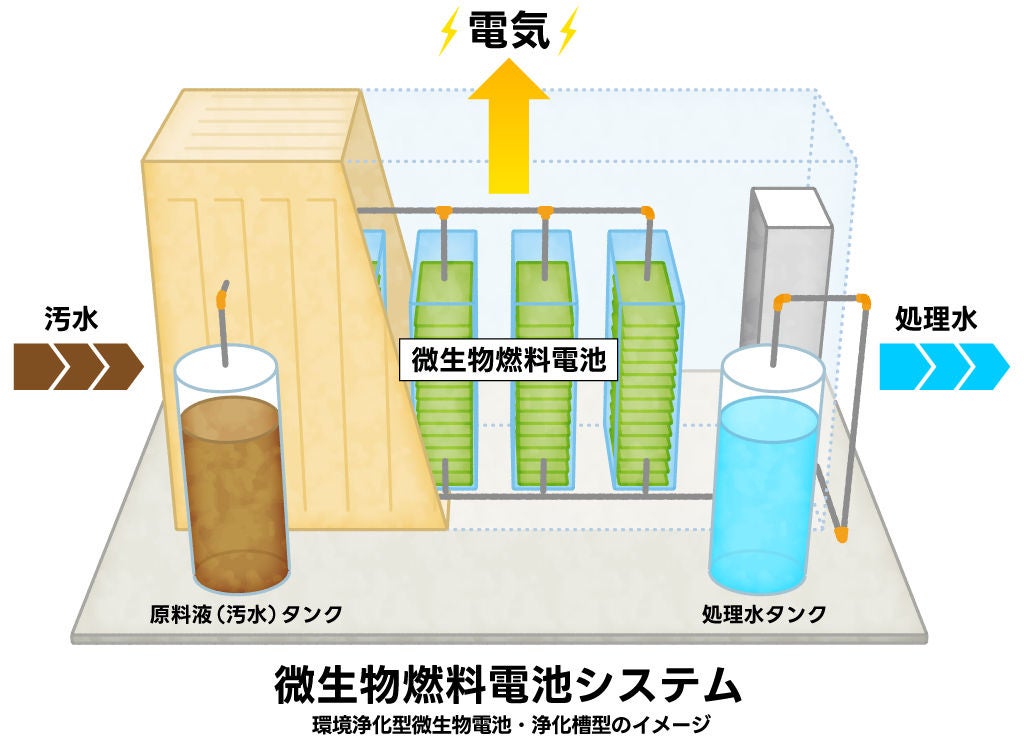 An illustration of environmentally restorative microbial power generation, which purifies wastewater while generating electricity.
DNP’s Iuchi: At DNP, we are also pursuing value creation in the new field of energy, and microbial power generation is currently our most advanced project within the broader vision of generating energy in everyday settings. At Expo 2025 Osaka, Kansai, Japan, we introduced this project at the Future Life Experience (FLE) exhibition within the Future Life Village co-creation zone, where it attracted considerable interest from visitors.
Iida: I hope that readers of this article will think, “This looks interesting” or “We'd like to be part of this,” and that new companies and partners will join the effort. I hope this environmentally restorative microbial power generation technology will spread throughout Japan and around the world, improving local environments while supporting the foundations of society through sustainable energy. I would like to see a future like that become a reality.
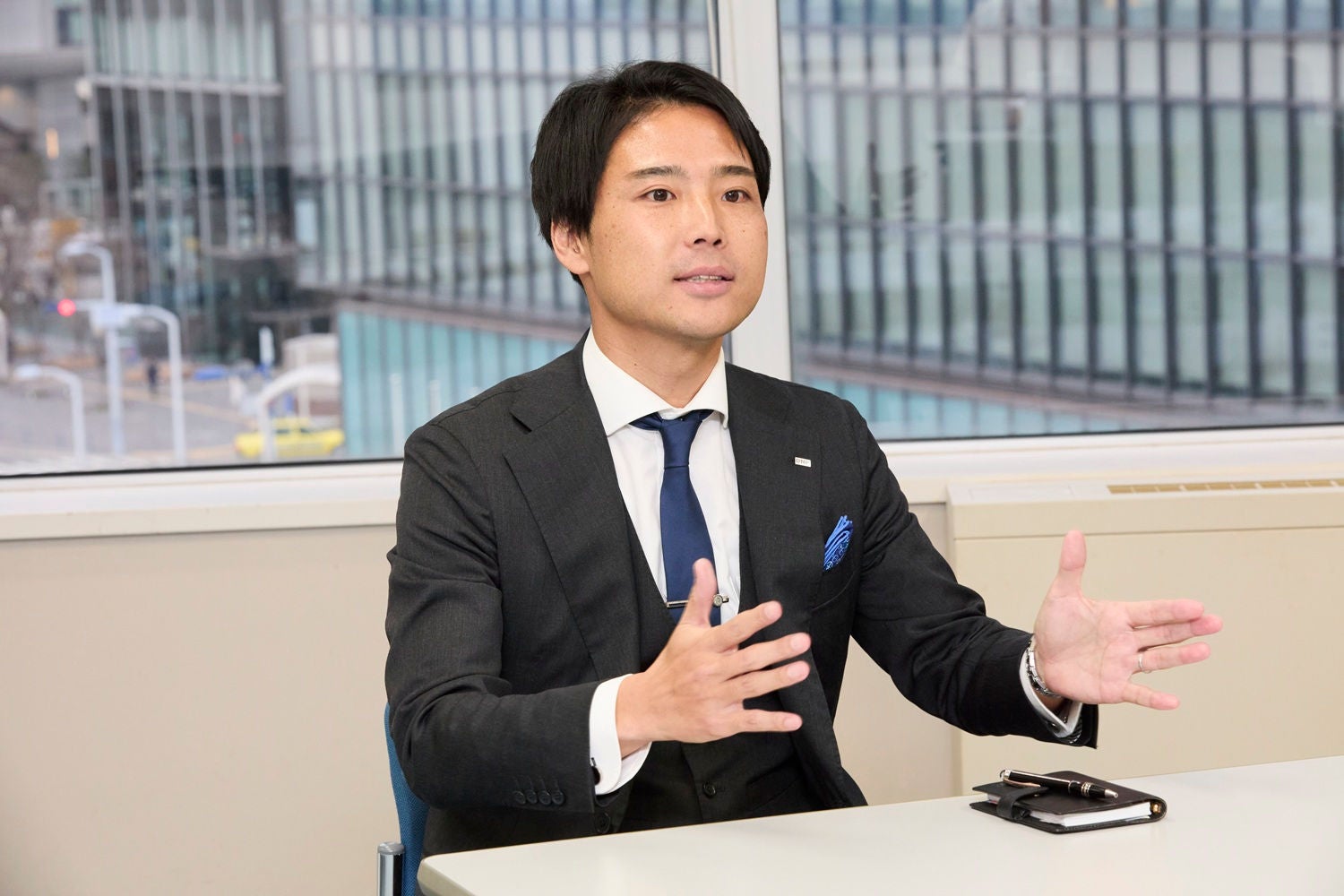 Shunsuke Iuchi
— What are your goals going forward?
Tokonami: We view 2030, the target year for the Sustainable Development Goals (SDGs), as an important milestone. By then, we hope to demonstrate a clear path toward the practical application of microbial power generation and establish it as a technology that contributes to carbon neutrality.
Kitagaki: At this stage, we see one milestone for 2030 as developing a system that can supply electricity while contributing to environmental restoration in everyday settings. For example, we envision commercializing a wastewater treatment system about the same size as a household septic tank, using domestic wastewater from baths, toilets, and other sources for wastewater treatment and power generation. In terms of power output, we anticipate a system capable of powering its own operation while generating enough electricity to charge devices such as mobile phones.
Tokonami: Beyond that, we are also looking toward larger-scale wastewater treatment systems. If microbial power generation systems could be deployed in coastal areas throughout Japan, including Osaka Bay, they could theoretically be expanded to supply electricity to anywhere from several million to tens of millions of households.
Ishikawa: I joined this project because I was drawn to the appeal of the technology itself. However, unless we can translate that technology into something that delivers real value to society, it cannot create value as a business. We will continue to move forward with the ultimate goal of social implementation in mind.
DNP's vision for a self-producing, self-consuming energy society
Guided by its brand statement, “Creating future standards,” DNP showcased and presented its latest initiatives in the energy field at the Future Life Experience (FLE), part of the Future Society Showcase Project at Expo 2025 Osaka, Kansai, Japan. By combining its unique technologies centered on P&I (Printing & Information) with a diverse range of external technologies and expertise, DNP is creating new forms of value. One example is DNP’s vision for a self-producing, self-consuming energy society.
This vision aims to integrate energy into everyday life, not through large-scale supply concentrated in limited locations, but through systems that generate energy close to where it is needed and use it as required. By leveraging technologies for power conversion, energy storage, and system control, DNP seeks to implement mechanisms that circulate energy while minimizing environmental impact.
To realize this vision, DNP has focused on four approaches: generating energy from living organisms, generating energy from light, generating energy from the surrounding environment, and making efficient use of the energy generated. By designing the entire process from energy generation to utilization as a single integrated flow, DNP is envisioning forms of energy that function naturally within everyday life and society.
The microbial power generation project introduced in this article is one of the initiatives that has progressed furthest toward practical demonstration. DNP views its presentation at the Expo as an important opportunity and will continue to advance verification efforts to ensure that this initiative moves beyond the conceptual stage and becomes a technology that functions in the real world.
Going forward, DNP will continue working with partners from a wide range of fields, each bringing their own unique strengths, to advance the realization of a self-producing, self-consuming energy society. DNP is actively seeking new collaborations with companies, research institutions, and other partners who share an interest in this vision and wish to explore and promote demonstration projects and real-world implementation together.
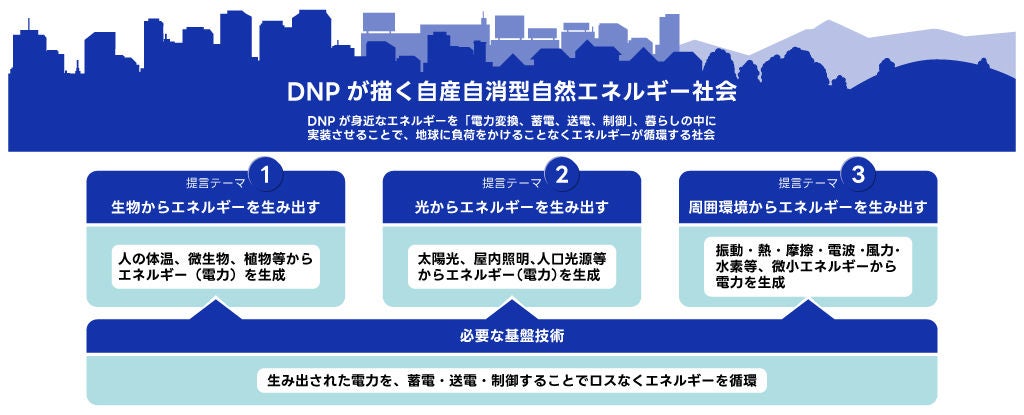 The future we aim to realize by 2050
- For inquiries, please contact Shunsuke Iuchi or Manabu Yamamoto at Dai Nippon Printing Co., Ltd.
(Please use the “Contact” button in the upper right corner.)
- Please note that the information provided is current as of the publication date.
First published: May 29, 2026 by Discover DNP Editorial Department
Discover more



Related products and services
Articles
-
News Release: Exhibiting at the Osaka-Kansai Expo with the theme "A Renewable Energy Society in 2050" (in Japanese)
-
News Release: Dai Nippon Printing and BIPROGY begin full-scale research on improving logistics efficiency using quantum technology and AI. (in Japanese)
-
News Release: EXPO Story [Episode 4] Future Energy Co-creation Project: Using the World Expo as an opportunity to create the "future standards" from the energy sector (in Japanese)