
Human Rights and Labor
Basic Approach
DNP recognizes that respect for human rights is a fundamental responsibility that all companies must fulfill and is an essential foundation for sustained improvements in corporate value. We support human rights standards such as the International Bill of Human Rights and the United Nations Guiding Principles on Business and Human Rights and are strengthening our efforts through dialogue with a wide range of stakeholders, including employees, local communities, suppliers, customers, and shareholders and investors.
Based on the corporate philosophy —”The DNP Group connects individuals and society, and provides new value.”— DNP aims to realize a better society by respecting the differences between individuals, accepting each other, and making the most of that diversity. In addition, we aim to contribute to sustainable development by maintaining and improving workplace safety and health, physical and mental health of our employees and their families, and promoting the creation of a healthy, safe, and vibrant workplace.
Policy
Respect human dignity and diversity is a component of the DNP Group Code of Conduct. At DNP, we respect for the diversity of each individual’s unique culture, nationality, beliefs, race, ethnic group, language, religion, gender, age, ideas and perspectives. After deliberations of the Board of Directors, DNP established the DNP Group Human Rights Policy in 2020, respecting international norms, such as the International Bill of Human Rights and the International Labour Organization (ILO) Declaration on Fundamental Principles and Rights at Work, and based on the UN Guiding Principles on Business and Human Rights.
Promotion Structure
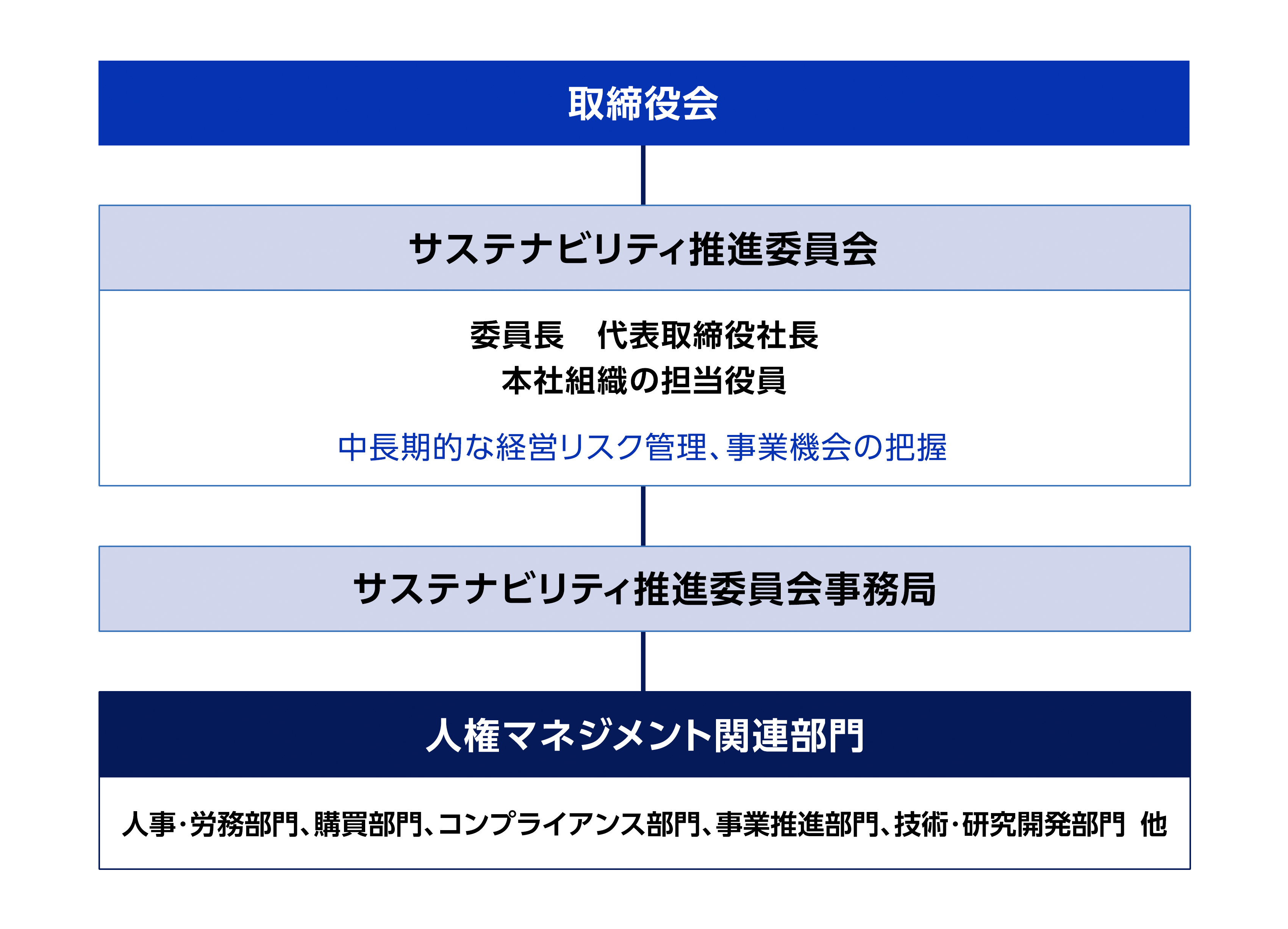
DNP promotes the management of human rights under the Sustainability Committee, with the committee's secretariat playing a central role in coordinating with relevant divisions at the Head Office. The committee manages medium- to long-term risks from the perspective of sustainability, including human rights, and is responsible for identifying business opportunities and reflecting them in management strategies, as well as reporting and making recommendations to the Board of Directors.
Strategy and Risk Management (Human Rights Due Diligence)
DNP is strengthening its human rights due diligence efforts in accordance with the DNP Group Human Rights Policy. Recognizing that its business activities influence the human rights of all stakeholders, including DNP’s suppliers and the communities it operates within, in addition to its employees, DNP implements many different measures to prevent or mitigate any adverse human rights impacts its activities may have. Additionally, to secure access to the remediation that is required when doing human rights due diligence, DNP is increasing the effectiveness of its contact point that is used by stakeholders and promoting dialogue with stakeholders.
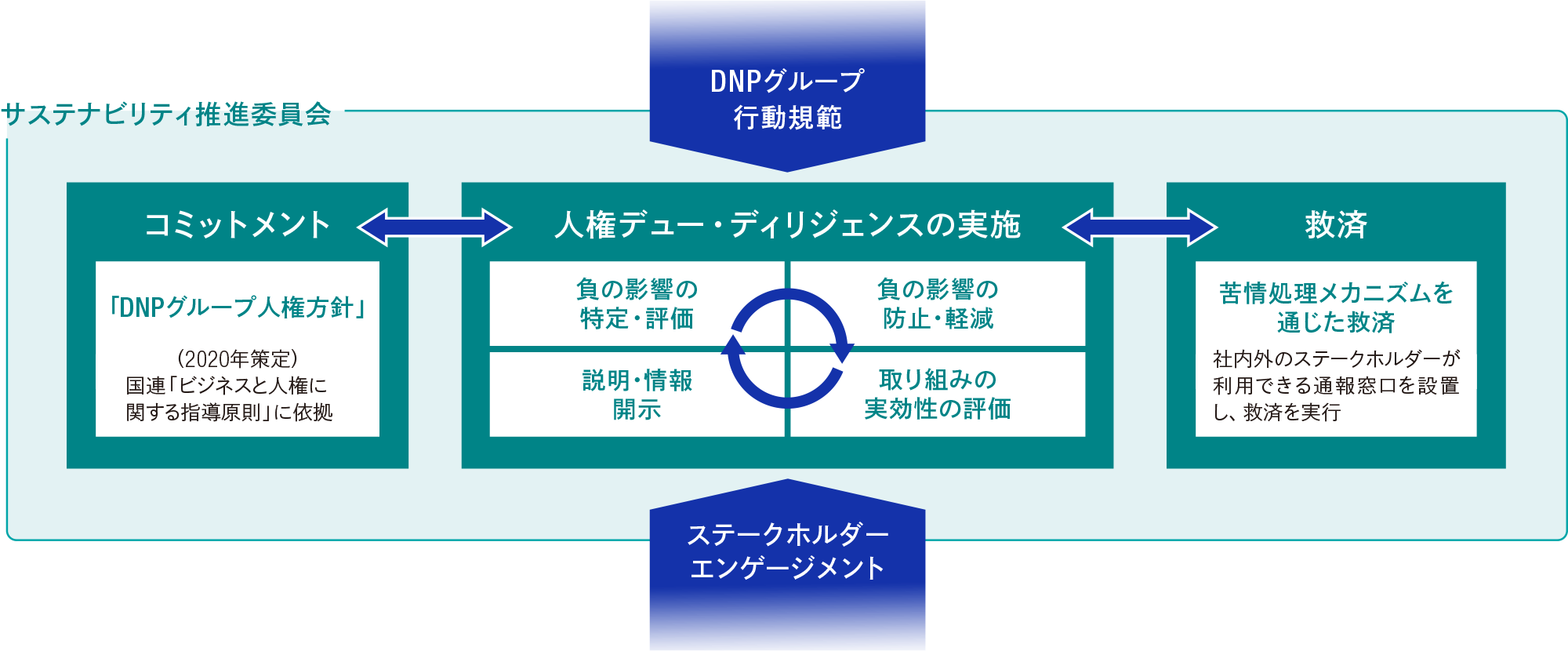
Identification and Assessment of the Adverse Impacts on Human Rights
In 2025, DNP collaborated with external experts to assess adverse impacts on human rights at the company and its domestic and overseas Group companies (with some exceptions). The results of the assessment were reported to the Sustainability Committee, which then deliberated and re-identified salient human rights issues for DNP. Going forward, we will continuously review the identified human rights issues, taking into account social trends, changes in business activities, dialogue with stakeholders, and information from reporting channels.
Assessment approach
1. Identifying adverse impacts on human rights that DNP should consider
- Based on reports and recommendations from international organizations and NGOs, we have outlined the characteristics of adverse impacts that should be taken into consideration within the industry.
- We identify adverse impacts that are likely to become apparent and their details based on past troubles and lawsuits within the industry, including those involving competitors
- Through interviews and surveys of relevant divisions and bases both in Japan and overseas, we have grasped the details and characteristics of DNP's business, as well as current risk awareness and concerns.
2. Identifying salient human rights issues at DNP
For identified adverse impacts, we will determine the initial importance by assessing its severity and likelihood of occurrence, and identify salient human rights issues that DNP should address as a priority.
- Severity (scale, remediability, scope)
- Likelihood of occurrence (presence or absence of potential risk factors and the status of risk materialization)
Identified salient human rights issues
In response to the identified salient human rights issues, DNP is implementing measures such as improving the workplace environment, promoting occupational health and safety, and implementing management based on sustainable procurement guidelines for suppliers. Going forward, we will continue to expand and strengthen these measures in order to further enhance the prevention and mitigation of any adverse impacts on human rights.
| Salient Human Rights Issues | Attempt | |
|---|---|---|
| DNP |
employees’ harassing business partners,* clients’ harassing DNP employees)
|
ハラスメント対策 労働安全衛生 健康経営 |
| Supply chain |
|
Supply Chain Management |
| Products and Services |
|
製品・サービスの安全性と品質 情報セキュリティ |
* Business partners: Suppliers, outsourcing contractors, on-site subcontractors, alliance partners, joint investors, etc.
Remediation Measures
DNP is promoting the creation of an environment in which rights holders can easily report and seek advice on issues and has established a complaints handling mechanism that enables the company to identify infringements of rights and lead to corrective action and remediation. DNP has set up reporting hotlines for each applicable stakeholder, including employees and business partners, and operates them in a way that protects the confidentiality of information and the anonymity of whistleblowers, ensuring that whistleblowers do not suffer any disadvantage.
Employee Hotline
We have established a system for providing remediation by setting up a consultation and reporting hotline for issues such as workplace conditions and harassment. We have also established a system that allows employees to consult with the designated contact person at their organization at any time.
Stakeholder Contact Point
We have established and are operating a Compliance Hotline, which allows suppliers, subcontractors, and former employees to report any compliance issues they become aware of regarding DNP's business activities or employee behavior. Additionally, the inquiry form on the corporate website accepts reports from a wide range of stakeholders, including companies, organizations, and consumers. Protection and remediation for whistleblowers are also important issues, and DNP is working to resolve these issues while promoting fair and impartial corporate activities.
Related Measures
Education and Awareness
DNP believes it is essential that each employee who supports DNP’s business activities understands the importance of respecting human rights and incorporates this understanding into their daily activities. Therefore, we have been conducting e-learning on "Business and Human Rights" since FY2021, targeting approximately 30,000 employees in the DNP Group, aiming to promote understanding of human rights. In FY2024, we conducted training sessions on the DNP Group Human Rights Policy and human rights issues based on international standards, using an easy‑to‑understand manga format, and approximately 21,600 employees took the course. We also invite external experts to conduct programs aimed at encouraging employees to act in a way that respects human rights. Additionally, during Human Rights Week, we raise awareness through in-house signage and the intranet and implement human rights initiatives in conjunction with our social contribution activities. We also offer a wide range of training programs, including "Diversity & Inclusion" and mineral procurement education for specific business segments.
For external suppliers, we communicate the importance of addressing human rights issues and work with them through various surveys, interviews, supplier information sessions and other opportunities based on the DNP Group Sustainable Procurement Guidelines.
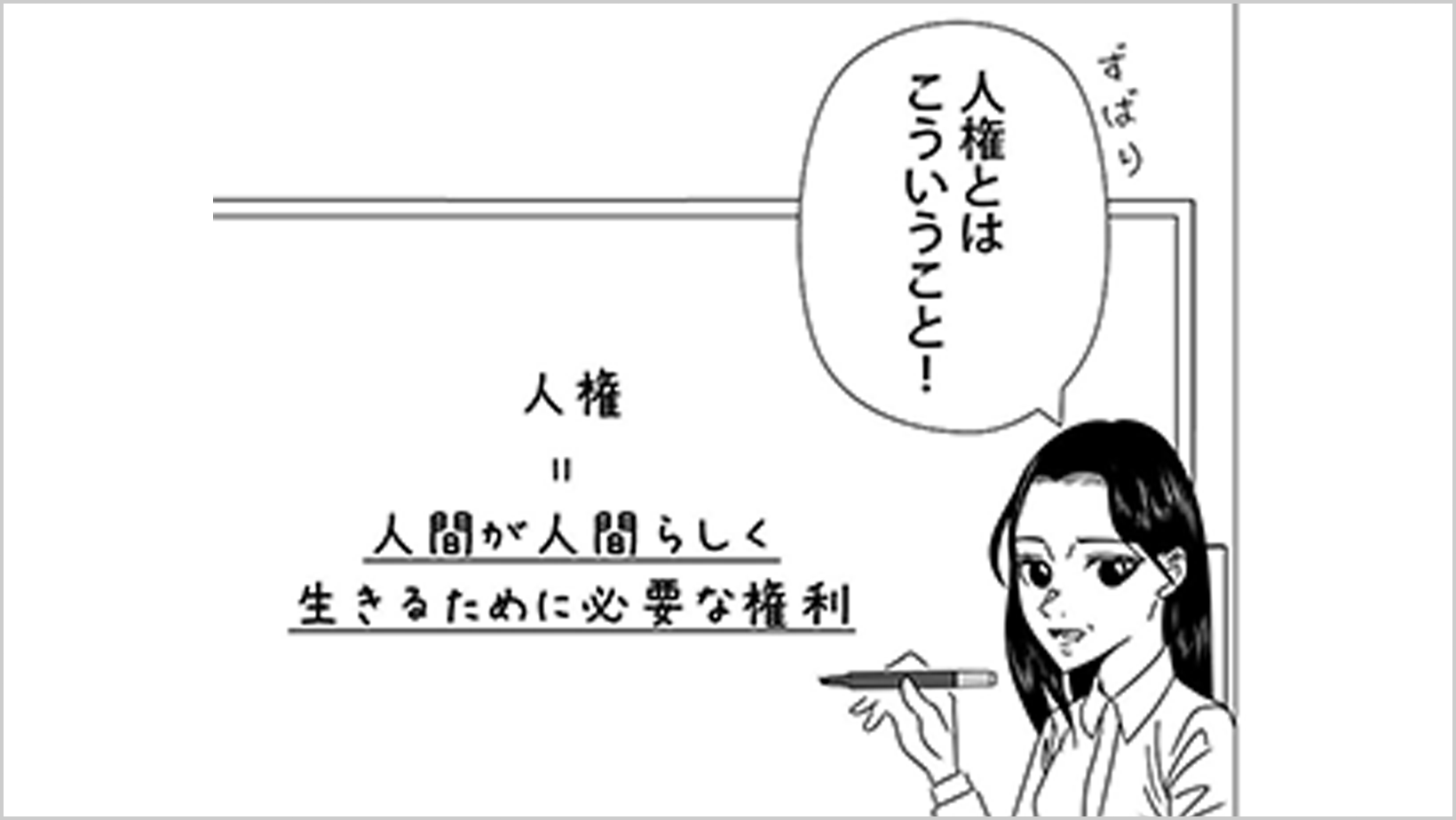 Panel from manga-based training materials on Business and Human Rights
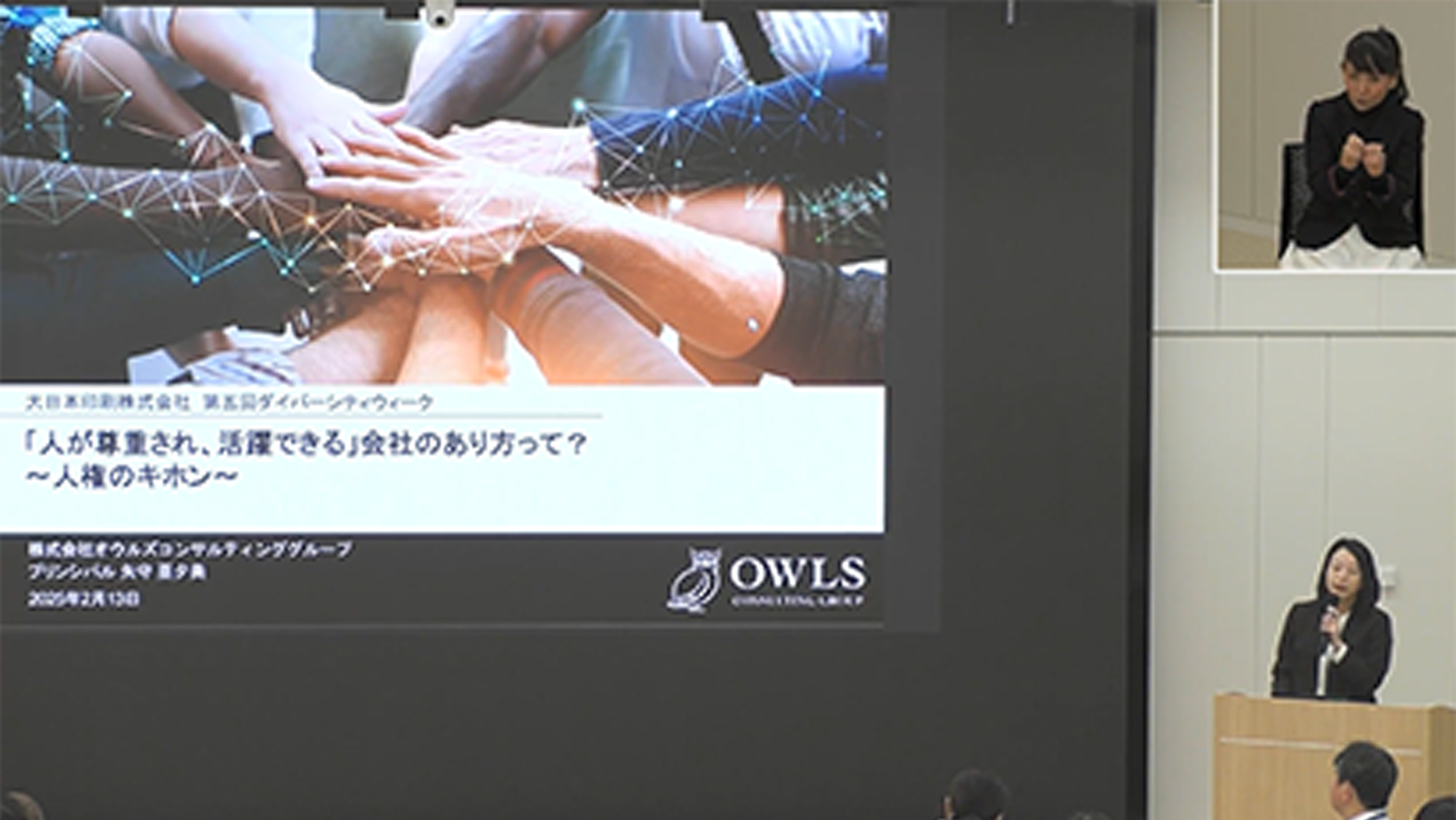 Lecture on "Business and Human Rights" by an external expert
Initiatives for Employees' Human Rights
Harassment Measures
With the aim of maintaining a healthy work environment, we have formulated sexual harassment prevention rules, power harassment prevention rules, and maternity harassment/care harassment prevention rules, and have established essential measures for the prevention and early detection of problems and for ensuring appropriate resolution.
Additionally, as part of management training during promotions, DNP educates all trainees on how to respond appropriately to harassment. We also conduct annual harassment training for all managers on an ongoing basis.
Payment of Fair Wages
DNP complies with laws and regulations requiring wages above the minimum wage stipulated by each country, and is mindful of paying a living wage that takes into account social trends such as prices. Furthermore, all employees’ wages are determined under a compensation system based on their current roles and performance, reflecting expected roles and results (expected contributions), and in accordance with the principle of “equal pay for equal work.” Accordingly, there are no differences in treatment based on seniority or gender. In addition to providing legally mandated employee benefits, DNP also proactively and continuously implements systems to support employees’ independent career development, measures to enhance both job satisfaction and work environment, and initiatives to improve the well-being of each individual employee.
Diversity & Inclusion
DNP promotes diversity and inclusion utilizing diverse individuality. Through these initiatives, we aim to respect the human rights of employees by preventing discrimination and harassment and ensuring psychological safety.
Labor-Management Relations
Based on “mutual understanding and mutual trust” between labor and management, the DNP Group has established systems (Joint Management Council, Labor-Management Expert Committee, etc.) for undertaking labor-management discussions and exchanging opinions on a variety of issues to realize the stable and sustainable development of management as well as the fulfillment and well-being of employees. Also, the DNP Group holds a wide range of labor-management discussions on work styles, workplace environments, overall personnel systems, safety and health, and more.
This fulfilling labor-management relationship is also one of the strengths of the DNP Group and we will further advance this relationship toward demonstrating the comprehensive strengths of “All DNP.”
In October 2006, DNP announced its Joint Labor-Management Declaration to share with all employees “the shape of labor-management relations to aim for” and “the starting point of labor-management relations.” “Labor-management collaboration” advocated in the Joint Labor-Management Declaration means that all employees, including those besides company and union members, have a shared recognition of the “direction we aim for" through Taiwa (dialogue) and fulfill their respective roles toward the direction.
Joint Labor-Management Declaration
Preamble
We mutually confirm the importance of “labor-management cooperation” to the goal of the perpetual development of the DNP Group and society, and to enhance the role we are bound to fulfill in society as a truly superior company, and we hereby issue the following declaration:
Page 1
To contribute to 21st Century society through cooperation
Page 2
To seek perpetual development and wealth
Page 3
To create a corporate culture based on TAIWA
Renshikai (Mutual Relief Association)
The Company and its labor union contributed their own respective funds to establish a fund, and thereby have built a unique framework under which the two parties work together to operate various mutual aid programs. In fiscal 2024, 10,489 benefit payments related to life events were made.
Initiatives as a Corporate Citizen
Nurturing the next generation
DNP supports the Convention on the Rights of the Child (adopted by the United Nations General Assembly in 1989) and the Principles on the Rights of the Child and Business (developed by UNICEF, the UN Global Compact, and Save the Children in 2012). We not only prohibit child labor but also respect the four rights of children as stipulated in the Convention on the Rights of the Child: the right to live, to grow up, to be protected, and to participate. As one of the DNP Group Social Contribution Policy and Social Contribution Themes, we emphasize the development of next generations, supporting the sound growth of the children who will lead the next generation.
Community Engagement
As a member of many communities, DNP maintains close ties with these communities that are both in Japan and abroad. For example, in the Ichigaya district of Tokyo, where the company’s head office is located, DNP participates in the Local School Management Council to support school operations and the District Disaster Prevention Council to help create a safe and secure environment. Nationwide, DNP promotes green space development and biodiversity conservation at its various sites. In instances where construction projects may temporarily impact the environment, DNP works closely with local residents, providing clear communication and proactive measures to minimize disruption. While fostering strong communication with not only its business partners but also community stakeholders and establishing appropriate frameworks, DNP responds to issues in an appropriate manner.