
Climate Change (Decarbonized Society)
Basic Approach
The effects of climate change are becoming more severe with each passing year, significantly impacting the environment, society, and economy. In response to this climate crisis, there is a need to accelerate efforts to achieve carbon neutrality by 2050, and the role that companies must play in this is becoming ever more important. By working to resolve various environmental issues, including climate change, DNP will not only solve social issues, but also provide new value that meets people's expectations.
Indicators/Goals
DNP obtained the approval of the international organization Science Based Targets (SBT) Initiative in July 2018. In April 2021, our target was revised upward as a target well below the 2°C target.
Furthermore, the Scope 1 and 2 emission reduction targets were revised in 2024, and the Scope 3 emission reduction targets were revised in 2025, and they have all been certified as 1.5°C targets in April 2025.
| 2050 Environmental Vision | ||
|---|---|---|
| • Scope 1 and 2: We aim to achieve effective net-zero greenhouse gas emissions from business activities at our own sites. • Scope 3: We will contribute to create a decarbonized society through our products and services. |
||
| FY2030 Targets | FY2025 Results | |
| Scope 1・2 emission reduction | Scope 1 and 2 emissions: 46.2% reduction compared to FY2019 (SBT) |
Compared to FY2019: 32.3% reduction Emissions in FY2025: ★719 thousand tons -CO2e (Emissions in FY2019: 1,062 thousand tons -CO2e ) |
| Scope 3 emission reduction (Target: Categories 1, 3, 4, 5) |
Scope 3 emissions: |
Compared to FY2019: 18.3% reduction Emissions in FY2025: ★2,904 thousand tons -CO2e (Emissions in FY2019: 3,556 thousand tons -CO2e ) |
| Reducing transportation-related environmental impact | Transportation fuel consumption per unit of sales: 11% reduction compared to FY2019 |
Compared to FY2019: 24.9% reduction Unit cost for FY2025: ★0.964 kL/billion yen (FY2019 Unit Cost: 1.28 kL/billion yen) |
Scope1・2 emissions
| FY2019 (Base year) | FY2023 Results | FY2024 Results | FY2025 Results |
|---|---|---|---|
| 1,062,000 tons - CO2e | 846,000 tons - CO2e | 866,000 tons - CO2e | 719,000 tons - CO2e 32.3% reduction |
Scope 3 emissions (applicable to categories 1, 3, 4, and 5)
| FY2019 (Base year) | FY2023 Results | FY2024 Results | FY2025 Results |
|---|---|---|---|
| 3,556,000 tons - CO2e | 3,257,000 tons - CO2e | 2,990,000 tons - CO2e | 2,904,000 tons - CO2e 18.3% reduction |
Some of the data contained in this report has been assured by LRQA Limited to ensure its reliability.
A star mark ★ has been attached to each one of the indicators that have been assured by LRQA Limited.
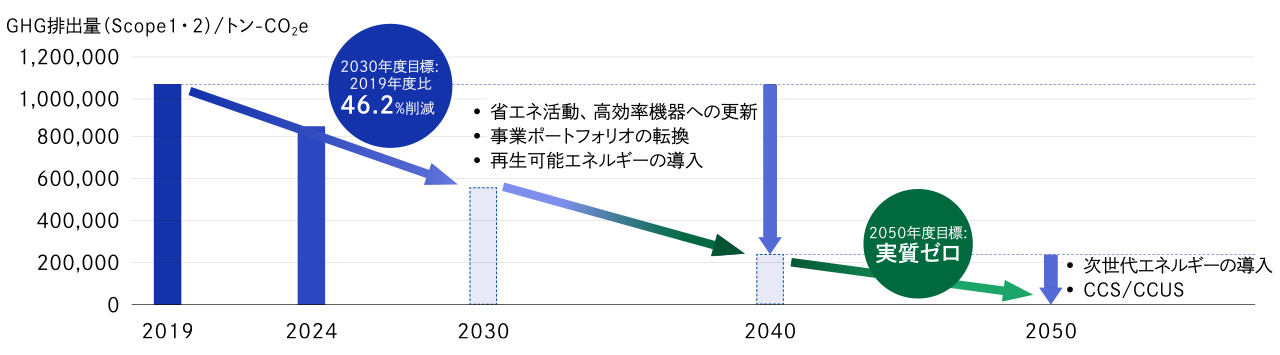
Roadmap to carbon neutrality by 2050 (Scope 1 and 2)
Short term goals
Scope 1 and 2 emissions reduction target
| Item | Target emissions (thousand tons - CO2e) | Target reduction rate |
|---|---|---|
| FY2019 (Base year) | 1,062 | ー |
| FY2025 | 794 | 25.2% |
| FY2026 | 750 | 29.4% |
| FY2027 | 705 | 33.6% |
| FY2028 | 661 | 37.8% |
| FY2029 | 616 | 42.0% |
| FY2030 | 571 | 46.2% |
Roadmap for reducing Scope 3 emissions
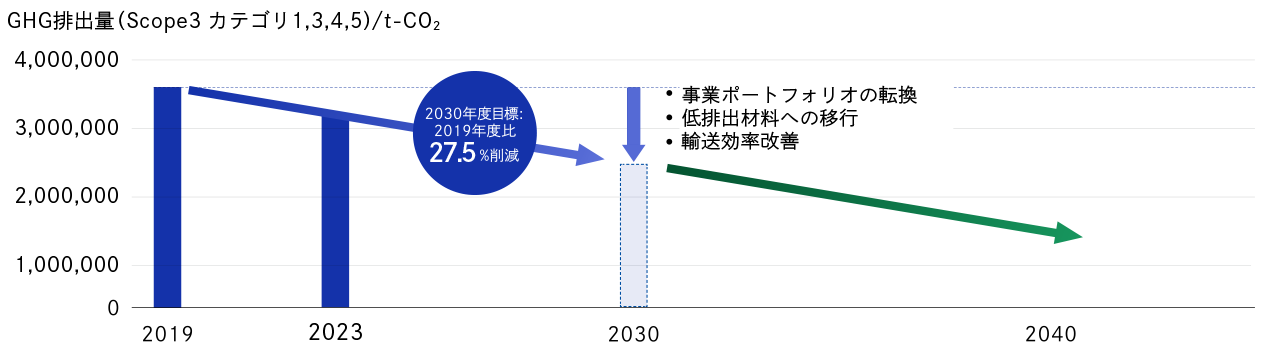
Scope 3 emissions reduction target
| Target emissions (thousand tons - CO2e) Target categories: 1, 3, 4, 5 |
Target reduction rate | |
|---|---|---|
| FY2019 (Base year) | 3,556 | - |
| FY2025 | 3,023 | 15.0% |
| FY2026 | 2,934 | 17.5% |
| FY2027 | 2,845 | 20.0% |
| FY2028 | 2,756 | 22.5% |
| FY2029 | 2,667 | 25.0% |
| FY2030 | 2,578 | 27.5% |
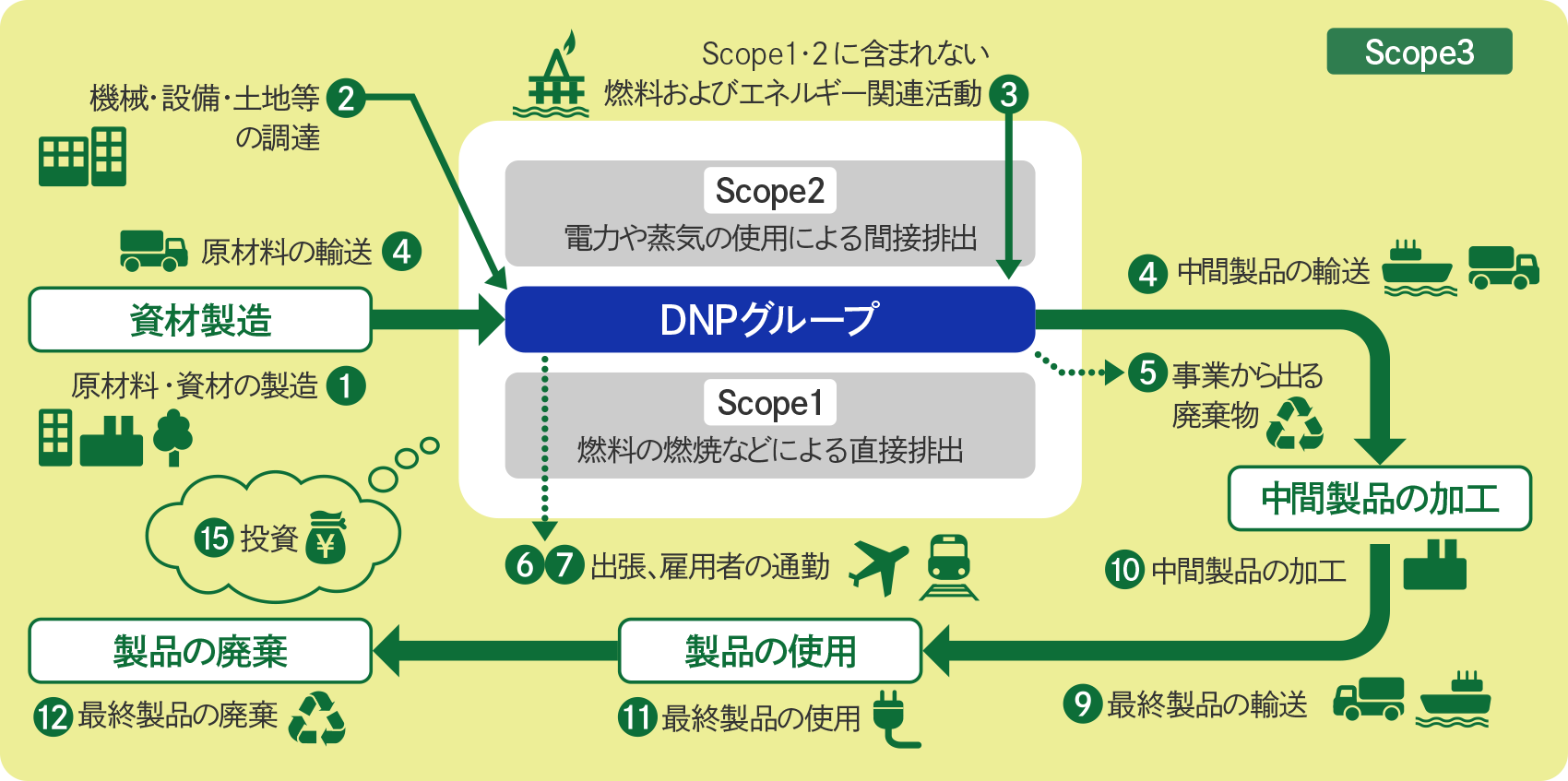
- The numbers in the diagram represent the category classifications defined by the GHG protocol.
Endorsement of the TCFD Recommendations
In addition to disclosing information using the framework recommended by the Task Force on Climate-related Financial Disclosures (TCFD), we will strive to improve the quality and quantity of information disclosure based on the Taskforce on Nature-related Financial Disclosures (TNFD) recommendations, thereby deepening dialogue with stakeholders.
Initiatives
Initiatives to Reduce Scope 1 and 2 Emissions
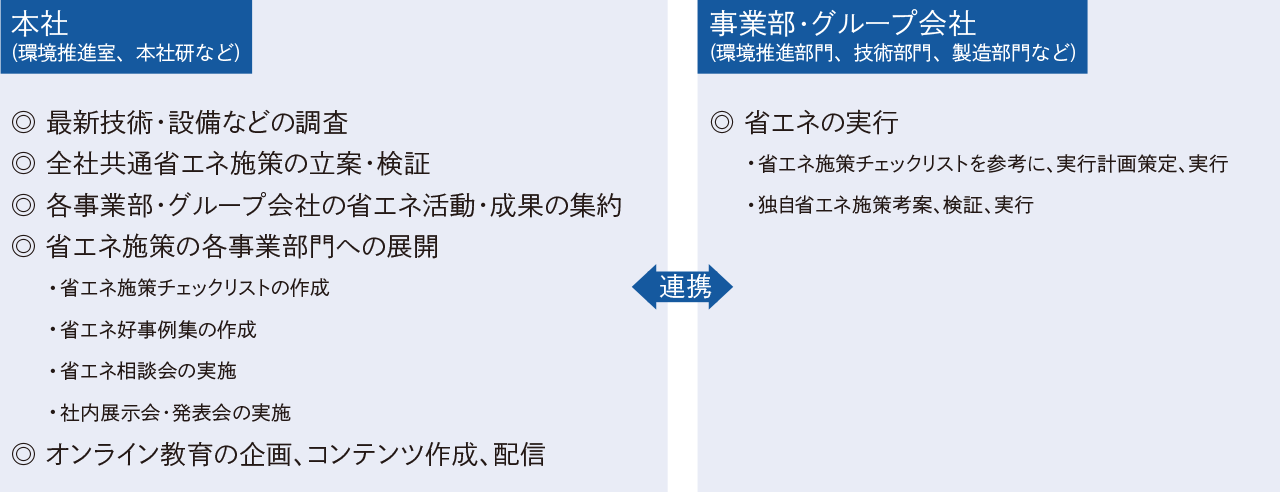
To help realize a decarbonized society, DNP is working to reduce its GHG emissions (Scope 1 and 2 emissions) by transforming its business portfolio, further promoting energy conservation, and introducing renewable energy. In particular, the DNP Group is continuously working to reduce unnecessary energy consumption across the entire group, with a focus on the manufacturing sector, which accounts for a significant portion of emissions.
Furthermore, when selecting equipment, we utilize internal carbon pricing (set at 20,000 yen per ton of CO2) to aim for the introduction of equipment with a lower environmental impact.
Promotion of Energy-Saving Initiatives
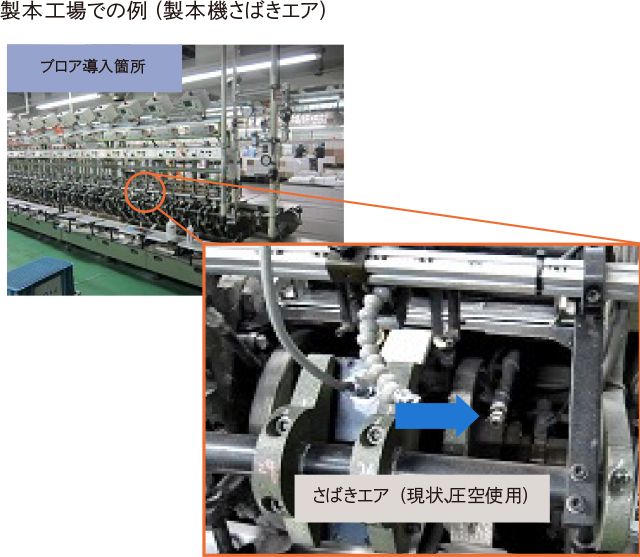
• Examples of energy conservation
Example 1
Blowers are used to replace the part for which compressed air with discharge pressure reduced by regulators is used.
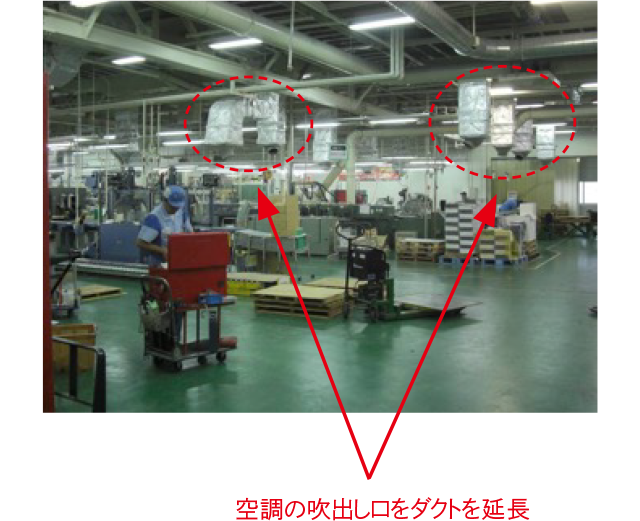
Example 2
If air conditioning outlets are located in high places, it is possible to save energy by extending the air conditioning ducts downwards (close to the work area) and reduce the air-conditioned area and the air volume.
Expanding the Use of Renewable Energy
In fiscal year 2025, we actively promoted the introduction of renewable energy. As a result, the total amount of renewable energy generated, purchased, and used through the use of certificates, etc., in fiscal year 2025 reached 397.4 thousand MWh, accounting for 32.9% of total electricity consumption. In fiscal year 2025, we installed solar panels at the Okayama Plant and progressively advanced the conversion of our office buildings to renewable energy, beginning the partial introduction of effective renewable energy at the Ichigaya Kagacho Building.
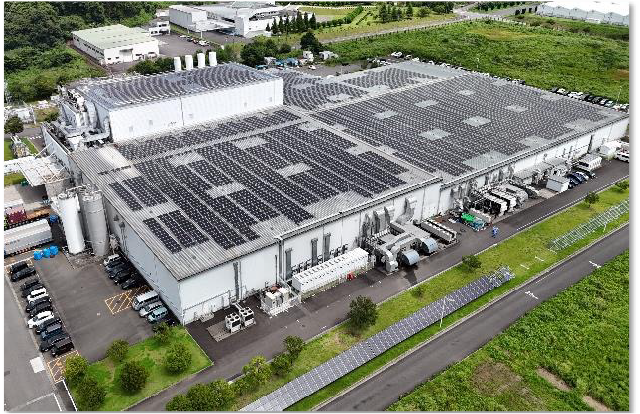 Solar power generation system at the Izumizaki Plant
• Utilization of renewable energy
• Installation of solar power generation systems at major sites
| Installation place | System capacity |
|---|---|
| Ichigaya office | 100 kW |
| Kashiwa research facility | 600 kW |
| Kyotanabe Plant | 1,300kW |
| Karawang Plant | 2,700kW |
| Mihara East Plant | 4,600kW |
| Izumizaki Plant | 1,700kW |
| Toyama Plant | 500kW |
| Okayama Plant | 900kW |
Initiatives to Reduce Scope 3 Emissions
DNP believes that reducing GHG emissions throughout the entire product lifecycle is essential, and it is therefore working to reduce indirect emissions (Scope 3 emissions) across the entire supply chain, in addition to Scope 2 emissions.
In April 2025, we updated our previous target (Supplier Engagement Target) to a new goal of “reducing Scope 3 emissions (Categories 1, 3, 4, and 5) by 27.5% compared to fiscal 2019 levels by fiscal 2030,” and we are actively promoting initiatives to achieve this reduction.
Specifically, we are continuously conducting supplier briefings, surveys, and interviews to transition our business portfolio toward environmentally conscious operations and to procure raw materials with lower environmental impact (low-emission materials). Going forward, we will continue to strengthen our relationships with suppliers and accelerate our efforts to reduce emissions by improving the tracking of GHG emissions and promoting the transition to low-emission materials.
Transport volume
We are implementing distribution-related environmental impact reduction measures such as the improvement of the loading ratio, the optimization of vehicle distribution and transport routes, improved efficiency through the installation of digital tachometers, an Idling stop campaign, a modal shift to rail transport, and the introduction of hybrid vehicles.