
DNP Group Key Environmental Data
The environmental data book is available here.
Third-party assurance of environmental data (Independent Assurance Statement)
Some of the data contained in this report has been assured by LRQA Limited to ensure its reliability.
A star mark ★ has been attached to each one of the indicators that have been assured by LRQA Limited.
Medium- to long-term goals and achievements (activity record up to March 2026)
GHG Emissions
Medium- to long-term goals (SBT certification)
Reduce Scope 1+2 emissions by 46.2% compared to FY2019 by FY2030 (target from fiscal 2024)
| FY2019 (Base year) | FY2023 | FY2024 | FY2025 |
|---|---|---|---|
| 1,062,000 tons - CO2e *1 | 846,000 tons - CO2e | 866,000 tons - CO2e | ★719,000 tons -CO2e ※2 32.3% reduction |
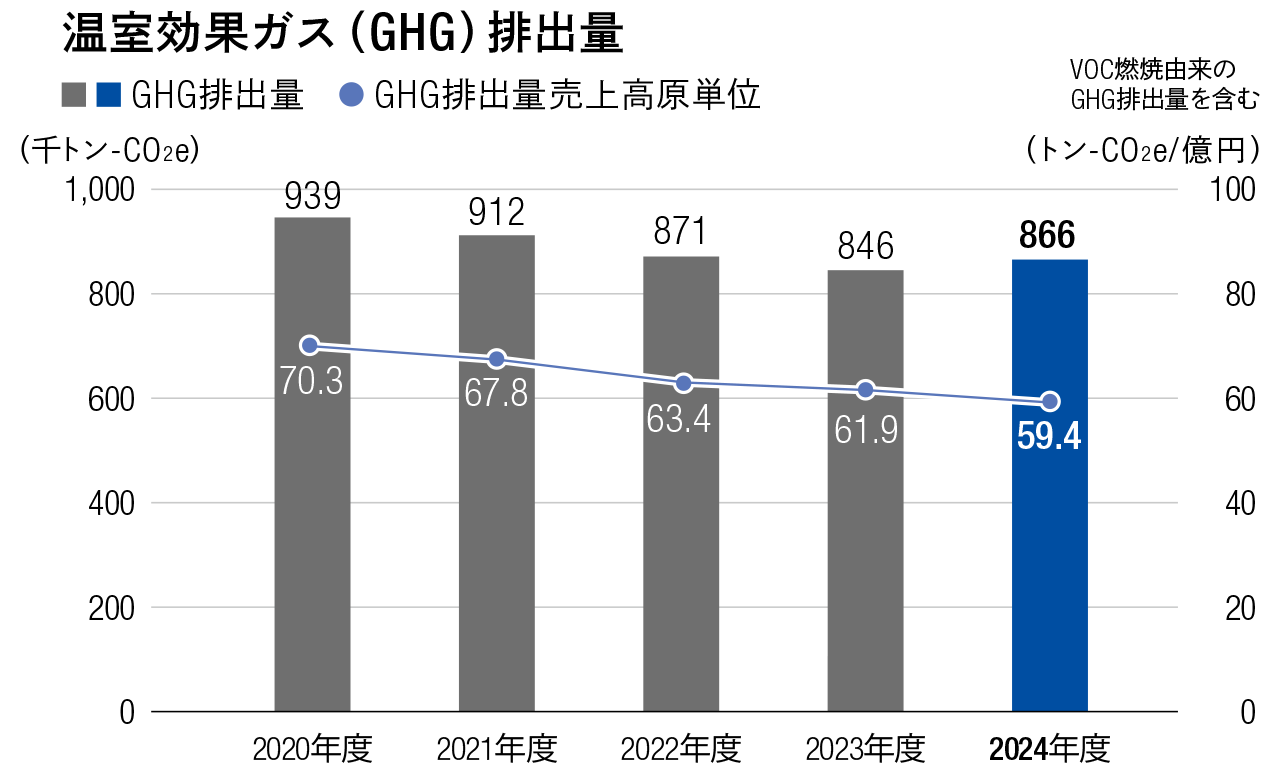
Medium- to long-term goals (SBT certification)
Reduce Scope 3 emissions (Categories 1, 3, 4, and 5) by 27.5% compared to fiscal 2019 by fiscal 2030 (target from fiscal 2024)
| FY2019 (Base year) | FY2023 | FY2024 | FY2025 |
|---|---|---|---|
| 3,556,000 tons - CO2e | 3,257,000 tons - CO2e | 2,990,000 tons - CO2e | ★2,904,000 tons - CO2e 18.3% reduction |
Starting in FY2024, GHG emissions from VOC combustion will be included in Scope 1 emissions. Accordingly, emissions from FY2019 to 2023 have also been recalculated.
- Emissions from CMIC CMO Co., Ltd. have been added to the base year of FY2019.
- DNP High-performance Materials Hikone Co., Ltd., DNP Hikari Metal Co., Ltd., and others have been added to the scope of calculation.
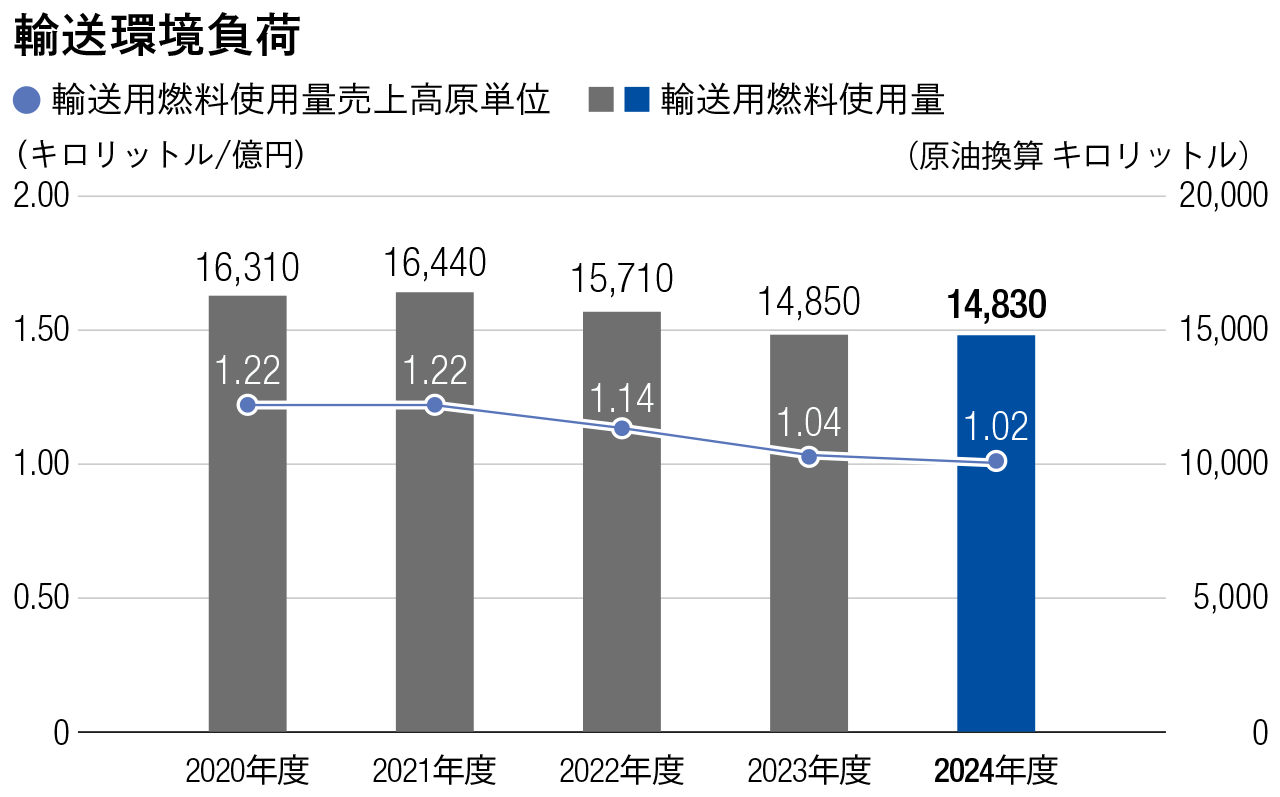
Transportation-related Environmental Impact
Medium-to long-term goals
An 11% reduction compared to FY2019 by FY2030 (target from FY2024)
| FY2019 (Base year) | FY2023 | FY2024 | FY2025 |
|---|---|---|---|
| 12.8kL/billion yen | 10.4kL/billion yen |
10.2kL/billion yen |
★9.6kL/billion yen 24.9% reduction |
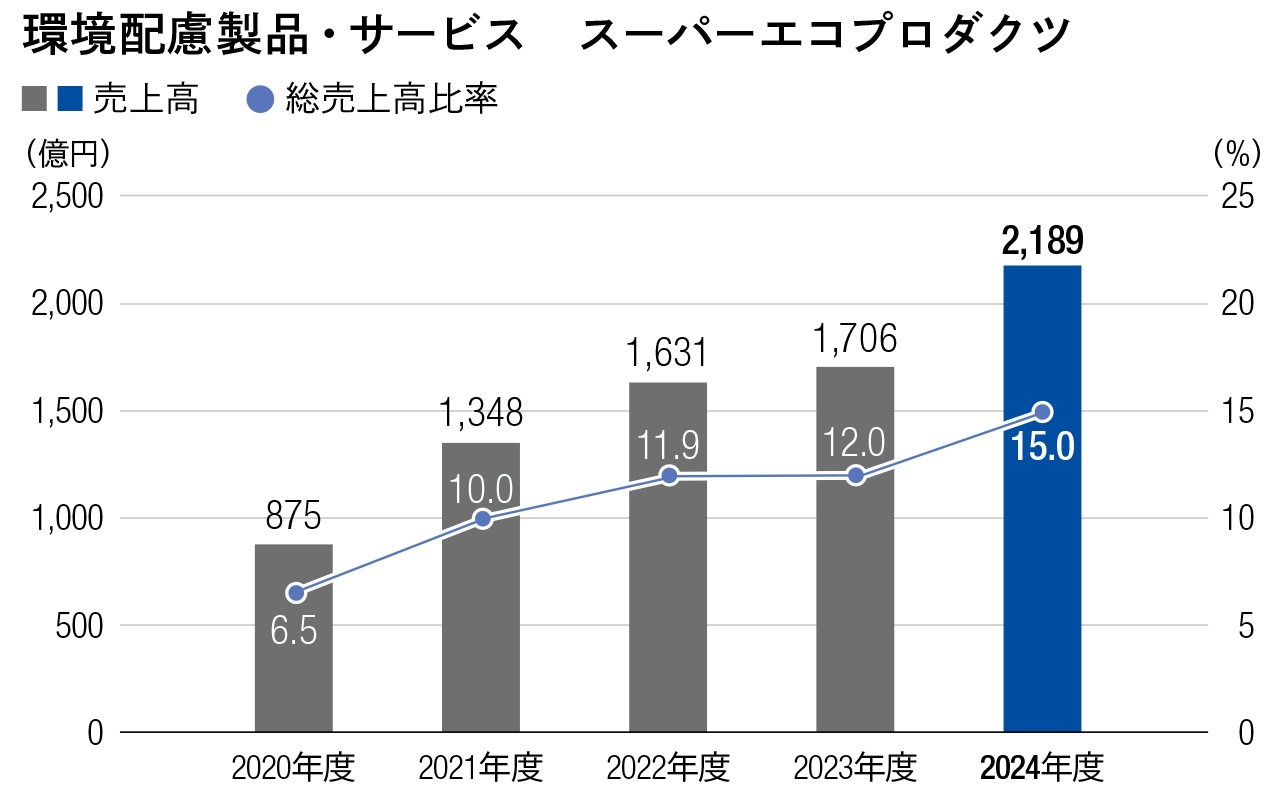
Sales of Eco-Friendly Products and Services
Medium-to long-term goals
Increase the ratio of Super Eco-Products to total sales to 30% by FY2030 (target from FY2024)
| FY2023 | FY2024 | FY2025 |
|---|---|---|
| 12.0% | 15.0% | ★18.3% |
Resource Recycling Rate
Medium-to long-term goals
Achieve a resource recycling rate* of 70% for all unnecessary objects by FY2030 (target from FY2024)
| FY2023 | FY2024 | FY2025 |
|---|---|---|
| 62.4% | 63.5% | ★65.9% |
- Of the unnecessary objects excluding paper and other valuable materials, the percentage that are recycled through material or chemical recycling.
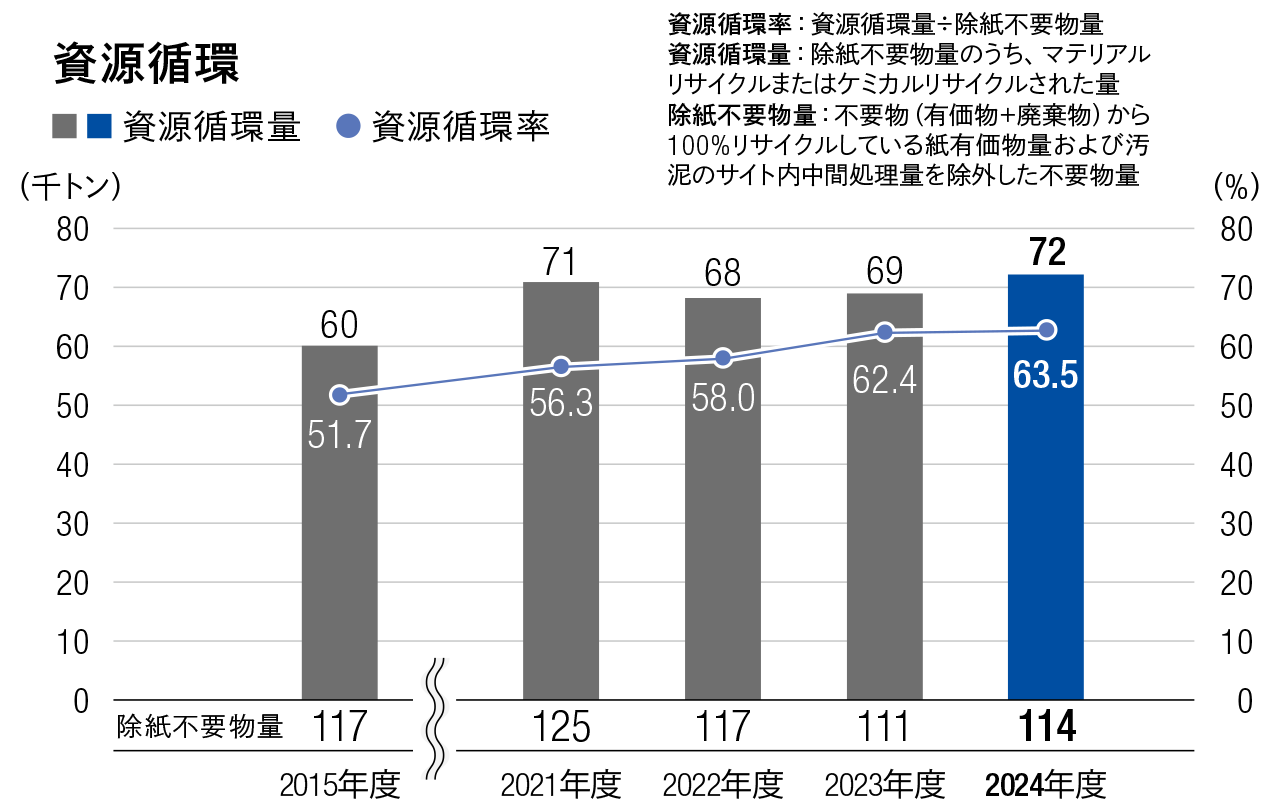
Resource circulation rate: Resource circulation amount ÷ Paper removal unnecessary objects x 100
Resource recycling volume: The amount of unnecessary objects paper that is recycled through material recycling or chemical recycling.
Paper unnecessary objects: The amount unnecessary objects (waste + valuable materials) minus the amount of paper valuable materials and the unnecessary objects sludge processed on-site.
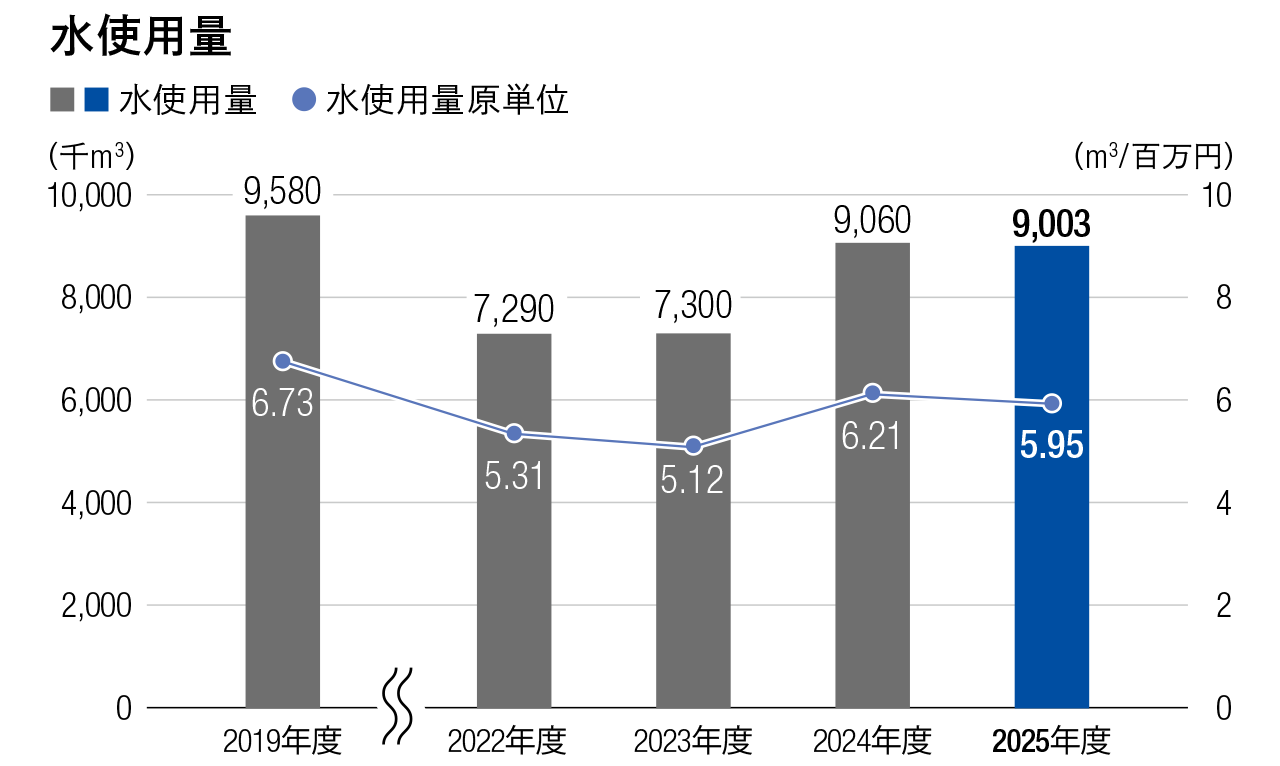
Water Usage
Medium-to long-term goals
Reduce water usage per unit of sales by 30% compared to FY2019 by FY2030 (target from FY2024)
| FY2019 (Base year) | FY2023 | FY2024 | FY2025 |
|---|---|---|---|
| 6.73m3/million yen*1 | 5.12m3/million yen | 6.21m3 / million yen | ★5.95m3 /million yen ※2 7.7% reduction |
- CMIC CMO Co., Ltd.'s water usage and sales figures were added to the base year of FY2019.
- We have added CMIC CMO Co., Ltd. and Tomoe Resin Co., Ltd. to the scope of calculation.
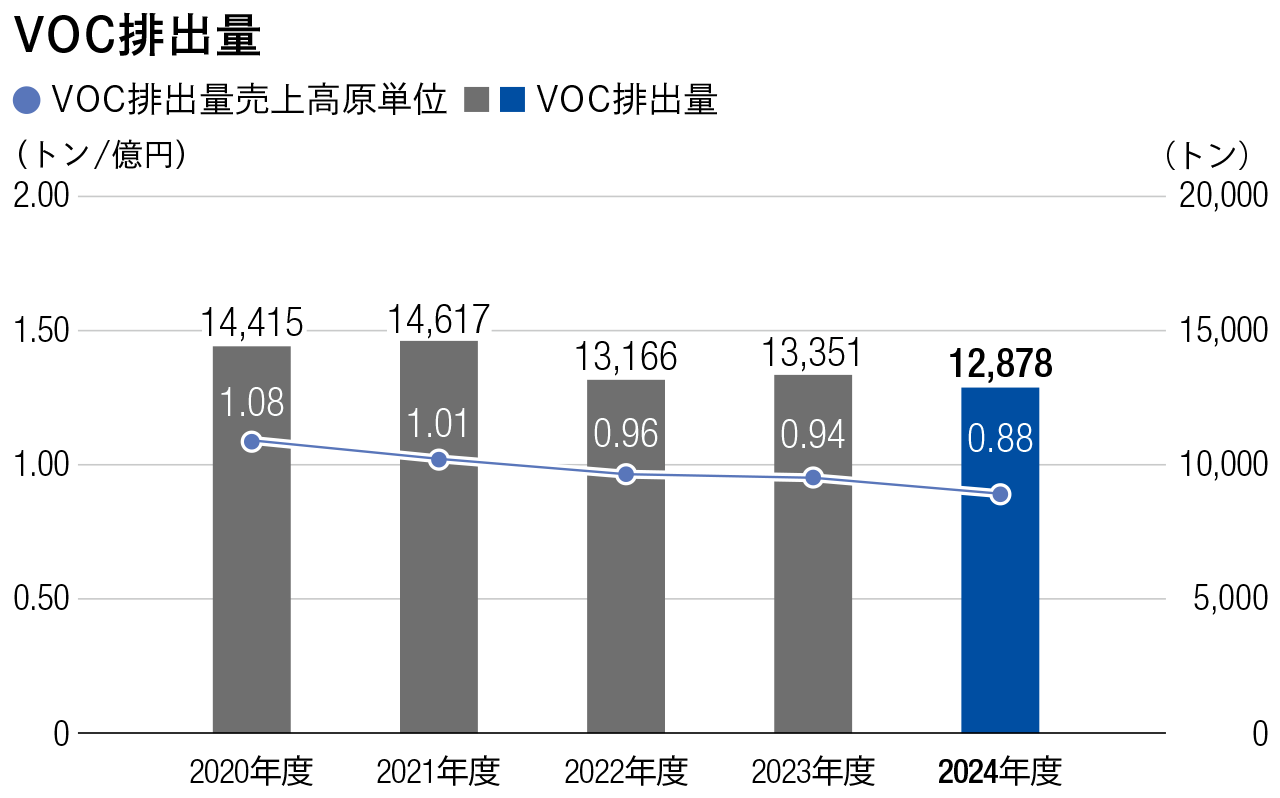
VOC Emissions
| FY2023 | FY2024 | FY2025 |
|---|---|---|
| 13,351 tons | 12,848 tons | 12,772 tons |
Environmental Conservation
Medium-to long-term goals
Maintain the maximum concentrations of regulated air emissions at 70% or less of the regulatory standard (voluntary standard)
| FY2023 | FY2024 | FY2025 |
|---|---|---|
| 98.4% | 100% | 100% |
Medium-to long-term goals
Maintain the maximum concentrations of wastewater discharge regulations at 70% or less of the regulatory standard (voluntary standard)
| FY2023 | FY2024 | FY2025 |
|---|---|---|
| 99.2% | 99.7% | 99.4% |
Medium-to long-term goals
Maintain the maximum odor levels at the site boundary at 70% or less of the regulatory standard (voluntary standard)
| FY2023 | FY2024 | FY2025 |
|---|---|---|
| 99.9% | 98.5% | 98.4% |
Medium-to long-term goals
Maintain the maximum noise level at site boundary at 70% or less of the regulatory standard (voluntary standard)
| FY2023 | FY2024 | FY2025 |
|---|---|---|
| 100% | 99.4% | 97.7% |
Medium-to long-term goals
Maintain the maximum vibration levels at site boundary at 70% or less of the regulatory standard (voluntary standard)
| FY2023 | FY2024 | FY2025 |
|---|---|---|
| 100% | 100% | 100% |
Other key data (activity record up to March 2026)
GHG Supply Chain Emissions
Unit: 1,000 tons-CO2e
| Item | FY2023 | FY2024 | FY2025 |
|---|---|---|---|
| Scope 1 emissions | 310 | 323 | ★ 310 |
| Scope 2 emissions | 535 | 543 | ★ 409 |
| Scope 3 emissions | 4,573 | 4,331 | 4,394 |
| Scope 1, 2, and 3 emissions | 5,419 | 5,197 | 5,113 |
Scope 3 category
| Category 1. Purchased goods and services | 2,909 | 2,645 | ★ 2,569 |
| Category 2. Capital goods | 128 | 134 | ★ 172 |
| Category 3. Fuel- and energy-related activities (not included in scope 1 or scope 2) | 136 | 144 | ★ 139 |
| Category 4. Upstream transportation and distribution | 184 | 174 | ★ 168 |
| Category 5. Waste generated in operations | 27 | 27 | ★ 28 |
| Category 6. Business travel | 12 | 13 | ★ 14 |
| Category 7. Employee commuting | 26 | 28 | ★ 26 |
| Category 8. Upstream leased assets | - | - | - |
| Category 9. Downstream transportation and distribution | 583 | 555 | ★ 567 |
| Category 10. Processing of sold products | - | - | - |
| Category 11. Use of sold products | 102 | 162 | ★ 261 |
| Category 12. End-of-life treatment of sold products | 445 | 432 | ★ 430 |
| Category 13. Downstream leased assets | - | - | - |
| Category 14. Franchises | - | - | - |
| Category 15. Investments | 18 | 18 | 20 |
Effective Use of Water Resources (Water withdrawal)
| Water sources | FY2023 | FY2024 | Actual results for fiscal year 2025 * |
|---|---|---|---|
| Surface water (clean water and industrial water) | 4,040,000m3 | 5.060,000m3 | 5,042,000m3 |
| Groundwater | 3,260,000m3 | 4,000,000m3 | 3,961,000m3 |
| River water | 0m3 | 0m3 | 0m3 |
| Sea water | 0m3 | 0m3 | 0m3 |
| Total amount | 7,300,000m3 | 9,060,000m3 | ★9,003,000m3 |
- CMIC CMO Co., Ltd., Tomoe Resin Co., Ltd., and DNP Scientific Analysis Center Inc. have been added to the scope of calculation.
Effective Use of Water Resources (Water discharged)
| Water sources | FY2023 | FY2024 | Actual results for fiscal year 2025 *1 |
|---|---|---|---|
| Public water areas*2 (rivers/oceans) | 2,620,000m3 | 3,990,000m3 | 3,840,000m3 |
| Sewer system | 2,930,000m3 |
3,980,000m3 | 3,170,000m3 |
| Ground infiltration | 0m3 | 0m3 | 0m3 |
| Total amount | 5,550,000m3 | 7,140,000m3 | ★ 7,010,000m3 |
- CMIC CMO Co., Ltd., Tomoe Resin Co., Ltd., and DNP Scientific Analysis Center Inc. have been added to the scope of calculation.
- When wastewater is discharged into public water areas such as rivers, it flows down the river and eventually reaches the ocean.
Reduction of Water Pollutants
| Item | FY2023 | FY2024 | FY2025 |
|---|---|---|---|
| Discharge of water pollutants COD | 1.35kg/100 million yen | 1.10kg/100 million yen | 1.11 kg/billion yen |
- Explanation of units: Although expressed as load weight/tons of product, we determined that weight was not an appropriate metric because our products vary widely, and therefore used sales as a substitute indicator.