
Disclosure of Information Based on TCFD and TNFD Recommendations

DNPは2024年4月、自然関連財務情報開示タスクフォース(Taskforce on Nature-related Financial Disclosure)の開示提言に沿った情報開示を行う意思を表明し、「TNFD Adopter」に登録しました。従来のTCFD(Task Force on Climate-related Financial Disclosures)に基づき情報開示してきた「気候変動」を自然の変化要因のひとつと捉え、TNFD提言に基づいた統合的な情報開示を進めています。
DNP is committed to harmonizing its business activities with the global environment. Environmental conservation and pursuit of a sustainable society are incorporated into our Code of Conduct, and we recognize addressing environmental issues―including climate change―as a key management priority. With strong requirements to reduce the negative impacts on the global environment, in recent years in particular, we have been promoting initiatives with a focus on the environment throughout all of our business activities. Going forward, we will continue to utilize frameworks such as the TNFDʼs LEAP (Locate, Evaluate, Assess, and Prepare) approach to further improve the quality and quantity of the value-chain related information that we disclose.
Disclosure Based on TNFD General Requirements
| Materiality | 自然関連課題に起因する財務インパクト開示をベースに、インパクト・マテリアリティを考慮しました。 |
|---|---|
| Scope of disclosed information | 3つの事業セグメントの直接操業と関連するバリューチェーンを対象としています。 |
| Location of nature-related issues | 下記ツールを活用して水リスクの高い地域を特定しました。 ・海外製造拠点:WRI(World Resources Institute)が提供するAqueduct ・国内製造拠点:ハザードマップ |
| 他のサステナビリティ関連の 開示との統合 |
「気候変動」を自然の変化要因の一つと捉え、さまざまな自然関連課題のシナジーとトレードオフを考慮した統合的な開示をめざしています。また、「環境・社会・経済」関連の社会課題を踏まえて特定したマテリアリティに基づく事業活動をWebサイトで開示しています。 |
| 対象期間 | 時間軸を以下の戦略と関連付けて設定しています。 ・短期(0~5年): 中期経営計画 ・中期(5~15年): 環境中期目標 ・長期(15年以降): 環境ビジョン |
| ステークホルダー エンゲージメント |
現在、気候変動や生物多様性の損失等による人権問題が課題となっており、その影響は社会的・経済的に大きな損害をもたらしています。こうしたなか、DNPの事業活動があらゆるステークホルダーの人権に影響を及ぼすことを認識し、負の影響を防止・軽減するため、ステークホルダーエンゲージメントを含む各種施策を実行しています。 |
Governance
DNPは、「環境への取り組み」を重要な経営課題の一つに位置づけ、マテリアリティで掲げるネイチャーポジティブなバリューチェーンの実現に向け、環境ビジョンの3つの社会「脱炭素社会」「循環型社会」「自然共生社会」への統合的な取り組みを推進しています。
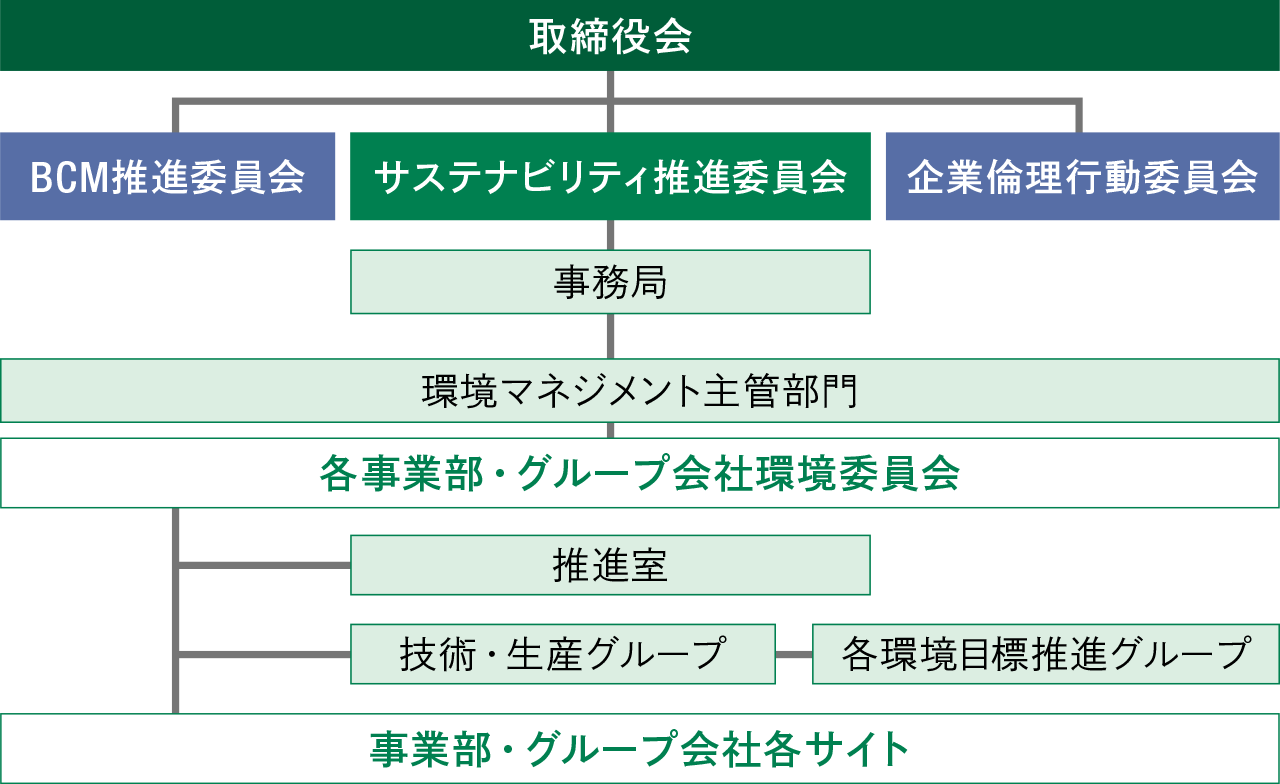
環境を含むサステナビリティに関する中長期的なリスクの管理と事業機会の把握や経営戦略への反映は、 代表取締役社長が委員長を務める「サステナビリティ推進委員会」が担っています。当委員会は、年4回以上開催しており、環境への取り組みについては、中期目標に対する進捗状況や移行計画に沿った今後の施策・投資に関する協議・決議を行っています。取締役会は、当委員会で協議・決議された事項の報告・提言を受け、サステナビリティに関するリスクと機会への対応方針や実行計画等について、審議・監督を行っています。決定した環境課題に対する戦略や方針等については、「各事業部・グループ会社環境委員会」と連携し、DNPグループ一体で取り組んでいます(下図)。
過去には、環境方針、環境ビジョン、サステナブル調達ガイドライン等の方針や基準について、サステナビリティ推進委員会(旧組織を含む)での協議・承認を経て、主要な議題については取締役会へ上申し、策定・改定を行っています。
Risk and Impact Management
DNP engages in integrated risk management to minimize the negative impacts of variable factors and expand business opportunities.
環境・社会・経済に関するリスクと機会は、サステナビリティ推進委員会が年に1回以上見直し、評価・管理しています。特に重要度や優先度が高いリスクについては、経営会議での協議を経て事業戦略・計画に反映し、選定された管理部門が中心となって対応しています。機会については、DNPグループ全体で注力する事業を定め、戦略的な事業展開につなげています。このプロセスのなかで、環境関連のKPIや投資の進捗も勘案し、事業計画や財務への影響、ステークホルダーの関心や環境・社会に与える影響の大きさ、発生可能性等の観点を踏まえ、必要に応じて事業戦略や投資計画に反映しています。
Strategy
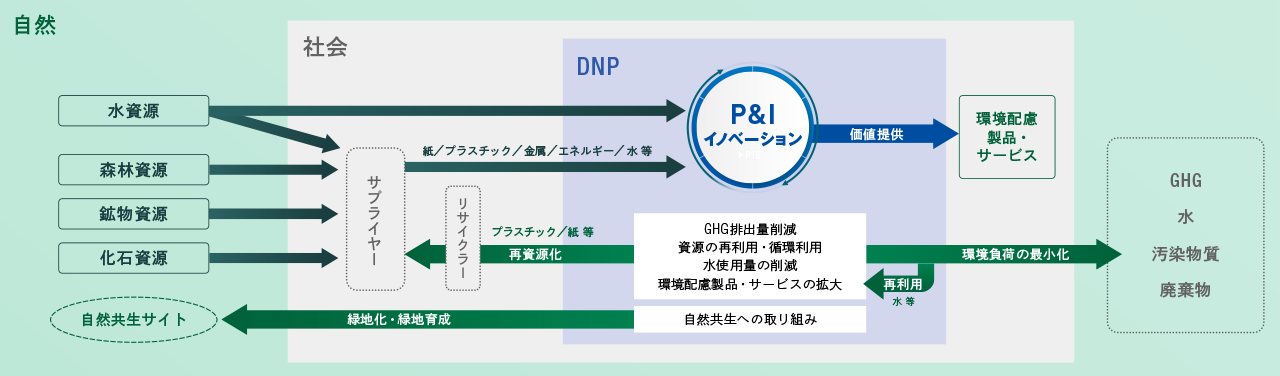
In its business activities, DNP relies on a wide range of ecosystem services and impacts natural systems. We have organized these dependencies and impacts within the context of DNP and Nature, identifying where in the value chain they occur and how they affect the natural environment.
DNPと自然との関わり
Dependencies and Impacts
DNPが事業で使用する原材料や副資材等は、生態系の供給サービスに依存しています。例えば、雑誌・書籍等に使う紙は森林資源を原料とし、リチウムイオン電池用バッテリーパウチや光学フィルム等には、鉱物資源や化石資源を利用しています(下表)。
| Main natural capitals | Our main products and services |
|---|---|
| Paper | Magazines, books, pamphlets, packaging materials |
| Water | Pharmaceutical and semiconductor-related materials |
| Mineral resources | Packaging materials, battery pouches for lithium-ion batteries |
| Plastic | ICカード、包装材、建材用化粧シート、リチウムイオン電池用バッテリーパウチ |
水資源への依存度が高い10拠点
なかでも水資源は、製造プロセスにおいて冷却や洗浄等の工程で直接的に利用しており、今後の事業拡大に伴う水使用量増加を考慮して、水資源への依存度が高い10拠点(下表)を特定し、重点的な管理を推進しています。
| 対象拠点 | 事業内容 |
|---|---|
| (株)DNPファインオプトロニクス 上福岡工場 | 電子精密部品製造 |
| (株)DNPファインオプトロニクス 三原東工場 | 電子精密部品製造 |
| シミックCMO(株) 静岡工場 | 医薬品等の製剤開発・製造 |
| シミックCMO(株) 西根工場 | 医薬品等の製剤開発・製造 |
| シミックCMO(株) 富山工場 | 医薬品等の製剤開発・製造 |
| シミックCMO(株) 足利工場 | 医薬品等の製剤開発・製造 |
| (株)DNPテクノパック 京田辺工場 | 包装用品の製造 |
| (株)DNPテクノパック 泉崎工場 | 包装用品の製造 |
| (株)DNP高機能マテリアル 戸畑工場 | 機能性フィルムの製造 |
| PT DNP Indonesia | 包装用品の製造 |
水リスクの高い4拠点
また、製造拠点の維持管理では生態系の調整・維持サービスに依存しており、特に水リスクの高い地域に近接するDNPの製造拠点を4カ所(下表)特定し、物理的リスクへの対応を強化しています。
| 対象拠点 | 事業内容 |
|---|---|
| DNP Vietnam Co., Ltd. | 昇華型・溶融型熱転写、記録材の製造 |
| DNP Imagingcomm Asia Sdn. Bhd. | 電子精密部品製造 |
| PT DNP Indonesia- Jakarta | 包装用品の製造 |
| PT DNP Indonesia- Karawang | 包装用品の製造 |
製造プロセスでは、大気への排出、水域への排出およびプラスチックを含む不要物等の排出が生じており、環境に対する負のインパクト要因になると考えています。
このような環境負荷の最小化に向けた活動を推進するとともに、緑地の育成、プラスチックや紙の再資源化、水の再利用、環境に配慮した製品・サービスの提供を通じて、ネイチャーポジティブ経済への移行に貢献していきます。
Current Status of Environmental Impact
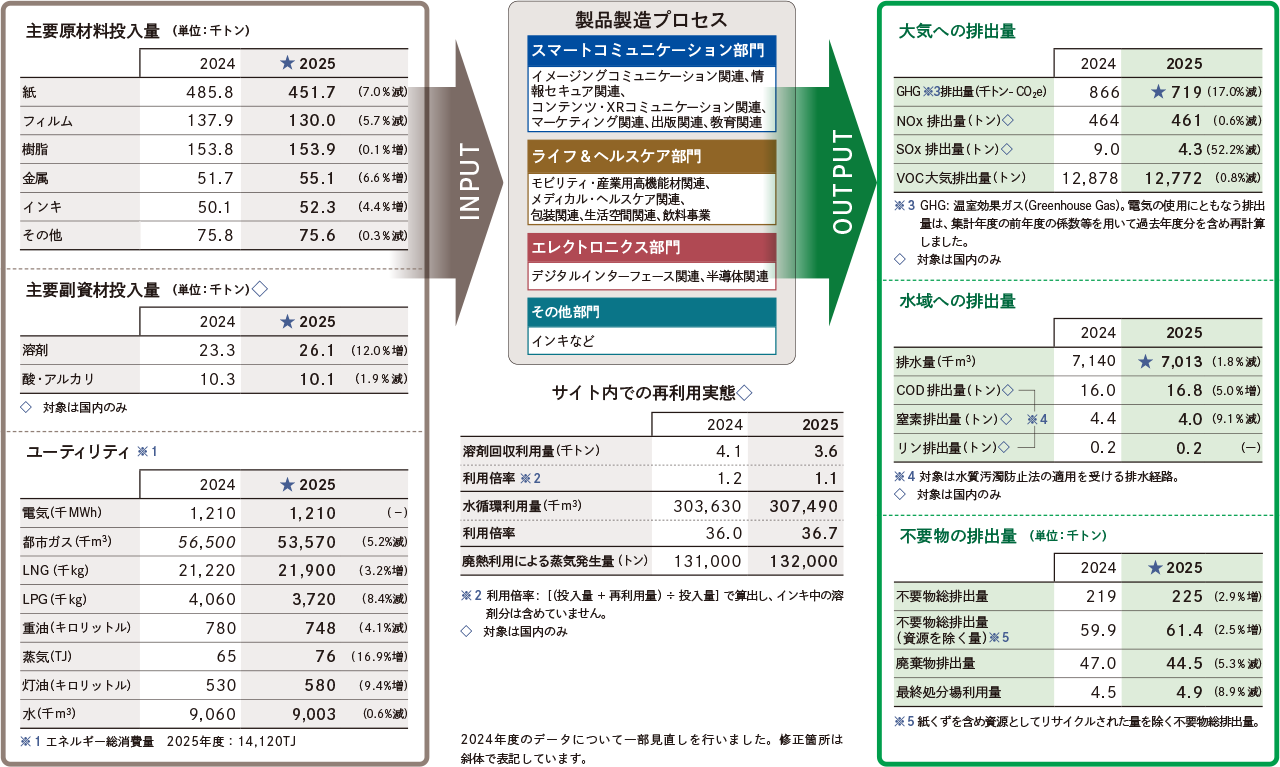
- Indicators independently verified by a third party are marked with a checkmark.
Scenario Analyses
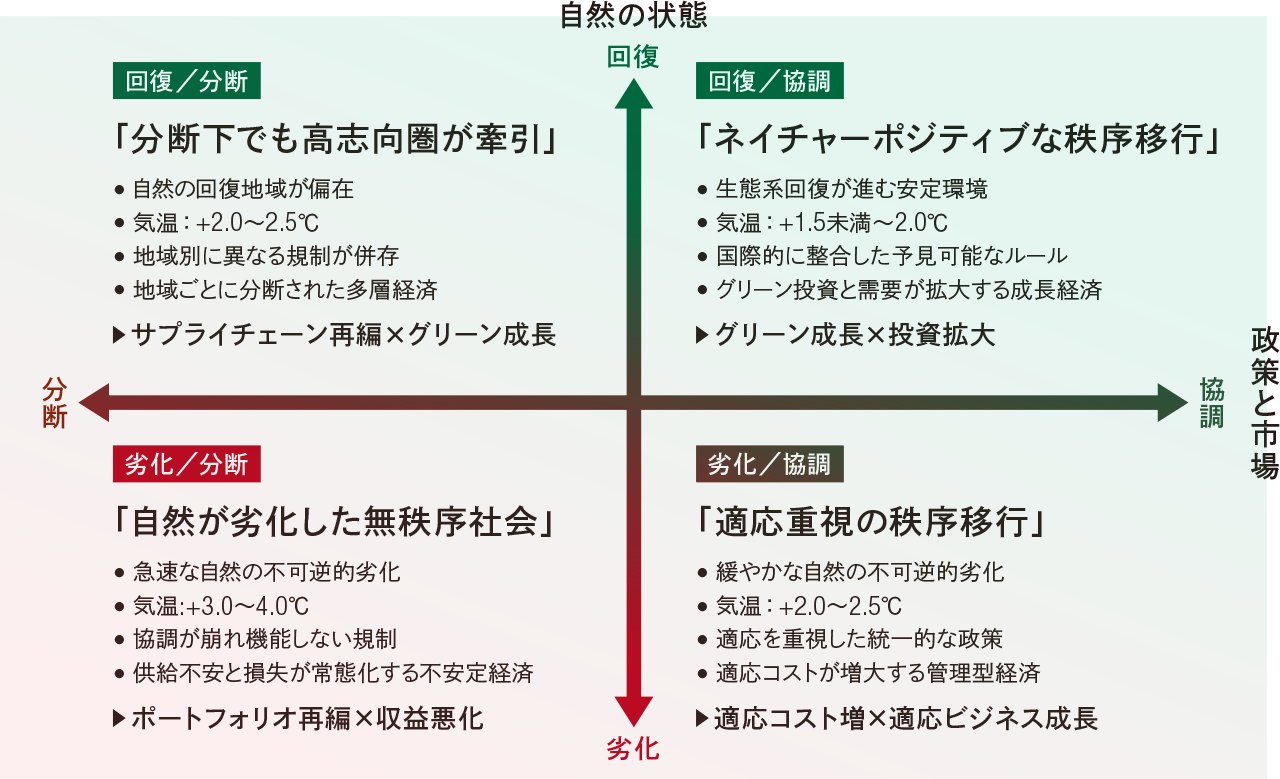
環境関連のリスクと機会が事業の持続可能性に与える影響をより具体化するため、DNP独自シナリオを設定し、分析を行いました。シナリオの設定では、事業戦略やリスク・機会の特定プロセスを踏まえ、事業継続の不確実性に影響する要素として「自然の状態」と「政策と市場」を設定しました。この2軸で構成した4象限について、これまで参照してきた4つの公開シナリオとTNFDの「シナリオ分析のガイダンス」を活用し、それぞれの世界観を具体化しました。
シナリオの設定で参照した4つの公開シナリオ
| Referenced published scenarios |
|---|
| Net Zero Emissions by 2050 Scenario (NZE) The NZE 2050 Scenario is one of the climate change scenarios published by the International Energy Agency (IEA). In order to create a decarbonized society and ensure energy security, it envisions the strengthening of ambitious and coordinated policies, the introduction of low-carbon technologies, and the creation of markets. It is a scenario in which carbon neutrality is achieved by 2050, and the average temperature increase is limited to 1.5 ºC. |
| SSP5-8.5 Scenario The SSP5-8.5 Scenario is one of the climate change scenarios presented by the Intergovernmental Panel on Climate Change (IPCC) in its Sixth Assessment Report. It is a scenario in which GHG emissions increase significantly due to fossil fuel-dependent social development, with the average temperature increasing by over 4 ºC by 2100, which will have a significant impact on ecosystems and human activities. |
| #1 Ahead of the game* 自然損失が中程度か低く抑えられ、依存している生態系サービスの提供を継続的に利用でき、ステークホルダーの要求と規制・法律・政策体制などが同調しているシナリオ。 |
| #3 Sand in the gears* 自然の状態の深刻な劣化によって依存している生態系サービスが著しく低下し、生産の中断やコスト増大への対応が必要となるほか、ステークホルダーの要求や規制・法律・政策体制などが同調せず、不安定で意思決定のリスクが高い状況にあるシナリオ。 |
*TNFD提言で提案されているシナリオ
DNP独自シナリオでは、各象限の世界観を特徴づける主要な要素と、DNPが受ける主な影響を示しています。リスクと機会のシナリオ分析では、DNP独自シナリオを用いて、ステークホルダーや事業に及ぼす影響について、その大きさと、期間、発生可能性の観点で分析を実施しました。
DNP独自シナリオ
Risks and Opportunities
DNPは、経営に多様な影響を及ぼす変動要因の一つに環境を取り上げ、リスクと機会を特定しています。下表では、環境関連のリスクと機会を「物理的リスク」「移行リスク」「機会」の観点で整理し、それらがDNPの事業に与える影響の【時間軸】を短期:0~5年、中期:5~15年、長期:15年以降、財務に与える【影響度】を大:100億円規模、中:10億円以上、小:10億円未満、こうした影響が発生する【可能性】:大>中>小で評価しています。また、DNPの事業が環境に与える【環境インパクト】や評価に用いた【DNP独自シナリオ】および関連する自然への依存とインパクトの要素をそれぞれ【生態系サービス】※1【インパクト要因】※2の観点から整理しています。これらの要素と、リスクと機会を統合的に管理することで、負の影響の最小化と事業機会の創出を両立する施策を実効的に推進していきます。
*1 Ecosystem services: The contribution of ecosystems to the benefits utilized in economic and other human activities. These consist of “provisioning services” (natural products such as water and timber that humans can use directly), “regulating and maintenance services” (the role of nature in stabilizing the environment and sustaining life), and “cultural services” (which provide spiritual and cultural values as well as recreational opportunities).
*2 Impact drivers: These refer to the inputs of natural resources used in the course of business activities and the outputs from business activities that affect nature. They are classified into five drivers of natural change: “climate change,” “land/freshwater/ocean-use and change”, ”resource use/replenishment”, ”pollution/pollution removal”, ”invasive alien species introduction/removal”.
Physical risks
We recognize that the increasingly frequent and severe damage due to torrential rains, forest fires and other natural disasters and the degradation of ecosystem provisioning services may cause the suspension of operations or the realization of supply chain risks. We conduct region-level assessments of the water risks faced by our domestic and overseas manufacturing sites using published tools such as Aqueduct provided by the World Resources Institute (WRI) to identify priority regions.
To respond to these risks, we are investing in disaster preparedness infrastructure, such as emergency power systems and water control barriers. We have also been working to further enhance our supply chain management by building production systems at multiple plants and diversifying suppliers.
| Scenario Driver | Increase in Natural Disasters | Decline in ecosystem provisioning services | ||
|---|---|---|---|---|
| 社会インフラの損壊 | 水ストレスの高まり | 原材料供給量の減少 | ||
| 想定される 事業への影響 |
• Decline in revenue due to manufacturing delays or suspensions • Increased disaster response costs • Rising raw material procurement costs and supply stoppages |
• Decline in revenue due to manufacturing delays | • Decline in revenue due to manufacturing and shipping delays • Rising raw material procurement costs and supply stoppages |
|
| Time Horizon | Short-term | Medium- to long-term | Medium- to long-term | |
| Impact | Medium | Medium | Medium | |
| Likelihood | Large | Small | Small | |
| Main Initiatives | ・BCP・BCM対策強化 ・強靭なサプライチェーンの構築 |
・水利用の最適化 ・汚染物質の削減 |
・生物多様性に配慮した調達 | |
| DNP独自シナリオ | 回復/分断 | △ | △ | △ |
| 回復/協調 | ||||
| 劣化/分断 | ◎ | ◎ | ◎ | |
| 劣化/協調 | 〇 | ◎ | ◎ | |
| 環境インパクト | Small | Large | Large | |
| 生態系サービス | 供給 | ● | ● | ● |
| 調整・維持 | ● | |||
| 文化的 | ||||
| インパクト要因 | 気候変動 | ● | ● | ● |
| 利用変化 | ● | ● | ● | |
| 資源使用 | ● | ● | ||
| 汚染 | ● | ● | ● | |
| 外来種 | ||||
Transition risks
As policies addressing environmental challenges become stricter, it is expected that new measures will become necessary, including mandatory environmental due diligence and the regulation of plastics, in addition to decarbonization-related regulations. This shift will increase stakeholdersʼ awareness of the environment, and companies that fail to respond adequately risk exiting the market or suffering reputational damage.
To address transition risks, DNP is transforming its business portfolio to reduce its negative environmental impacts and increase added value. In addition, DNP is focusing on managing environmental risks using self-imposed criteria that are stricter than laws and regulations, promoting the recycling of plastics with a low recycling rate and strengthening its supplier engagement based on the DNP Group Sustainable Procurement Guidelines.
| Scenario Driver | The Transition to Nature Positive | ||||
|---|---|---|---|---|---|
| 脱炭素に向けた政策・法規制 | 資源循環に向けた政策・法規制 | バリューチェーンに関する情報開示要求 | |||
| 想定される 事業への影響 |
・気候変動の緩和コストの増大 ※主要排出企業に対する排出権取引制度の導入 |
• Addressing remaining emissions | • Rising costs of regulatory compliance • Rising costs due to the surge in prices of recycled materials • Redesign of existing products |
・環境デュー・ディリジェンスによる情報開示 ・サプライチェーン管理の厳格化 ※ バッテリー規則のCFP算定値開示適用 ※ サステナビリティ開示基準に基づく情報開示の適用 |
|
| Time Horizon | Short- to medium-term | Long-term | Short- to medium-term | Short- to medium-term | |
| Impact | Medium to Large | Medium | Medium | Medium | |
| Likelihood | Large | Small | Large | Medium | |
| Main Initiatives | ・エネルギーの効率的利用 ・エネルギー転換(再生可能エネルギー) ・証書・カーボンクレジットの活用 ▸インターナルカーボンプライシング:20,000円/t-CO2 ▸ 2030年時点の炭素税価格:76-120億円 |
・エネルギー転換(次世代エネルギー) ・CCS、CCUS等の活用 ▸ 2050年時点の炭素税価格:32-40億円 |
・製品・サービス情報の連携 ・プラスチックリサイクルの推進 |
・サプライチェーンマネジメント ・製品・サービス情報の連携 ・環境マネジメントシステムの強化 |
|
| DNP独自シナリオ | 回復/分断 | 〇 | 〇 | 〇 | 〇 |
| 回復/協調 | ◎ | ◎ | ◎ | ◎ | |
| 劣化/分断 | |||||
| 劣化/協調 | |||||
| 環境インパクト | Small | Small | Large | Large | |
| 生態系サービス | 供給 | ● | ● | ● | |
| 調整・ 維持 |
● | ||||
| 文化的 | ● | ||||
| インパクト要因 | 気候 変動 |
● | ● | ● | |
| 利用 変化 |
● | ||||
| 資源 使用 |
● | ● | |||
| 汚染 | ● | ||||
| 外来種 | ● | ||||
Opportunities
DNP believes that society and the economy are increasingly oriented toward integrated actions to realize nature positivity, and this will increase the demand for eco-friendly products and services. This is a significant business opportunity for the Company.
Guided by its Medium-term Management Plan, DNP is planning to invest 260 billion yen over the five years through fiscal 2027, focusing on priority business areas including eco-friendly products and services, such as battery pouches for lithium-ion batteries. Our goal is to positively impact the natural environment while creating a virtuous cycle of new earnings growth and enhanced corporate value.
| Scenario Driver | Market Changes | The Growing Importance of Non-Financial Information | ||
|---|---|---|---|---|
| GX製品・サービス市場の拡大 | インパクトファイナンスの拡大 | 情報開示基準の標準化 | ||
| 想定される 事業への影響 |
• Growing demand for environmentally friendly products and services • Accelerating technological innovation toward a nature-positive future |
• Expanded opportunities for low-cost financing | ・企業イメージと投資家評価の向上 ※サステナビリティ開示基準に基づく情報開示の適用 |
|
| Time Horizon | Medium-term | Medium- to long-term | Short- to long-term | |
| Impact | Large | Large | Large | |
| Likelihood | Large | Medium | Medium | |
| Main Initiatives | ・環境配慮製品・サービスの開発 ▸ スーパーエコプロダクツ2025年度売上高:2,761億円 |
・環境指標をSPT(サステナビリティ・パフォーマンス・ターゲット)とした資金調達 ▸ サステナビリティ・リンク・ボンド発行:600億円(2025年5月) |
・ステークホルダーエンゲージメント | |
| DNP独自シナリオ | 回復/分断 | ◎ | △ | 〇 |
| 回復/協調 | ◎ | ◎ | ◎ | |
| 劣化/分断 | △ | |||
| 劣化/協調 | 〇 | △ | ||
| 環境インパクト | Large | Medium | Small | |
| 生態系サービス | 供給 | ● | ● | |
| 調整・ 維持 |
● | ● | ||
| 文化的 | ● | ● | ||
| インパクト要因 | 気候 変動 |
● | ● | ● |
| 利用 変化 |
● | ● | ||
| 資源 使用 |
● | ● | ● | |
| 汚染 | ● | ● | ||
| 外来種 | ● | ● | ||
Indicators/Goals (Metrics and Targets)
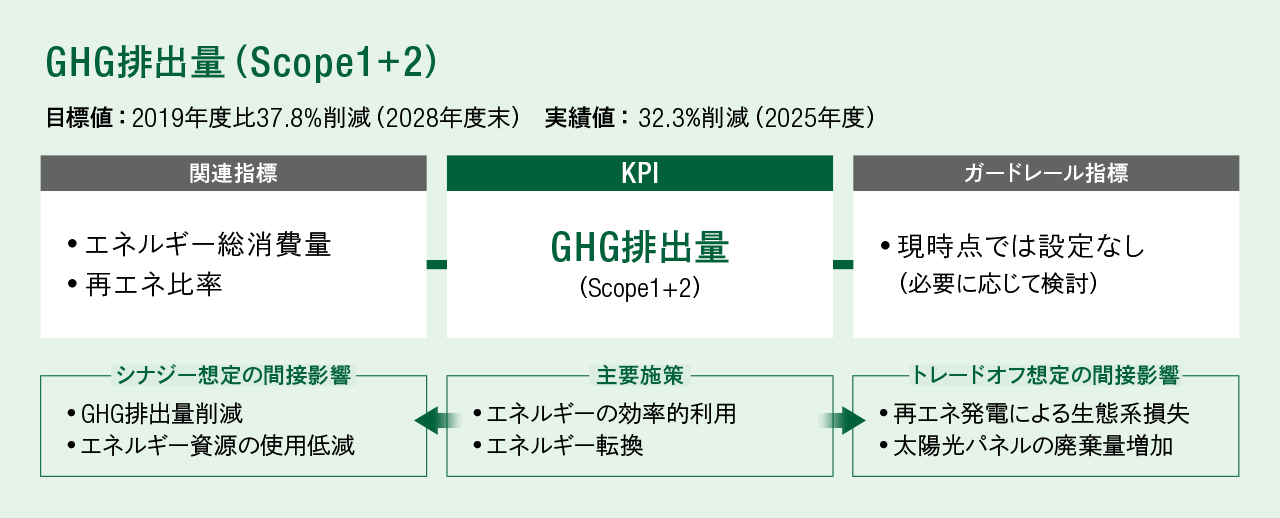
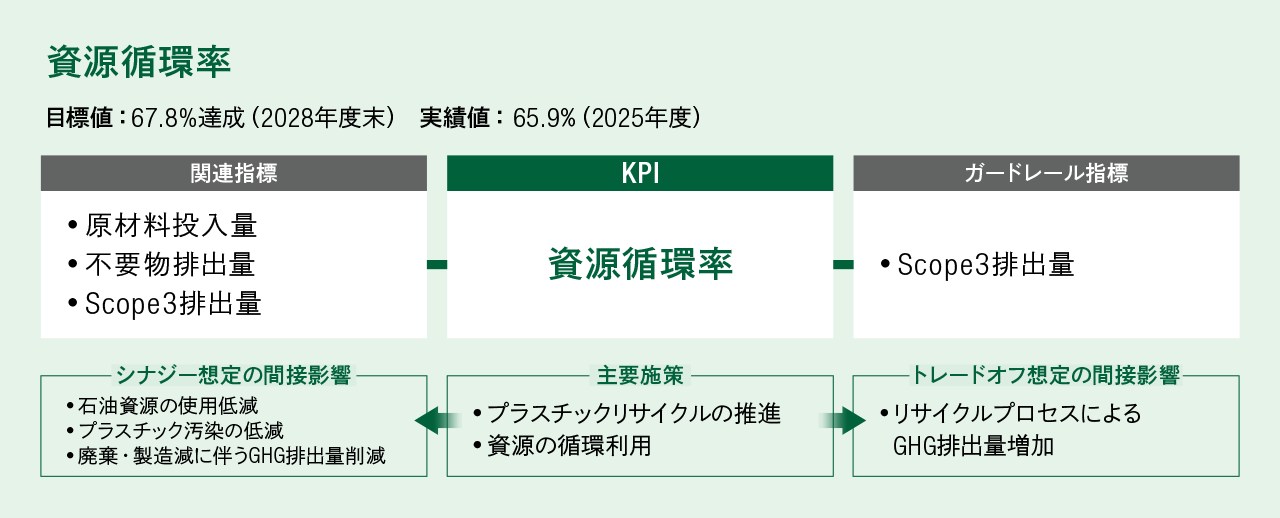
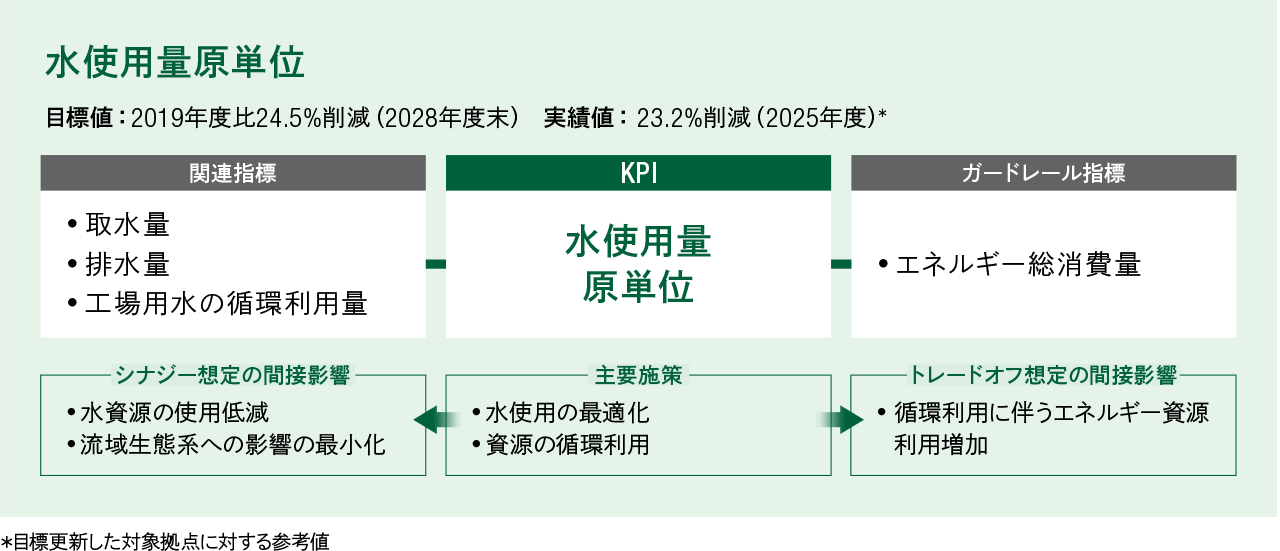
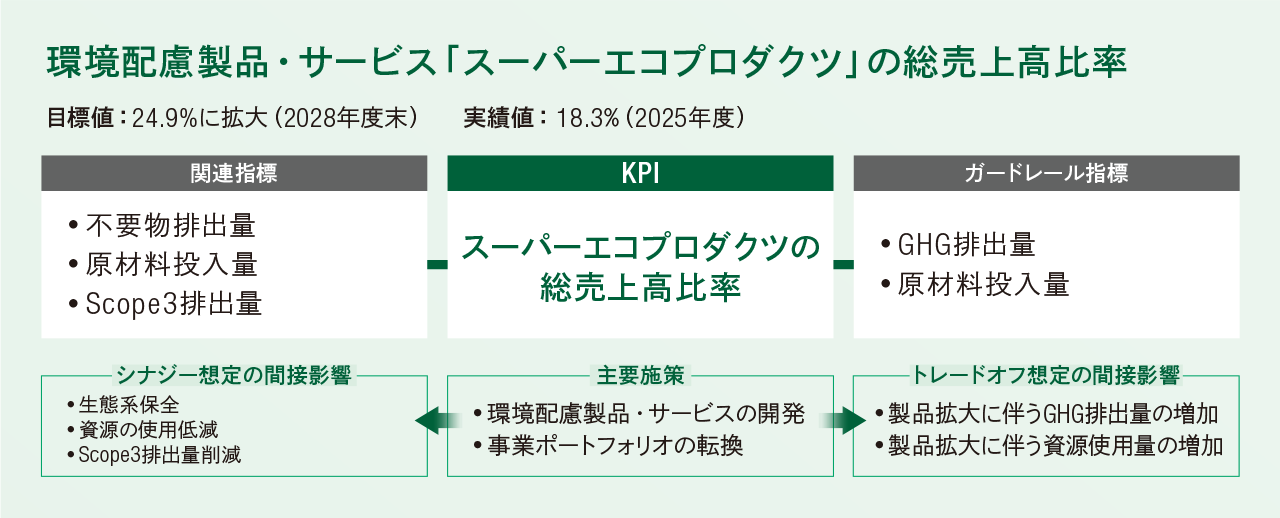
2026年度から始動した中期経営計画では、「GHG排出量」「資源循環率」「水使用量原単位」「環境配慮製品・サービス『スーパーエコプロダクツ』の総売上高比率」を環境戦略の実効性を測るKPIとして設定しました。これら4つのKPI達成に向け、DNPが取り組む主要施策とその施策が及ぼすと想定される環境へのシナジー・トレードオフを抽出しました。また、DNPがこれまで管理してきた環境データを、シナジーを測る指標「関連指標」と、トレードオフを測る指標「ガードレール指標」として再定義することで、「脱炭素社会」「循環型社会」「自然共生社会」の実現に向けた一体の管理構造として「指標と目標」を整理しました(下図)。これらのKPI・指標を統合的に管理していくことで、バリューチェーン全体でのネイチャーポジティブ実現をめざします。
TNFD Core Global Disclosure Metrics
| Driver of Nature Changes | Indicator | FY2025 Results | |
|---|---|---|---|
| ー | Climate change | GHG emissions | Scope 1: 310,000 tons - CO2 Scope 2: 409,000 tons - CO2 Scope 3: 4,392 thousand tons of CO2 |
| C1.0 | Land/freshwater/ocean-use and change | Land-use spatial footprint | • 3,100,000 m2 * Total site area of key domestic production bases under the Factory Location Act |
| C1.1 | Spatial footprint of preserved/restored areas |
Green space area: 790,000 m2 * Major domestic production bases based on the Factory Location Law • Nature-friendly site: 1.56 ha (Ichigaya no Mori (Ichigaya Forest)) - Forest utilization management at Quy Nhon Afforestation Co., Ltd. (DNP holds a 10% stake) Logging area: 1,196 ha / Reforestation area: 1,176 ha |
|
| C2.0 | Pollution/pollution removal | Pollutants | ・PRTR対象物質総排出量:1,984トン *大気、公共水域、土壌、下水道への排出量及び廃棄物処理量 *各物質の内訳は環境データブックを参照 |
| C2.1 | Water discharged | Total Water discharged: 7,010,000 m3 • Drainage into public waters: 3,840,000 m3 • Drainage into the sewer system: 3,170,000 m3 • Concentration of emitted pollutants: Less than 5 ppm, which is below the regulatory standard. • Discharge water temperature: Discharge water is kept below the national regulatory limit. |
|
| C2.2 | Waste | ・不要物総排出量:225千トン ・除紙不要物量:115千トン *不要物総排出量から100%リサイクルしている紙有価物量及び汚泥のサイト内中間処理量を除いた量 ・資源循環量(再生量):76千トン ・埋立処理量:259トン *処理フロー段階ごとの排出量については、環境データブックを参照 |
|
| C2.3 | Plastics | • Amount of plastic (film/resin) used: 284,000 tons | |
| C2.4 | Non-GHG air pollutants | Estimated values from related facilities at domestic bases NOx: 461 tons SOx: 4.3 tons • VOCs: 4,211 tons • Dioxin: 25mg-TEQ • Dust: 9.5 tons |
|
| C3.0 | Resource use/replenishment | Water usage in water-scarce areas | In four locations with high water risk Total Water withdrawal: 220,000 m3 *All water sources are surface water. Total consumption: 2,000 m3 * The difference between Water withdrawal and Water discharged is calculated as the amount of water consumed. |
| C3.1 | Amount of high-risk natural commodities | • Paper: 270,000 tons (domestically sourced, of which certified paper: 89,000 tons) Metals (aluminum, iron, etc.): 55,000 tons |